
Summary
Editor's rating
Price, no subscription, and how it stacks up against other brands
Chunky white pods with practical mounts, not exactly discreet
Battery and solar: does it really run for months without touching it?
Build quality, weather resistance, and long-term concerns
Video quality, motion detection, and how it actually behaves day and night
What you actually get in the box and how it all fits together
Pros
- Good 2K image quality with usable colour night vision in low light
- Solar + large internal battery means very rare manual charging in decent sunlight
- Local storage on HomeBase 2 with no mandatory subscription fees
Cons
- Slight delay on notifications and live view loading
- Bulky, very visible cameras and one extra HomeBase box to place near router

Specifications
View full product page →| Brand | eufy Security |
Two cameras, one HomeBase, and zero subscription drama
I’ve been running this eufyCam E40 2-Cam Kit with HomeBase 2 around my house for a few weeks now. I put one camera on the front driveway and the other watching the back garden, both mounted high on the wall. I wanted something wireless, that I didn’t have to charge every month, and that didn’t lock me into yet another subscription. On paper, this kit ticks all of that: solar, 2K, local storage, works with Alexa, and no mandatory monthly fee.
In day-to-day use, what stands out first is how easy it is to get going. I’m not a professional installer, I just used a drill, the included screws, and a basic ladder. The app setup was straightforward: plug in the HomeBase 2, connect it to the router, add the cameras, and they paired without weird errors. Compared to some cheap Wi‑Fi cameras I tried before, this was less annoying and I didn’t spend half a day fighting connection issues.
The second thing that hit me is that the solar charging actually works when the camera is placed halfway sensibly. On my sunny side wall, the battery level basically hasn’t moved. On the shadier side, the percentage goes down very slowly but still holds up fine so far. So in practice, it does feel like a low‑maintenance setup, at least in late spring and summer. Winter will be the real test, but for now I don’t feel like I’ll be climbing the ladder every month.
It’s not perfect though. Notifications have a small delay, the app is a bit noisy until you tune the settings, and the whole HomeBase requirement means one more box plugged into your router. But as a package, for a regular homeowner who just wants to see who’s on the driveway and get clips stored locally without paying a fee every month, it’s pretty solid. That’s the angle I’ll stick to in this review: how it behaves in normal daily use, not in lab conditions.
Price, no subscription, and how it stacks up against other brands
In terms of value, I’d say this kit lands in the good but not dirt-cheap category. You’re paying for two 2K cameras plus the HomeBase with 16 GB of local storage and the whole solar/battery setup. It’s not the lowest price on the market, but you avoid the monthly fees that come with some big-name brands. That matters a lot if you think long term. After two or three years, those small monthly fees add up and can easily surpass the price of the hardware.
Compared to something like Ring or Arlo, the big difference is the local storage and optional subscription. With this eufy kit, out of the box, you already get motion recordings saved locally, app access, and notifications. You’re not forced into a subscription just to see history or download clips. If you’re the kind of person who hates subscriptions and prefers a one-time purchase, this alone makes the value proposition strong. On the other hand, if you love advanced AI features and cloud-based detection, you might find some of those locked behind extra fees or not as polished.
Against really cheap no-name cameras from random brands, eufy feels more polished: the app is more stable, the install is easier, and the build quality is better. Those cheaper ones often come with clunky apps, weak Wi‑Fi, or shady cloud services. I’ve had a couple of those before and ended up replacing them because they were more hassle than they were worth. So while this E40 kit costs more upfront, it saves you time and ongoing costs, which to me is part of “value”.
Overall, I’d call it good value for what it offers: decent 2K image, solar power, strong battery, local recording, and a mature app. It’s not a bargain bin product, and there are cheaper setups if you’re really on a tight budget and don’t mind compromises. But if you want a system you can install once and mostly forget about, without paying every month, the price makes sense.

Chunky white pods with practical mounts, not exactly discreet
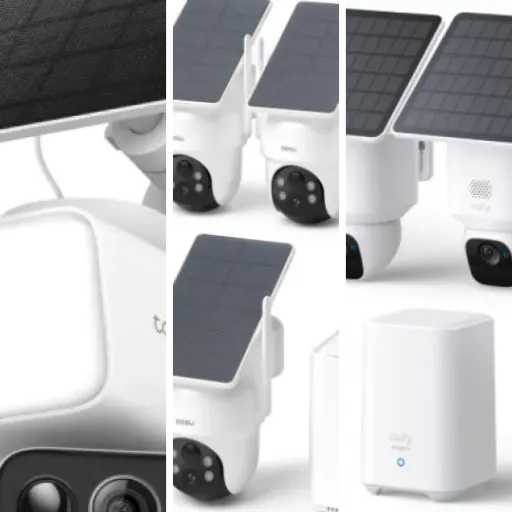
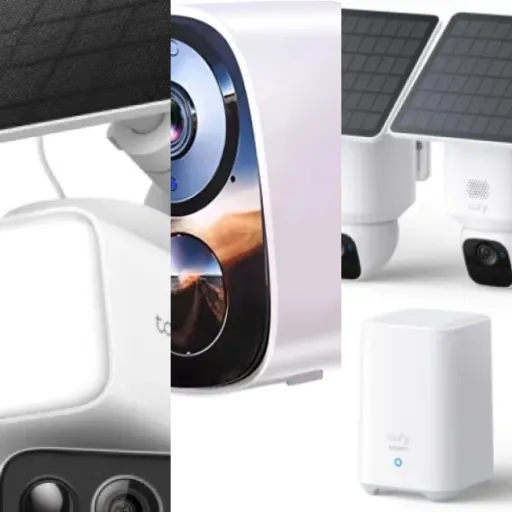
Design-wise, the E40 cameras are pretty chunky white bricks with a slightly curved shape and a dark front face. They don’t look premium or fancy, but they look solid. Once mounted, they’re quite visible, which can be seen as a plus (deterrent) or a minus (not discreet at all). On my brick wall, they stand out clearly. If you’re trying to keep things low-key, these are not tiny hidden cameras.
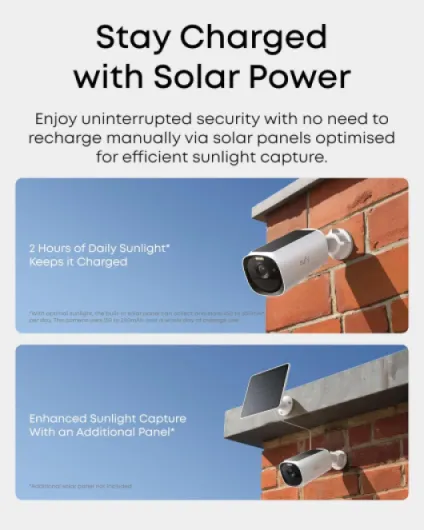
The built‑in solar panel sits on the top of each camera. It’s fixed, not adjustable, so you have to think a bit about where you mount it. You can angle the whole camera body thanks to the ball-style mount, but you can’t independently tilt just the panel. On my south-facing wall, that’s fine: I just pointed the camera where I wanted and the panel still gets plenty of light. On the side of the house that only gets partial sun, I had to compromise slightly between the best view and the best sun angle. Eufy does allow adding an external solar panel if needed, but that’s an extra accessory.
The mounts are basic but effective. You screw the base plate to the wall (I used the included screws and plugs in brick), then the camera twists on and you adjust the angle. Once tightened, it doesn’t move. I tried to wiggle it by hand and it stayed put. There’s also an anti‑theft alarm: if someone tries to yank the camera off, it screams. It’s loud enough to draw attention, though obviously it won’t stop someone determined with a ladder. Still, it’s a decent deterrent and more than you get on many budget cameras.
The HomeBase 2 is a small white box, roughly the size of a thick paperback book, with a status LED on the front. It’s not ugly, but it’s another box you’ll have to fit near your router or somewhere with ethernet. Mine is just sitting on a shelf; once set up, you barely touch it. Overall, the design is practical and a bit bulky, not pretty. It looks like a security system, which might actually be what some people want.
Battery and solar: does it really run for months without touching it?
The big selling point here is the combo of a 13,000 mAh internal battery and the built‑in solar panel. In theory, you charge it fully once, mount it, and then the sun keeps it topped up. In practice, it depends a lot on where you put it and how much motion it records. On my front camera, which gets a decent amount of sun from late morning to afternoon and records a fair number of clips per day (cars, deliveries, neighbors), the battery percentage has been basically flat over a few weeks. It drops a bit on cloudy days, then climbs back up when the sun comes out.
The back garden camera is in a slightly worse spot, with more shade and fewer direct hours of sunlight. There, I can see a very slow drain over time, but nothing worrying yet. It’s clearly not gaining as much power as the front one, but it’s also not plummeting. If winter comes and it struggles, I’ll probably either adjust its angle, move it slightly, or consider adding an external panel. The good part is that even without the sun, a 13,000 mAh battery on a camera that only wakes up on motion means you’re looking at weeks to months of life, not days.
One thing to note: you must fully charge the cameras before mounting. The initial charge took a few hours per camera via cable. That’s a bit of a boring step, but if you skip it, the solar panel won’t magically rescue a half-charged battery in the first days, especially if the weather is bad. Once I did that properly, I basically forgot about charging. For someone who hates climbing ladders, that’s a big plus.
Compared to some cheaper battery cameras I’ve used, which needed charging every 4–6 weeks in busy areas, this setup is noticeably less hassle. The only real downside is the dependency on sun for the “infinite” part. If you live somewhere with long, dark winters and you mount the cameras under deep eaves or in north-facing spots, don’t expect miracles. The battery system is strong, but it’s still bound by physics. Overall though, for most typical UK/European installs with some daylight, the battery and solar combo does its job well.

Build quality, weather resistance, and long-term concerns
I haven’t had these cameras for a full year yet, so I can’t pretend I know exactly how they’ll age, but there are a few things you can judge early. First, the build feels dense and solid. There’s no creaking plastic when you tighten the mount, and the body doesn’t feel hollow. The IP66 rating means it’s designed to handle rain and dust. Mine have already gone through a couple of heavy rain days and one pretty windy night, and there’s been no sign of water ingress, fogging, or loose parts.
The front face where the lens and sensors are feels well-sealed. After rain, I just had to wipe a few droplets off the lens area on the lower-mounted one. If you can, I’d still recommend mounting slightly under an eave or at least not right where gutters drip, just to keep the lens cleaner and reduce how often you have to wipe it. The white plastic housing might yellow a bit over years in direct sun, but that’s cosmetic and typical for most outdoor gear.
The mounting hardware is decent. The screws and wall plugs included are okay for standard brick or block walls. If you’re mounting into something trickier like old crumbly brick or special cladding, you might want better plugs from a DIY store. Once the base is in, the ball joint and tightening ring hold the camera in place well. I tried to simulate someone bumping it with a broom handle, and it didn’t flop around or change angle easily.
My only long-term concern is the internal battery lifespan. Like any lithium battery, after a few years of charging cycles and temperature swings, capacity will drop. Because the battery is internal, replacing it isn’t as simple as swapping an AA cell. Realistically, after 3–5 years you might see shorter runtimes or more dependence on the solar panel. That’s pretty standard for this type of product though. Overall, the durability looks good so far, and I don’t see any obvious weak points, but it’s still a consumer-grade camera, not industrial kit.
Video quality, motion detection, and how it actually behaves day and night
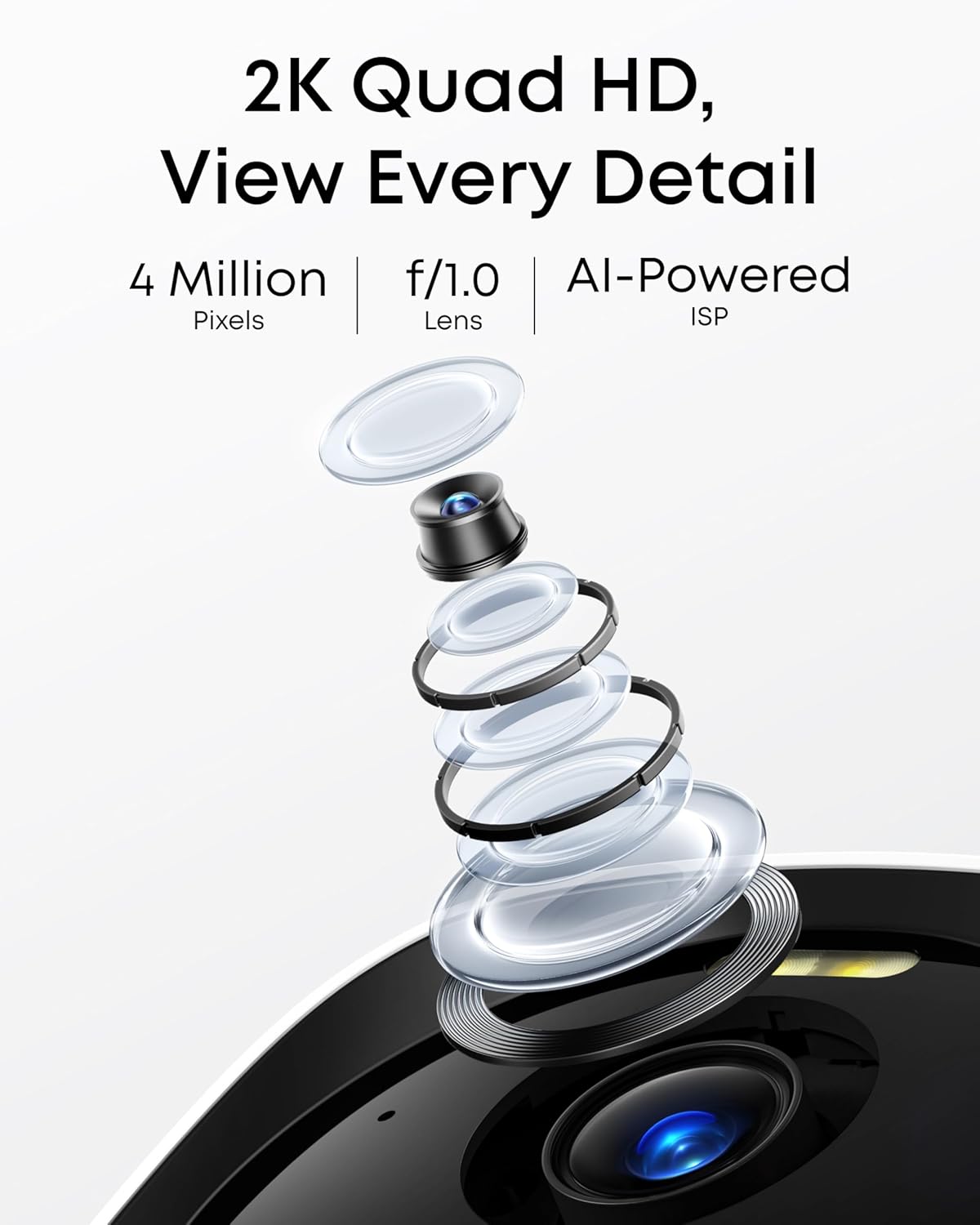
On the performance side, the E40 is pretty solid for a mid-range system. During the day, the 2K image is sharp enough to clearly see faces, read license plates at short distances, and spot small details like packages on the ground. I can zoom in on recordings without everything turning into a mush of pixels, which is exactly what I expect from 2K. Is it cinema quality? No. But for a security camera, it’s more than enough to identify people and see what’s going on.
The night performance is where I was a bit skeptical, especially with the “MaxColour Night Vision” claim. In practice, if there’s some ambient light (streetlight, neighbor’s porch light, etc.), you do get usable colour footage at night. On my driveway with a weak streetlamp, I can still see the colour of cars and clothes. When it’s really dark, it falls back more into a kind of boosted low-light mode; it’s still readable, but you’re not getting crisp, bright colours like daytime. I wouldn’t call it mind-blowing, but it’s better than the usual pure black-and-white IR you see on cheaper models.
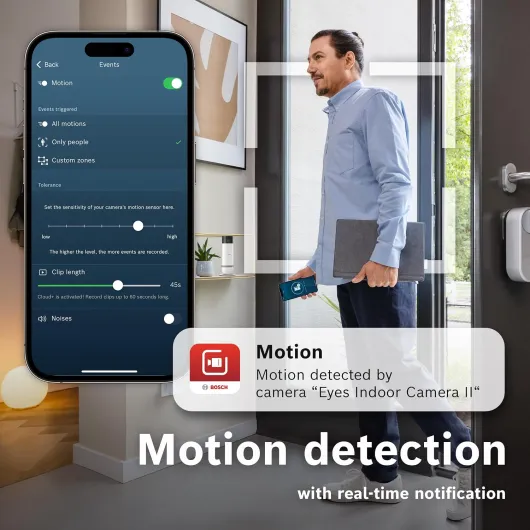
Motion detection with the upgraded PIR sensor is generally reliable. People walking into the field of view get picked up consistently. Cars driving by on the street are also detected if you point the camera that way. I did get some false alerts from moving tree branches on a windy day, but less than with my older pixel-detection camera. The app lets you tweak sensitivity and activity zones, which helps. I had to spend about 20–30 minutes over a couple of days tuning it so I wasn’t getting pinged every time a cat walked through the garden.
There is a small lag on notifications. From the moment someone walks onto the driveway to the moment my phone buzzes, there’s usually a delay of 2–5 seconds. It’s not instant, but it’s acceptable. If you’re thinking of using this as a live intercom the second someone steps on your property, you’ll notice the delay. For reviewing events after they happened, it’s fine. The live view also takes a second or two to load, especially when you’re on mobile data instead of home Wi‑Fi. So performance is good, but not ultra-snappy. For the price range and considering it’s 2K with local storage, I’d say it’s in line with expectations.
What you actually get in the box and how it all fits together
The kit I tested is the eufyCam E40 2-Cam Kit with HomeBase 2. So you’re getting: two wireless outdoor cameras with built‑in solar panels, one HomeBase 2 hub with 16 GB of local storage, mounting hardware, and the power/ethernet bits for the base. No NVR, no separate solar panels, it’s all integrated. The cameras talk to the HomeBase, and the HomeBase is what you connect to your router and your phone app.
Each camera records in 2K (Quad HD), saves video locally to the HomeBase in MP4, and uses Wi‑Fi to send clips and notifications to your phone. The cameras use a PIR motion sensor, which is basically a heat-based sensor that reduces false triggers from things like moving branches compared to pure pixel-based motion detection. They’re rated IP66, so rain and bad weather shouldn’t be a problem. Eufy advertises colour night vision (MaxColour) and a 13,000 mAh internal battery supported by the solar panel.
What matters in practice is how the system is organised. The HomeBase 2 is the brain: it stores the clips, handles encryption, and manages all the cameras. That means if your Wi‑Fi is flaky outside, as long as the cameras can talk to the HomeBase, recordings still happen. I have my HomeBase in the living room near the router, and both cameras show a stable connection in the app. It also means you don’t put SD cards in the cameras themselves, which I actually prefer because if someone steals the camera, they don’t walk away with the footage.
There are optional cloud features and extra subscriptions if you want more smart detection stuff, but you don’t have to pay for basic recording, playback, and notifications. For me, that’s one of the key points of this kit. The default free mode is enough: motion detection, push alerts, and local video history. If you’re used to Ring or others that push subscriptions, this is a bit of fresh air. Just be aware that if you enable some cloud-based options (like thumbnails in notifications), some data will go through their cloud, but the main storage is still local.
Pros
- Good 2K image quality with usable colour night vision in low light
- Solar + large internal battery means very rare manual charging in decent sunlight
- Local storage on HomeBase 2 with no mandatory subscription fees
Cons
- Slight delay on notifications and live view loading
- Bulky, very visible cameras and one extra HomeBase box to place near router
Conclusion
Editor's rating
After using the eufyCam E40 2‑Cam Kit with HomeBase 2 in normal, everyday conditions, my overall feeling is positive. It’s not perfect, but it does the main job well: it records clear video, sends you alerts when something happens, and stores everything locally without forcing you into a subscription. The 2K image is sharp enough to recognise faces and details, and the colour night vision is decent as long as there’s at least a bit of ambient light. The solar + big battery combo works as advertised in my setup, especially on the sunnier side of the house, which means very little ladder time.
On the downside, the notifications and live view aren’t instant, and you do need to spend some time tweaking motion settings to avoid too many alerts. The design is a bit bulky and obvious, and the dependence on the HomeBase means one more box by your router. Long-term, the internal battery lifespan is something to keep in mind, but that’s true for most wireless cameras. If you want a super cheap system or ultra-advanced AI features, there are other options. If you want a practical, low-maintenance, no-subscription outdoor security setup, this kit is a solid pick.
I’d recommend it mainly to homeowners or renters who can mount cameras outside, want to avoid monthly fees, and are okay with a visible camera setup. If you live somewhere with very little sun or you need instant, real-time response for security patrol style use, you might want to look at wired PoE systems or models with more aggressive AI features. For most regular households that just want to keep an eye on the driveway, garden, or side gate with minimal hassle, the eufyCam E40 kit gets the job done well enough to justify the price.