
Summary
Editor's rating
Is it good value for money?
Functional design, not pretty but practical
Packaging and unboxing experience
Build quality and weather resistance
Video quality, night vision and smart detection in real life
What you actually get in the box
Does it actually make you feel more secure?
Pros
- Sharp 4K (8MP) image quality with good detail in day and night
- Wired setup is stable and doesn’t rely on Wi‑Fi or subscriptions
- Human/vehicle detection cuts down a lot of useless motion alerts
Cons
- Interface and mobile app feel dated and not very intuitive
- Installation requires running BNC cables and basic DIY skills

Specifications
View full product page →| Brand | ANNKE |
A no-nonsense 4K kit if you’re ready to run cables
I installed this ANNKE 8MP CCTV kit at home to replace a mix of old 1080p cameras and random Wi‑Fi cams. I wanted something wired, 4K, with a hard drive included so I didn’t have to mess around with separate NVRs and SD cards. This bundle ticks those boxes on paper: 4 turret cameras, an 8‑channel 4K DVR, 2TB drive already fitted, and the usual cables and power splitters in the box.
In day‑to‑day use, the system feels like a classic DVR setup: plug the BNC cables in, hook it to your router and a TV/monitor, and you’re basically done. It’s not as slick as some app‑only Wi‑Fi systems, but once it’s wired, it’s stable. Over about three weeks of use, I didn’t have random disconnections or missing clips like I sometimes had with wireless cameras.
What stood out right away was the jump in image clarity compared to my old 1080p analog cameras. Faces, plates, and small details are much easier to pick out, especially in decent daylight. The human/vehicle detection also cuts down a lot of the useless alerts I used to get from tree branches or cats passing by, although it’s not perfect and still triggers on some weird angles or partial bodies.
It’s not all good, though. The app and interface feel a bit dated, and setup isn’t exactly plug‑and‑play for someone who’s never touched a DVR before. If you hate menus and cables, this will annoy you. But if you want a fairly straightforward wired system that just records 24/7 and lets you check footage from your phone, this kit does the job without trying to be fancy.
Is it good value for money?
Looking at the price bracket for a 4‑camera 4K wired kit with a 2TB HDD included, this ANNKE system sits in the good value zone. You’re getting 4x 8MP cameras, an 8‑channel DVR (so you can add 4 more later), plus all the wiring and a decent‑sized hard drive. If you tried to piece that together separately with some other brands, you’d probably end up paying more, especially once you add a surveillance‑grade HDD.
Where they clearly save money is on the software polish and accessories. The interface is usable but dated, the app feels a bit clunky, and the mouse and cables are very basic. For me, that’s acceptable at this price, because the core functions – recording, image quality, and reliability – are solid. I’d rather have a slightly rough interface with good 4K footage than a super stylish app wrapped around weak cameras.
Compared to pure cloud systems like Ring, Arlo, etc., the big plus is no monthly subscription for recording. Once you’ve bought this kit, your ongoing cost is basically your electricity and maybe a drive replacement years down the line. If you need lots of cameras and want continuous recording, the cost of cloud storage on some ecosystems gets silly very quickly. With this, you pay once and you’re done, as long as you’re okay with managing your own DVR.
On the downside, if you only need one or two cameras and hate running cables, this might feel like overkill. There are simpler Wi‑Fi options that will be easier to install, even if the long‑term cost ends up higher. So in my opinion, the value is best for someone who wants a more “serious” wired setup at home or in a small business, is willing to spend a weekend installing it, and cares more about reliability and local storage than having the slickest app on the market.
Functional design, not pretty but practical
Design‑wise, this system is very utilitarian. The DVR is a flat metal box with ventilation slots and a few LEDs on the front. It’s not something you’d proudly display in your living room, but it’s fine to hide in a cupboard, under a TV, or in a network corner. No fancy touchscreen or glossy finishes here, just a box that sits there and records.
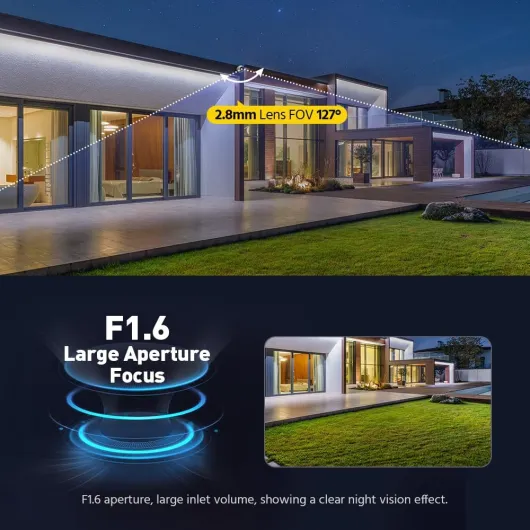
The turret cameras are more interesting from a practical point of view. They’re the classic “eyeball” style, which I actually prefer over bullet cameras. The universal joint bracket with 360° rotation makes placement a lot easier. You can mount them on a wall or under an eave and twist them until the view is right. Compared to my previous fixed bullet cams, adjusting the angle on these was quicker and less frustrating. The wide 2.8mm lens with a 127° diagonal view also helps cover more area with fewer blind spots.
One thing to note is that the cameras are fairly visible. They’re white, not tiny, and the IR LEDs are obvious at night when they glow red (unless you’re using full‑colour mode with the dual light function properly set with the ANNKE AI DVR). So if you want something discreet, these might feel a bit obvious. On the flip side, the visible cameras can act as a deterrent, which isn’t a bad thing for security.
The menus and software design feel a bit old school. When you plug the DVR into a monitor, you get that typical CCTV menu style with icons and submenus that look like they’re from the early 2010s. It works, but it’s not very intuitive if you’re used to modern app UIs. I had to poke around a bit to find where to tweak human/vehicle detection, set recording modes, and adjust image quality. Once configured, you don’t spend much time in there, but the initial setup is not exactly friendly for beginners.
Packaging and unboxing experience
The packaging is pretty straightforward. Brown outer box, branded inner box, everything held in place with foam and cardboard. It’s not trying to impress you like a high‑end gadget; it just aims to get the gear to you in one piece. When I opened it, each camera was individually wrapped and protected, and the DVR sat in a foam cradle. No damage, no scratches, nothing rattling around.
Cables, screws, and small accessories are grouped in separate plastic bags. Labels are basic but clear enough: you can quickly see which is the HDMI, which is the Ethernet, and which power adapter is for what. The USB mouse is as cheap as it looks, but it works, and honestly, it’s fine for navigating the DVR menus. I’ve seen more chaotic CCTV kits where everything is just thrown in; this one is at least organised.
The manual is thin and a bit generic, but it covers the essentials: how to connect the cameras, how to hook up the DVR to a monitor and router, and some basic setup steps. Don’t expect a super detailed step‑by‑step with pictures for every menu, though. If you’ve never touched a CCTV system, you might need to combine the manual with a YouTube video or two. That’s what I did for some of the more advanced features like remote access and AI detection zones.
Overall, the packaging is functional and safe, nothing more. It protects the hardware, gives you the minimum info you need, and doesn’t add unnecessary junk. If you’re into fancy unboxing moments, this is going to feel a bit dull. But for a security kit that’s going on walls and in cupboards, I honestly don’t care what the box looks like, as long as it arrives intact, which it did.
Build quality and weather resistance
I’ve had the cameras mounted outside for a few weeks, including through a couple of heavy rain days and some windy nights. So far, no water ingress, no fogging inside the dome, and no obvious corrosion on the screws or brackets. The IP67 rating looks believable: the camera housings feel solid, not flimsy plastic. They’re metal and have a bit of weight to them, which gives some confidence they’ll hold up over time.
The operating temperature range is listed from -40°F to 140°F. I haven’t tested the extremes, obviously, but one of my cameras is mounted on a south‑facing wall that gets a lot of sun. The camera body gets warm, but not to the point where it worries me. No random restarts or glitches so far. If you live somewhere very hot or very cold, you’d probably want to check long‑term reviews, but for a typical European climate, it seems fine.
The DVR itself has been running 24/7 without issues. There’s a small fan inside, which you can hear if the room is quiet, but it’s not crazy loud. I’d say about the level of a basic desktop PC. It’s something to consider if you plan to put it in a bedroom or a very quiet office. The hard drive noise is minimal, just a faint hum and occasional click when writing, nothing dramatic. Heat levels are normal; the case gets warm but not hot.
The only minor concern is the included BNC cables. They work, but they’re not the thickest or most rugged I’ve seen. If you’re running them through tight holes, under tiles, or anywhere they might get pinched, I’d be a bit careful. For a normal surface run along walls and through a few drilled holes, they’re fine. If I were doing a more permanent or professional install, I’d probably use better‑grade Siamese cable, but for a home user on a budget, the supplied ones are okay.
Video quality, night vision and smart detection in real life
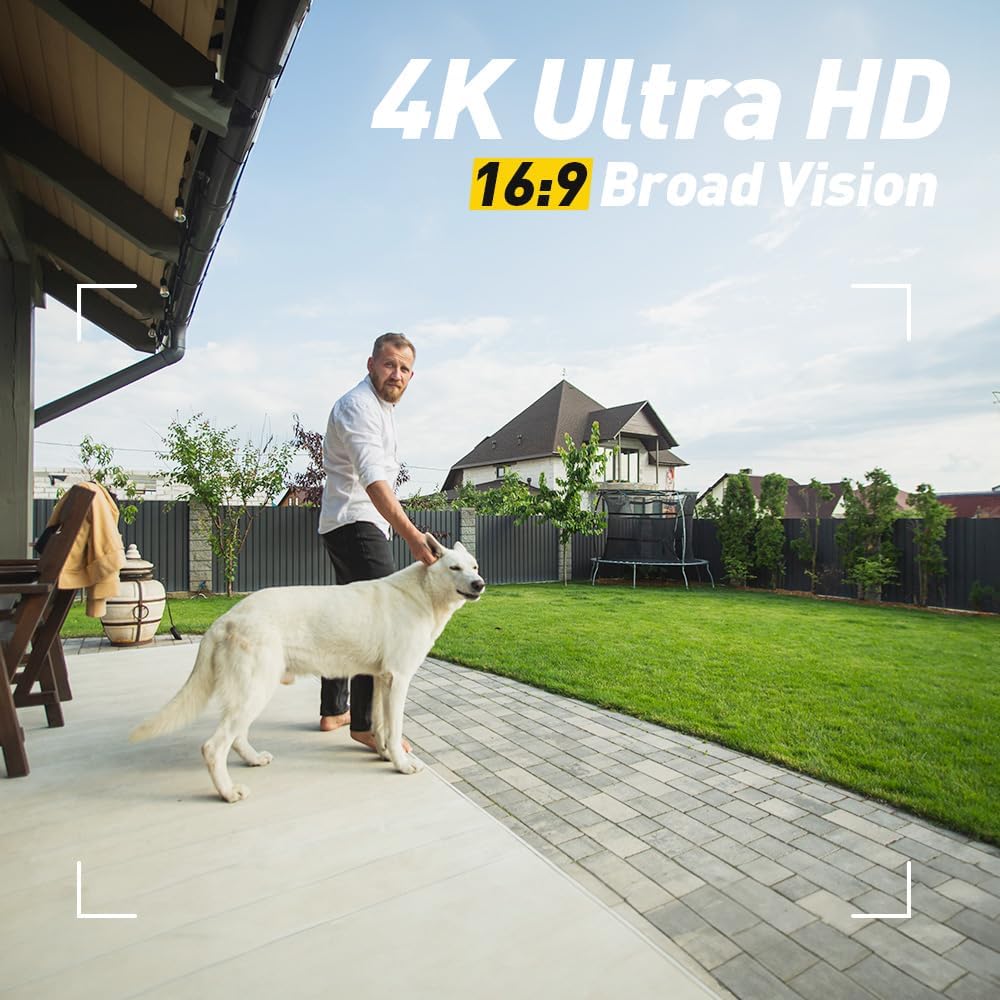
On performance, the main thing is the 8MP 4K image quality. During the day, the footage is sharp. I can clearly see faces, read license plates at a reasonable distance, and zoom in on recorded video without everything turning into a blur. Compared to my old 1080p analog kit, the difference is big. Small details like logos on jackets or text on delivery boxes are much easier to identify. The DVR handles 4K at 30fps, and I didn’t notice stuttering or weird artifacts when watching live on a monitor.
Night vision is also decent. The cameras have IR LEDs rated up to about 80 ft, and in my case, the front yard and driveway are well lit in black and white. With the F1.6 aperture, they pull in more light than my older F2.0 cameras. In practice, that means slightly brighter and cleaner images in low light. You still won’t get miracles in a pitch‑black garden 30 meters away, but for typical house distances, you can see people clearly enough to recognize them. The dual light/full colour function is a bit finicky though and depends on proper configuration with the ANNKE AI DVR; otherwise you end up stuck in either IR or full colour mode.
The human and vehicle detection is where it gets interesting. Once I set it up to only alert on humans and cars, the number of useless notifications dropped a lot. Before, with basic motion detection, every tree branch and cat triggered an alert. Now, most of the push notifications are actually relevant. It’s not perfect: I had a few cases where a person partly hidden behind a car wasn’t picked up, and a couple of times it flagged a big moving shadow as a person. But overall, I’d say it filters maybe 70–80% of the junk alerts, which is a big quality‑of‑life improvement.
The H.265+ compression seems to do its job. With 4 cameras recording mainly on motion plus some continuous recording on the main entrance, the 2TB drive gives me roughly 2–3 weeks of history before overwriting, depending on how busy the area is. That’s pretty good for 4K. Playback over the local network is smooth, but remote playback over 4G can lag a bit if your upload speed at home is weak. That’s more a network issue than the DVR, but it’s something to keep in mind if you’re on a slow line.

What you actually get in the box
Out of the box, you get pretty much everything you need to get started: the 8‑channel 4K DVR with a 2TB hard drive already installed, four 8MP turret cameras, power adapters, a 4‑way power splitter for the cameras, four 18.3m BNC cables, an HDMI cable, a short Ethernet cable, screws and plugs, a basic USB mouse, and a small manual. In practice, that means you don’t need to buy extra stuff unless you have a big house and need longer cables or more cameras.
The DVR itself is a fairly standard metal box, about the size of a small DVD player. It has 8 BNC inputs on the back, plus HDMI and VGA outputs, Ethernet, USB, and power. The 2TB drive is already in there, which is handy. I opened the case to check, and it’s a standard 3.5" surveillance‑grade drive, not some weird custom thing. So in theory, upgrading later to a bigger drive should be straightforward if you’re comfortable with a screwdriver.
The four turret cameras are 8MP (4K) with 2.8mm wide‑angle lenses. They’re rated IP67, so they’re fine for outdoor use. Each camera comes pre‑wired with a pigtail that splits into BNC video and power, nothing fancy. The 18.3m cables are just standard premade Siamese BNC/power leads. For a normal house, that length is usually enough, but if you want to reach a detached garage or a long driveway, you might hit the limit and need to buy longer cables.
Overall, the kit feels like a “classic CCTV bundle” rather than some smart home gadget. No Wi‑Fi, no battery, no built‑in screens. It’s meant to be wired into place and then mostly forgotten. If you’re expecting a sleek, app‑first experience like Arlo or Ring, this is a different world. But if you want a full wired system in one box, the package is pretty solid and practical.
Does it actually make you feel more secure?
In terms of pure effectiveness as a home security system, it does the job. The combination of 24/7 recording, smart alerts, and remote access covers the basics. I set it up so that high‑priority zones (front door, driveway) record continuously, while less important areas trigger on motion only. That way, I can go back and check anything suspicious without worrying that the system “missed” something because motion didn’t trigger properly.
The phone alerts are fairly quick. When someone walks up to my door, I usually get a notification on my phone within a few seconds. Over Wi‑Fi or 5G, I can open the app and see what’s happening almost in real time. Over 4G with weaker signal, there’s sometimes a delay or buffering, but again, that’s more about my mobile network than the system itself. Being able to quickly check if it’s a courier, a neighbour, or a random person hanging around is genuinely useful.
Compared to the cheap Wi‑Fi cameras I had before, the big difference is reliability. Those used to disconnect, fail to record clips, or just go offline for no reason. With this wired system, once the cables are in, it’s basically stable. No battery to charge, no Wi‑Fi drops. The downside is the effort of installation, but the payoff is that you can actually trust it to capture what’s going on, which for security is kind of the point.
It’s not perfect. The AI detection is decent but not magic, and the app/interface feel old‑fashioned. If you want super polished smart home integration or fancy features like two‑way audio on every camera, you’ll be disappointed. But if your main goal is “record good‑quality footage and warn me when people or cars show up”, the system is effective enough to give you some peace of mind.
Pros
- Sharp 4K (8MP) image quality with good detail in day and night
- Wired setup is stable and doesn’t rely on Wi‑Fi or subscriptions
- Human/vehicle detection cuts down a lot of useless motion alerts
Cons
- Interface and mobile app feel dated and not very intuitive
- Installation requires running BNC cables and basic DIY skills
Conclusion
Editor's rating
After using the ANNKE 8MP CCTV system for a few weeks, I’d sum it up as a solid, no‑nonsense wired security kit. The 4K image quality is a clear step up from older 1080p systems, and the night vision holds its own for typical home distances. The human/vehicle detection actually reduces a lot of the useless alerts, even if it’s not perfect. Most importantly, once it’s installed, it’s stable: no random disconnects, no missing recordings, just steady 24/7 capture to the 2TB drive.
It does have downsides. The interface and app feel dated, the setup is not super beginner‑friendly, and you need to be okay with running BNC cables everywhere. The included cables and mouse are basic, and the software could be clearer. But at the price, with four 8MP cameras, an 8‑channel DVR, and a hard drive already installed, the overall package is good value if you want a wired system you can trust more than cheap Wi‑Fi cams.
I’d recommend this to people who: want local recording without subscriptions, are ready to drill a few holes and route cables, and care more about reliability and image quality than about having the slickest app. If you live in a flat, hate DIY, or only want one camera with simple phone alerts, you’re probably better off with a simpler Wi‑Fi camera. For a small house or small business looking for a straightforward 4K CCTV setup, this kit is a pretty solid option.