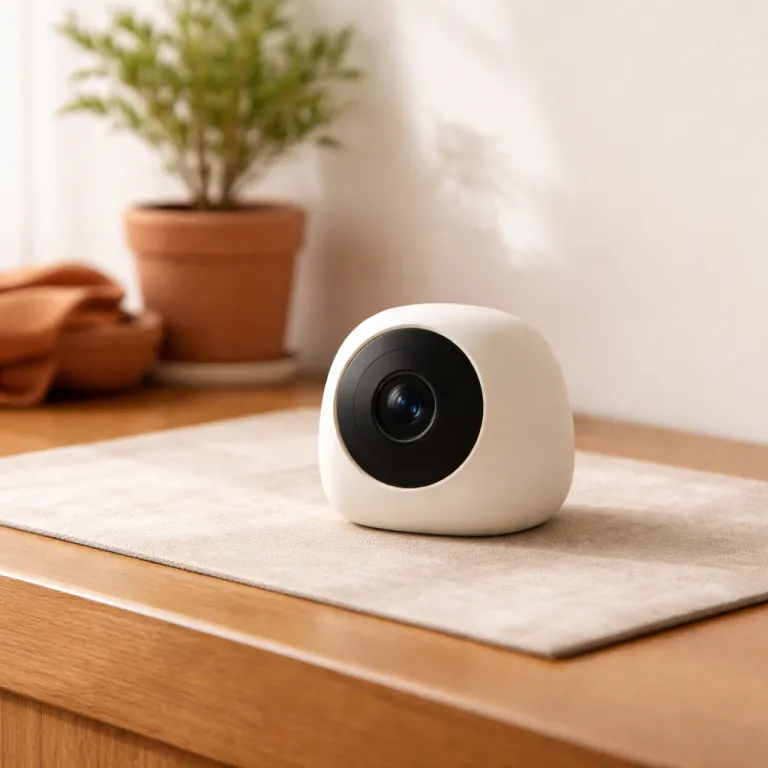

Apple home security camera rumors and what is actually known
Apple’s long-rumored home security camera is shaping up as more than just another smart cam for the living room. Early reporting suggests a tightly integrated Apple home security device designed to work as a core sensor in an Apple-centric smart home, with deep ties to Apple HomeKit, the Home app, and iCloud-based HomeKit Secure Video. For homeowners who already treat an iPhone or iPhone Pro as the main remote control for every smart home accessory, this potential Apple home security camera could finally close the loop between phone, speaker, hub, and video surveillance.
In an April 2024 report, MacRumors journalist Joe Rossignol described an Apple-designed home security sensor that combines a wireless power source, facial recognition, infrared motion detection, and fire alarm audio analysis, positioning it as the heart of an Apple home monitoring system rather than a standalone gadget. Apple’s existing HomeKit Secure Video documentation indicates that supported cameras record high resolution video, process faces and audio locally on device, and then upload only encrypted clips to iCloud, with that secure video storage not counting against your normal iCloud quota. Industry analysts expect any first party Apple camera to follow the same pattern, likely offering at least 1080p or 2K resolution, a wide field of view in the 120–160 degree range, and battery life measured in weeks rather than days, which would directly challenge subscription heavy rivals like Ring and Arlo.
The confirmed elements are still narrow but significant, because they point to how the camera will actually behave in a real home rather than just on a spec sheet. Based on the MacRumors reporting and Apple’s own HomeKit Secure Video requirements, Apple is reportedly planning on battery powered hardware that prioritizes on device processing, end to end encryption, and tight integration with the Apple Home app over raw 4K video resolution or extreme night vision range. What remains speculation are the launch date, the exact camera resolution, the final field of view, and the price, though many observers expect a premium price point similar to higher end Nest Cam and Eufy Cam models and a launch window no earlier than late 2024. Until Apple confirms those details, any claim that this will be the best security camera for every home is still marketing guesswork rather than fact.
For now, the most concrete story is about ecosystem and privacy rather than headline specs. Apple already treats the Apple Home app on iOS as the central dashboard for every HomeKit Secure Video camera, every Eve Outdoor floodlight cam, every Eufy outdoor camera that supports HomeKit, and every compatible video doorbell, so adding a first party Apple cam would give the company end to end control over hardware, software, and cloud services. That level of vertical control is exactly what lets Apple tune audio detection, motion sensitivity, and power source management so that a security camera can run longer on battery, wake faster, and stream more reliable video to your iPhone without the Wi Fi handoff drops that still plague some Nest Cam and Eufy Cam models.
Privacy first design and how it pressures Nest, Ring, Arlo and Eufy
The most disruptive part of any Apple home security camera will not be its lens or its megapixels, but the way it handles your data and video footage. Apple already requires that HomeKit Secure Video cameras process people, pet, and vehicle detection on device, and that encrypted clips are stored in iCloud with end to end encryption, which sharply contrasts with Ring’s history of law enforcement partnerships and Arlo’s reliance on cloud side analysis for some advanced alerts. If Apple ships a battery powered indoor or outdoor cam that treats every frame of video and every fragment of audio as private by default, then other security cameras will face immediate pressure to match that standard or risk looking dated and intrusive.
Consider how this plays out for Nest Cam by Google, which remains one of the best options for image quality and smart alerts but still leans heavily on cloud processing and a Nest Aware subscription for full event history. If you already own a Nest Cam Battery or a wired Nest Cam for your front door, you can reset your Nest Cam for optimal performance and tighten your privacy settings, but you cannot turn it into a HomeKit Secure Video camera that lives inside the Apple Home app with the same level of control that Apple promises for its own hardware. That gap between a tightly integrated Apple home setup and a mixed ecosystem of Nest, Eufy, and Ring devices is exactly where Apple sees an opportunity to sell a camera that feels less like another app and more like a native part of your iPhone and Apple TV.
Brands such as Eufy, which already markets local storage and no fee recording on models like the Eufy SoloCam S340 and the Eufy SoloCam E30 4 cam kit, will probably lean harder on their ability to record to a microSD card or a home base while still offering strong night vision and wide field of view coverage. If Apple refuses to support any local microSD card slot in its own security camera and instead doubles down on encrypted cloud video, then Eufy outdoor camera lines and Eve Outdoor floodlight cams can position themselves as the flexible, power source agnostic alternatives for buyers who want to mix HomeKit Secure Video with purely local recording, and a detailed review of solar powered Eufy SoloCam kits shows how that strategy already appeals to people who hate monthly fees. The net effect is that Apple’s privacy first posture will not kill Nest Cam or Eufy Cam, but it will force every major security camera brand to explain exactly how their cameras work, where video goes, and how much control the homeowner really has.
Should you wait for Apple or buy a Nest Cam or Eufy cam now ?
For someone shopping today, the practical question is simple but urgent, because your home security needs do not pause while Apple finalizes its hardware roadmap. If you already live inside Apple HomeKit with an iPhone, an Apple TV, and maybe an Eve Outdoor sensor on the patio, then waiting for an Apple home security camera could give you the cleanest possible integration, but it also means accepting at least many months with no new coverage over your driveway, hallway, or back garden. In that time, a well placed Nest Cam Battery, an Arlo Pro 5S, or a Ring Stick Up Cam could already be recording high resolution video, sending smart alerts, and giving you a reliable live view of every entrance.
For buyers who want the best balance of privacy, flexibility, and cost right now, a mixed strategy often works better than betting everything on a single future product. You can deploy a Nest Cam by Google or a Blink Outdoor 4 as an outdoor camera to cover the perimeter, then use a HomeKit Secure Video compatible indoor cam from Eufy or Eve as a bridge into the Apple Home app, and a comprehensive guide to resetting your Nest Cam will help you keep those devices stable while you experiment with automations. That way, when Apple finally ships its own security camera, you can add it as a premium front door or living room cam without ripping out the rest of your security cameras or replacing every existing video doorbell.
Whatever you choose, focus less on the marketing term Apple home security camera and more on how each camera, app, and power source fits the way you actually live. Check whether the camera resolution holds up in low bitrate night vision clips, whether the field of view really covers the whole room, and whether the iOS app lets you control notifications, audio sensitivity, and secure video retention without forcing an expensive subscription. In home security, the best setup is not the one with the shiniest cam on the box, but the one that still captures a clear, usable video at three in the morning when the Wi Fi is flaky, the battery is low, and something moves just outside the frame.
References
- MacRumors (Joe Rossignol, April 2024 report on Apple home security sensor and smart home roadmap)
- Apple (HomeKit Secure Video documentation outlining on device analysis and encrypted iCloud storage)
- The Verge (coverage of Apple HomeKit Secure Video, Apple Home app, and broader smart home strategy)
- Wirecutter (comparative reviews of Nest Cam, Eufy Cam, Arlo, and Ring security cameras and subscription plans)