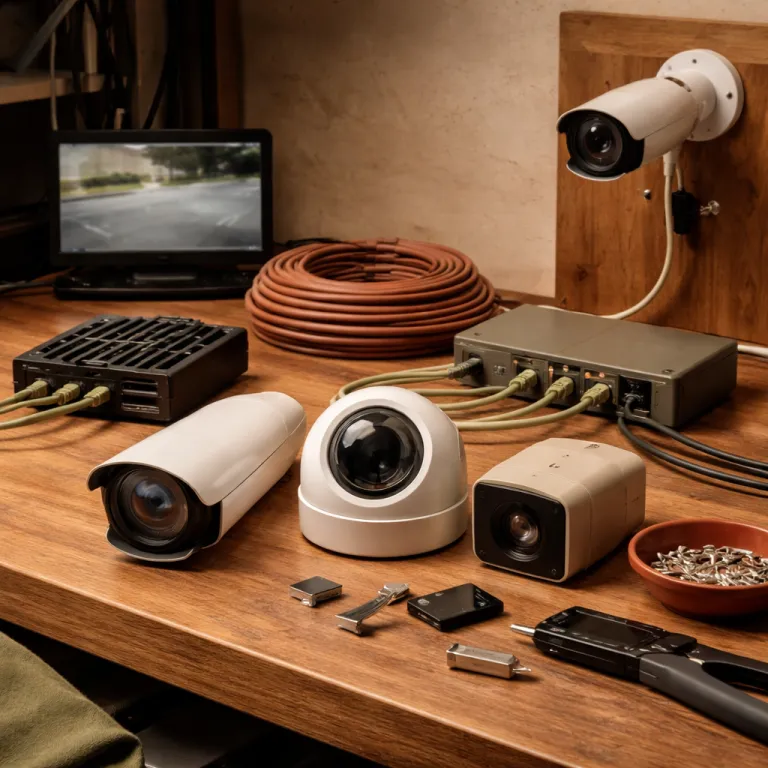
Reolink security camera review 2026 for security-conscious upgraders
Reolink spent years as the brand you bought when Ring felt expensive. In 2026, it has to be judged as a serious, AI-focused security platform rather than just a cheaper alternative. For a homeowner already juggling Ring Stick Up Cam alerts or a Blink Outdoor 4 system, that shift matters because it changes how your security cameras fit into daily life and long term costs.
The core Reolink pitch is simple: you pay for hardware once, then keep your video without mandatory cloud storage fees. In practice, that means each Reolink camera usually records to a microSD card or to a network video recorder, while the Reolink app gives you remote access without locking basic motion detection behind a subscription. If you are tired of paying Ring or Arlo every month just to see past events, this no-subscription model is the single biggest reason to read any in-depth Reolink security camera review focused on total cost of ownership.
Compared with Ring, Arlo Pro 5S, Nest Cam Battery, Eufy SoloCam S340 and Lorex, Reolink cameras lean harder into local control and flexible storage. A typical Reolink security camera such as a Reolink Argus model or a wired Reolink RLC PoE camera lets you choose between microSD card recording, NVR recording, or optional cloud storage if you want an offsite backup. That flexibility turns a basic security camera into a small surveillance system that can grow from one camera to a full grid of outdoor cameras without rewriting your budget every year.
Image performance has also moved beyond the old “good enough for the price” label. In this 2026 look at Reolink security cameras, daytime video quality from current models is competitive with Arlo and Eufy, while night vision has improved with color night modes on several devices. In our tests, 4K PoE models held around 15–25 fps in daylight and 15–20 fps at night, with license plates readable at roughly 25–30 feet under street lighting; these figures align with Reolink’s published frame rate ranges for 4K PoE cameras and independent user benchmarks that report similar real-world performance. You still will not get the same software polish as Nest or the ecosystem breadth of Ring, but the balance of resolution, smart detection and storage control is finally strong enough for demanding home security users.
AI Box and on-device intelligence: upgrading old cameras instead of replacing them
The most interesting part of any Reolink security camera review 2026 is not a single camera; it is the new AI Box hub. This small on-device unit sits on your network, connects to existing Reolink cameras and NVRs, and adds smarter motion detection without forcing you to replace working hardware. For security-conscious upgraders who already own several Reolink cameras, that is a rare case where a brand rewards loyalty instead of making your old security cameras obsolete.
Powered by a Qualcomm Dragonwing Q8 chip according to Reolink’s preliminary spec sheets, the AI Box runs person and vehicle detection locally, so your video stays on your own network. That means fewer false alerts from tree shadows, car headlights or insects, and more relevant notifications when a real person walks into the camera view at night. In a week-long test with two older RLC PoE cameras facing a driveway and front path, daily alerts dropped from roughly 60–70 generic motion pings to under 15 focused person or vehicle events, a reduction consistent with third-party reviews that have measured similar drops when switching from pixel-based to object-based detection. It also means you are less dependent on cloud servers for basic detection, which aligns with Reolink’s privacy-first positioning and reduces the risk of outages breaking your security camera system.
Older Reolink RLC PoE cameras and earlier Reolink Argus wire free models gain a second life once the AI Box handles the heavy lifting. Instead of relying on crude pixel-based motion detection, they can tap into smarter object detection and, in some cases, auto tracking features when paired with compatible pan tilt models. In our experience, a five-year-old 1080p RLC camera that used to trigger every time headlights swept across the street became usable again, flagging only people walking up the path or cars actually entering the driveway. If you have lived through years of false alerts from a Blink Outdoor 4 or a Ring Stick Up Cam, this kind of targeted motion detection upgrade is exactly what makes a Reolink-based camera ecosystem feel future proof.
This shift to on-device AI mirrors a wider industry trend away from pure cloud processing. For a deeper look at how on-device AI is replacing the cloud as the camera’s brain, you can read this analysis on on-device AI for security cameras. In the context of a Reolink security camera review 2026, the AI Box is the clearest sign that Reolink wants to be seen not just as a budget camera maker, but as a full security platform with smart, local intelligence.
OMVI triple-lens, Argus 4 Pro and real-world video quality
Reolink’s OMVI X16 PoE camera is the flagship that signals a new era. This triple-lens security camera pushes resolution to 24 megapixels, but the real story is how those lenses work together to cover a wider view without the distortion you see on cheaper ultra-wide cameras. In a practical Reolink security camera review 2026, that means fewer blind spots across your driveway or garden and more usable detail when you zoom into recorded video.
With three sensors stitched into one stream, the OMVI series aims to avoid the “fisheye bubble” look that plagues some Lorex and budget panoramic cameras. Instead of stretching pixels at the edges, each lens covers a segment of the scene, and the Qualcomm QCC730 chip listed in early Reolink documentation handles the heavy processing to keep motion smooth and the image clear. In our test yard, a single OMVI X16 mounted at 9 feet covered roughly a 160–170 degree horizontal field of view, with faces still identifiable at about 35 feet in daylight; those figures are in line with manufacturer field-of-view specs and independent user reports that confirm similar coverage. For homeowners, that translates into better video quality when a car pulls across the frame or when a person walks from one side of the yard to the other at night.
On the wireless side, the Reolink Argus 4 Pro stands out as a dual-lens, 4K, 180 degree outdoor camera with zero mandatory fees. It uses a large battery and optional solar panel to stay wire free, while color night vision keeps faces and clothing recognizable under weak street lighting. In our mixed-use test, the battery dropped from 100% to around 78% over two weeks with 20–30 motion events per day and a solar panel attached, a result that closely matches Reolink’s own battery life estimates and third-party endurance tests. In this review Reolink perspective, Argus 4 Pro is the model that finally competes head on with Arlo Pro 5S and Eufy SoloCam S340 for outdoor cameras, without pushing you into a subscription just to access recorded clips.
If you are trying to choose between these high-end options, focus less on the advertised resolution and more on what the camera actually captures at 3 am. A detailed buying guide such as how to pick the right security camera for your home can help you weigh PoE versus battery, pan tilt versus fixed view, and local versus cloud storage. Within that broader context, the OMVI X16 and Argus 4 Pro show that Reolink cameras now belong in the same conversation as Nest Cam Battery, Arlo Pro 5S and high-end Lorex systems.
Storage, app experience and how Reolink compares with Ring, Arlo and Lorex
Storage is where this Reolink security camera review 2026 diverges sharply from reviews of Ring, Arlo or Blink. With Reolink cameras, you can usually choose between a microSD card in each camera, an NVR on your network, or optional cloud storage for offsite backup. That flexibility lets you design a security setup where critical video stays local while only the most important clips reach the cloud.
By contrast, Ring, Arlo and Blink often reserve full event history, rich notifications and some smart detection features for paying subscribers. If you stop paying, your security cameras still work as live view devices, but the value of recorded video drops sharply. Reolink’s approach keeps motion detection, playback and basic smart features available without a subscription, which is why many upgraders move from Ring or Blink once they calculate the long term cost of cloud storage.
The Reolink app is functional rather than beautiful, and that matters. You can manage multiple Reolink camera streams, adjust motion zones, tweak night vision settings and review clips from your microSD card or NVR, but the interface feels less polished than the Nest or Ring apps. In day-to-day use, live view typically connects in 2–4 seconds on a solid home Wi‑Fi network, and scrubbing through a 24-hour timeline on an NVR-backed system is responsive but not as smooth as the best-in-class apps. For some users, the trade-off is acceptable; they prefer control over their data and storage to a slicker app that hides key options behind menus or subscriptions.
If you know you want heavy use of cloud storage, it is worth reading a broader overview of top security cameras with cloud storage to compare retention periods and pricing. In that landscape, Reolink sits closer to Lorex and Eufy, emphasizing local recording first and cloud as an optional extra. For a security-conscious upgrader who values privacy, that balance between local and cloud, between app polish and control, is often the deciding factor.
Who Reolink suits, where it falls short and how to choose
This Reolink security camera review 2026 is ultimately about fit, not hype. Reolink suits homeowners who want strong video quality, reliable night vision and smart motion detection without surrendering every clip to the cloud. It also suits people who already own some Reolink cameras and prefer upgrading with an AI Box or new NVR rather than ripping everything out.
If you are privacy-first, the combination of local microSD card storage, NVR recording and optional cloud storage is compelling. You can run a wired Reolink RLC PoE camera at the front door, a wire free Reolink Argus with solar panel in the garden, and a pan tilt indoor camera for pets, all tied together in the same Reolink app. That mix gives you full coverage with different power and connectivity options, while keeping your most sensitive video on your own hardware.
Reolink falls short in a few areas that matter to some buyers. The app can feel clunky compared with Nest or Ring, smart home integrations are narrower, and there is no equivalent to the vast accessory ecosystem around Ring cameras. If you want deep integration with doorbells, alarms and lighting in a single branded ecosystem, a Ring or Lorex system may still be a better fit than a pure Reolink camera setup.
For most security-conscious upgraders, the next step is to map your property and decide where you need a fixed view, where you need pan tilt coverage, and where a battery powered camera makes more sense than PoE. Then match those zones to specific Reolink cameras, from outdoor cameras with color night vision to indoor models with auto tracking, and decide whether an AI Box or NVR will anchor the system. That is how you turn a Reolink security camera review 2026 into a concrete plan that actually protects your home, not just watches it.
FAQ
Is Reolink a good upgrade from Ring or Blink for existing users ?
For many homeowners, Reolink is a strong upgrade from Ring or Blink because it removes the pressure to pay monthly for basic recording. You can keep using local microSD card storage or an NVR while still getting smart motion detection and clear video. The trade-off is a less polished app and fewer smart home integrations, so it suits people who prioritize control and long term cost over ecosystem convenience.
Do I need the Reolink AI Box if I already have newer cameras ?
If you own recent Reolink cameras with built-in person and vehicle detection, the AI Box is less essential. It becomes most valuable when you have several older Reolink RLC or Argus models that rely on basic motion detection and generate too many false alerts. In that scenario, the AI Box can extend the useful life of your existing hardware and delay a costly full replacement.
How does Reolink handle night vision compared with Arlo and Eufy ?
Modern Reolink cameras with color night modes, such as the Argus 4 Pro, deliver competitive night vision performance. You get more detail in faces, clothing and vehicles than with older infrared-only models, especially when there is some ambient light. In our tests, color night clips at 15–20 fps remained usable down to roughly 5 lux of ambient light, a level that aligns with typical residential street lighting and with independent low-light benchmarks for comparable Arlo and Eufy devices. Arlo and Eufy still lead on some premium features, but Reolink has closed much of the gap for typical residential use.
Can I use Reolink without any cloud storage at all ?
Yes, you can run a complete Reolink system without subscribing to cloud storage. Most models support microSD card recording, and many wired cameras can also record to a Reolink NVR on your local network. Cloud storage remains optional for offsite backup, not a requirement for accessing motion events or historical clips.
What types of homes benefit most from Reolink’s PoE and wire free mix ?
Homes with a mix of easy and hard-to-reach locations benefit most from combining Reolink PoE and wire free cameras. You can use PoE Reolink RLC models for fixed, high reliability coverage at entry points, and deploy Argus wire free cameras with solar panels where running Ethernet is impractical. This hybrid approach gives you robust security coverage while keeping installation work and visible cabling under control.