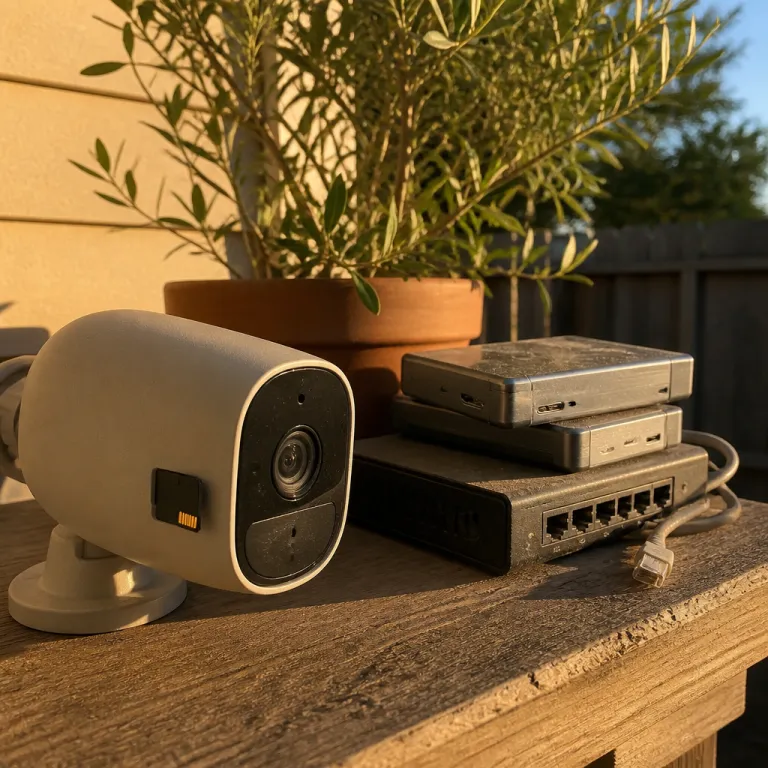
Why edge AI security cameras are breaking the subscription habit
The shift to an edge AI security camera that is subscription free is not a marketing slogan; it is a structural change in how home surveillance works. When a security camera can run person and vehicle detection directly on its own processor, the main historical reason for paying for cloud analysis quietly disappears, and with it the old promise that smarter alerts always required a permanent internet connection. For homeowners who already own several security cameras and feel trapped by monthly fees, this change will feel less like a minor upgrade and more like finally owning the product they thought they had bought in the first place.
For a decade, the economics of every mainstream camera pushed you toward the cloud, because vendors could sell cheaper hardware and then bill you forever for cloud storage, AI motion detection, and so‑called smart alerts. Ring, Arlo, and Blink built their business models on this pattern, where the real product was not the cameras security buyers installed on their walls but the recurring subscription that unlocked basic video history and person alerts people actually needed. That is why a Ring Stick Up Cam or Blink Outdoor 4 often feels half finished without a paid subscription, even though the camera hardware, the battery, and the night vision LEDs are already sitting in your home.
Edge AI flips that logic by putting the neural network directly on the camera, so motion detection, person detection, and even pet or vehicle classification run locally without sending raw video to any cloud. A modern edge AI security camera that is subscription free typically uses a system‑on‑chip from Qualcomm’s QCS series or MediaTek’s Genio line that can process frames in real time, then only store video clips that matter on a microSD card or a home hub. The result is fewer useless alerts, less bandwidth, and a very different conversation about data security, because your footage no longer has to live in a distant data center just to tell a tree from a person.
Look at how this plays out in real products you can actually buy, rather than in vague promises about artificial intelligence. Eufy’s SoloCam and eufyCam lines, Reolink’s 4K PoE cameras, and TP‑Link’s Tapo C420 and C460 all run person and vehicle detection on device, then let you store video locally without any mandatory cloud storage plan. When you compare that to a Nest Cam Battery or Arlo Pro 5S, where the best smart alerts and extended history still sit behind a subscription, you start to see why independent analyst roundups now estimate that roughly four out of five new cameras launched recently are marketed as subscription free by default, based on aggregated product listings from major retailers and vendor launch announcements.
This is not only about saving a few euros each month, although that matters when you have five or six cameras. It is about control over your own security footage, because an edge AI security camera that is subscription free keeps more of your data inside your home network, on your own card or network video recorder. For a security‑conscious upgrader who has already lived through false alert fatigue and the pain of losing recordings when a subscription lapses, that control is worth more than another cloud feature checkbox.
How cloud economics created the subscription trap
To understand why edge AI matters, you first need to see how the old cloud model for every security camera backed you into a corner. When Ring, Arlo, and Google Nest launched their early cameras, running AI in the cloud was cheaper for them than putting powerful chips into every unit, and the subscription revenue paid for both the servers and the constant training of their detection models. The result was a generation of security cameras that looked affordable on Amazon but quietly required a monthly fee to feel complete.
Cloud storage was the lever that made this work, because once your video lived on someone else’s servers, it was easy to bundle motion detection, smart alerts, and extended history into a single subscription tier. A Ring Stick Up Cam or Arlo Pro 5S without cloud storage can still show live video, but the moment you want to store video for more than a few hours, you are pushed toward Ring Protect or Arlo Secure with carefully written terms and conditions that keep the free tier intentionally limited. That is why so many people only realise the true cost of their cameras security setup after the return window has closed and the first renewal email arrives.
Cloud‑based AI also created a data security trade‑off that many buyers never fully understood, because every motion event meant sending video clips to remote servers for analysis. Those clips were valuable training data for the companies, helping them refine person detection and reduce false alerts, but they also expanded the surface area for potential breaches or misuse. When you rely entirely on free cloud trials that later convert into paid plans, you are effectively paying with both your money and your privacy for the privilege of getting fewer false alerts people do not want.
Edge AI changes that balance by letting the camera itself decide what matters before anything touches the internet, which is why brands like Eufy and Reolink can credibly argue that a subscription is unnecessary for core features. If you are comparing whether a subscription is necessary for Eufy security cameras, you will quickly see that their battery‑powered models with local hubs already provide person detection, motion detection, and event‑based recording without any recurring fee. That does not mean cloud storage disappears entirely, but it becomes optional insurance rather than the only way to make your security camera useful.
There is still a place for the cloud in home security, especially for people who travel often or want offsite backups in case a burglar steals both the camera and the card. However, the key shift is that an edge AI security camera that is subscription free can now offer most of the intelligence locally, then use the cloud only to sync critical clips or share access with family members. For a buyer who has already paid for several cameras, a decent router, and maybe a floodlight, the idea of paying again every month just to keep using motion detection feels increasingly outdated.
Winners and losers in the new subscription free camera landscape
Once you accept that edge AI makes a subscription optional for most people, the winners and losers in the camera market come into sharp focus. Brands that built their identity around local storage and on‑device intelligence, such as Reolink, Eufy, and TP‑Link’s Tapo line, suddenly look prescient rather than niche. Their pitch has always been simple: buy the product once, store video on your own hardware, and keep your ongoing costs close to zero.
Reolink’s PoE cameras and NVR kits are a good example, because they treat cloud storage as a bonus rather than a requirement, and their newer models add person and vehicle detection directly on the camera. Eufy’s eufyCam S3 Pro pushes this further with on‑device AI that recognises people, vehicles, and pets, then stores encrypted clips on a home base instead of any remote cloud, which aligns perfectly with the idea of an edge AI security camera that is subscription free. TP‑Link’s Tapo C460 shows how far this can go at the budget end, offering on‑device detection and colour night vision at a price that undercuts many cloud‑dependent rivals.
On the other side, incumbents like Ring and Arlo now have to justify why their subscriptions still matter when competitors offer similar detection for free, and that is reshaping their roadmaps. Arlo’s newer Pro 6 and Ultra 3 models include some AI features without a subscription, but the company still reserves advanced analytics and extended cloud storage for Arlo Secure, signalling a hybrid strategy where the free tier keeps you in the ecosystem while the paid tier chases higher margins. Ring is leaning into professional monitoring, insurance partnerships, and deeper integration with Amazon Alexa to defend Ring Protect, effectively saying that the subscription buys you a service layer rather than just better motion detection.
For consumers, this means the best value now comes from brands whose default is subscription free ownership, with optional cloud add‑ons that you can ignore without crippling the camera. When four out of five new cameras skip the subscription, as recent industry analysis and retailer assortment data have shown, the ownership model is clearly winning, and you should treat any mandatory plan as a red flag rather than a normal cost of doing business. If you want a deeper dive into how this shift is playing out across dozens of models, a detailed look at how four out of five new cameras skip the subscription can help you benchmark your options.
There are still edge cases where a subscription makes sense, such as small businesses that need 60 days of cloud history or homeowners who want centralised monitoring with guaranteed response times. However, for the typical household with three to six security cameras covering outdoor security zones, a mix of local storage, edge AI detection, and selective free cloud backups will usually be enough. The key is to choose hardware that treats the subscription as optional frosting, not as the only way to get decent video quality, reliable alerts, and usable night vision.
How to buy an edge AI security camera that is truly subscription free
When you start shopping for an edge AI security camera that is subscription free, ignore the glossy marketing and go straight to the spec sheet and the app screenshots. You are looking for three concrete things: on‑device person or vehicle detection, local storage via microSD card or hub, and a clear statement that core features remain available without any paid plan. If a brand cannot answer those points in plain language, assume that the free tier is a teaser and that the real experience lives behind a paywall.
Begin with the basics of the camera hardware, because no amount of AI can fix a weak lens or a noisy sensor, and remember that what matters is not the advertised 1080p but what it actually captures at 3 a.m. Check the video quality at both day and night, paying close attention to how the camera handles backlit scenes, headlights, and mixed lighting, since these are the conditions that often break cheaper CMOS sensors. For outdoor security, prioritise models with good night vision or colour night capabilities, weather sealing, and either a reliable battery or wired power so that the camera does not die just when you need it.
Next, evaluate how the camera handles motion detection and smart alerts, because this is where edge AI should shine compared with older cloud‑dependent designs. A well‑implemented edge AI system will let you filter alerts by type, so you can choose to be notified only for humans or vehicles while ignoring pets, insects, and tree shadows, which dramatically reduces false alarms. Look for clear controls in the app, including activity zones, sensitivity sliders, and schedules that let you tune alerts differently for night and day without digging through obscure menus.
Power and connectivity matter just as much as AI, especially if you are replacing older battery‑powered cameras that struggled with Wi‑Fi drops or short runtimes. A wired PoE camera will always be more stable than a battery model, but if you need flexibility, choose a battery‑powered unit with at least three months of realistic runtime and support for both 2.4 GHz and 5 GHz networks to reduce hand‑off issues. If you are debating whether to use a combined floodlight camera or a separate floodlight plus a camera, a detailed comparison of floodlight cameras versus a separate floodlight plus a camera can help you decide which setup actually wins for your driveway or garden.
Finally, read the terms and conditions carefully to see what happens to your recordings and AI features if you never pay a cent beyond the purchase price. A genuinely subscription free design will keep motion detection, person alerts, and local storage fully functional forever, while treating any cloud storage or advanced analytics as optional extras you can add later if your needs change. In practice, that means you should be able to buy a camera, pair it with Alexa, Google Assistant, or Amazon Alexa for voice control, store video on your own card or hub, and walk away knowing that your security does not depend on a monthly charge quietly hitting your bank account.
Key statistics shaping the future of subscription free edge AI cameras
- Industry analysts report that four out of five new consumer security cameras launched recently are marketed as subscription free by default, based on product listings and launch announcements, indicating a rapid shift away from mandatory cloud plans toward ownership‑based models. This figure is drawn from aggregated data in recent smart home hardware market overviews and retailer assortment studies.
- Market research on smart home devices shows that brands focused on local storage and edge AI, such as Reolink, Eufy, and TP‑Link’s Tapo, have grown their combined market share by several percentage points over the last two product cycles, largely at the expense of cloud‑first incumbents. These shifts are documented in quarterly vendor share trackers that segment the home security camera category.
- Surveys of security camera owners consistently find that more than half of users with three or more cameras cancel or downgrade at least one subscription within the first two years, citing cumulative cost and limited added value as the main reasons. This pattern appears across multiple consumer sentiment studies run by smart home research firms and privacy‑focused nonprofits.
- Independent testing of modern edge AI cameras has measured reductions of up to 80% in false motion alerts when on‑device person and vehicle detection is enabled, compared with simple pixel‑based motion detection used in older models. These results come from lab comparisons that log alert counts over fixed test scenes with controlled lighting and repeatable motion paths.
- Consumer privacy studies show that a significant majority of respondents prefer to store video locally on a card, hub, or network recorder rather than in the cloud, especially for indoor cameras, which aligns directly with the rise of the edge AI security camera that is subscription free. This preference is reported in annual privacy barometer surveys that track attitudes toward connected devices and data retention.