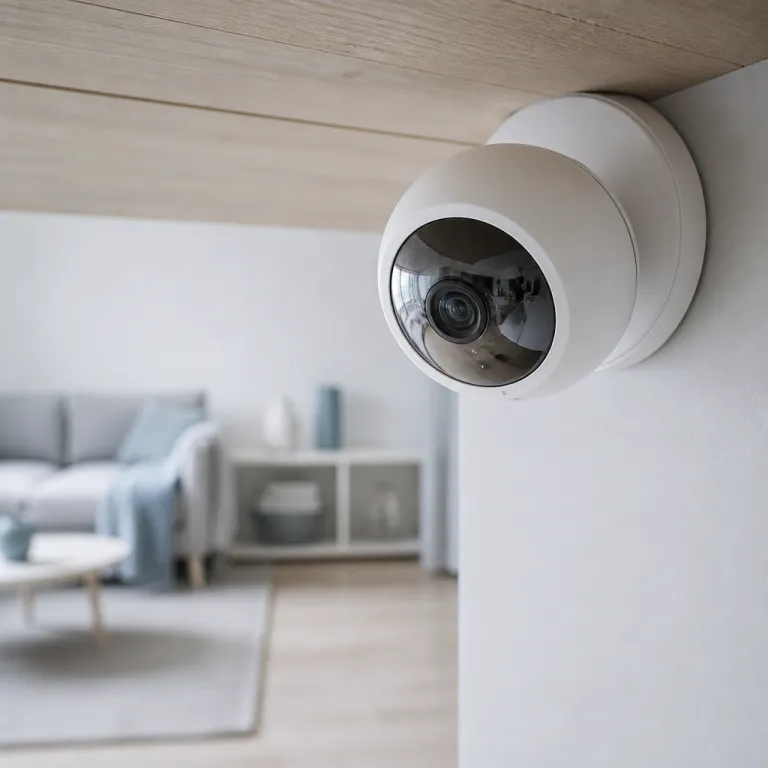

Round facing security cameras for 360° home monitoring
What a round facing security camera really sees
A round facing security camera with a panoramic or fisheye design gives you a continuous circular view. By using a wide angle lens and often a 360 degree sensor, these cameras reduce blind spots that traditional fixed cameras leave behind. In a small flat or a large open plan living room, one such omnidirectional security camera can sometimes replace several separate cameras.
Most 360° home cameras rely on a fisheye lens that bends light to capture an ultra wide field view. The raw video then passes through onboard processing that dewarps the image, so the surveillance footage looks natural in the app and on your monitoring screen. When you compare these panoramic cameras with classic bullet cameras or dome cameras, the difference in coverage and flexibility becomes immediately obvious.
Because the camera sees so much of the room, motion detection becomes more reliable and easier to tune. You can define zones in the app so that the system will alert you only when motion appears close to doors, windows, or a child’s play area. This approach keeps your security notifications meaningful instead of overwhelming you with constant alerts from every small movement.
Pan tilt, 360° and the role of cameras PTZ
Round facing models that support pan tilt functions behave like compact cameras PTZ for the home. Instead of relying only on a static lens, the camera head can rotate horizontally and vertically to track motion across the room. When combined with a 360 degree sensor, this pan tilt movement allows the camera system to follow a person from one side of the field view to the other.
In practice, these cameras PTZ use motors that draw low power yet move smoothly enough to avoid jerky video. A well designed camera system will let you set patrol routes, so the security camera automatically scans key areas even when no motion detection event is active. For readers comparing options, a dedicated PTZ dome with optical zoom is better for large gardens, while a compact indoor panoramic model such as a 4 MP Wi Fi PTZ rated for 3x optical zoom and around 30 metres of night vision excels at flexible room surveillance.
Outdoor cameras PTZ often come in weatherproof dome housings that protect the lens and internal motors. When you look at professional installation offers, you will see PTZ dome cameras and bullet cameras specified together to build layered video surveillance around a property. One detailed test of a 5 MP PTZ model with colour night vision and human or vehicle tracking is available as a 5 MP PTZ security camera review, which illustrates how such cameras perform in real outdoor conditions.
Dome, bullet and round facing cameras in the same system
Homeowners rarely rely on a single type of camera when building serious cameras security coverage. A balanced camera system might combine a round facing indoor security camera with outdoor bullet cameras and vandal resistant dome cameras over entrances. This mix lets you use each camera design where its strengths matter most for security.
Bullet cameras offer a very visible deterrent, projecting a clear message that video surveillance is active around the property. Dome cameras, especially compact indoor domes, blend more discreetly into ceilings while still providing a wide view and strong night vision. A round facing ceiling mounted camera can then sit at the centre of the home, tying these other cameras into one coherent surveillance system.
When you shop online, you will often see complete camera systems that bundle a recorder, several bullet cameras, and a few dome cameras in one cart. Many readers then add a separate panoramic Wi Fi security camera to cover a living room or hallway and effectively add one more flexible device to the package. Over time, this layered approach gives you overlapping fields of view, better motion detection coverage, and more resilient home security overall.
Image quality, night vision and advanced analytics
The value of any security camera round facing design depends heavily on image quality and low light performance. A high resolution sensor paired with a sharp lens will capture more detail across the entire circular view, which matters when you later zoom into recorded video. In dim corridors or basements, strong infrared night vision ensures that the camera still records usable surveillance footage.
Modern security cameras also integrate analytics such as face recognition and license plate reading, although these features work best on cameras with a narrower field view. A round facing camera can still support basic face recognition at close range, but you should not expect reliable license plate capture from a ceiling mounted fisheye in a driveway. For that task, dedicated cameras bullet with a tighter lens and carefully aligned installation angles remain the more effective choice.
On the software side, motion detection has become far more intelligent than simple pixel change alerts. Many camera systems now distinguish between people, pets, and vehicles, which reduces false alarms and makes customer reviews noticeably more positive. One detailed test of a 1080p outdoor PTZ dome with night vision and motion detection is presented as a wireless PTZ dome camera review, showing how analytics and optics combine in a real product.
Power, connectivity and video storage choices
Behind every elegant round facing camera sits a practical question about power and connectivity. Some security cameras use Power over Ethernet, which sends both data and power through a single cable to simplify installation and improve reliability. Others rely on Wi Fi and a separate power adapter, which offers flexible placement but demands a strong wireless signal for stable video.
When planning your camera system, think about how video storage will work across all cameras. Network video recorders can handle multiple cameras security streams, while some round facing models also record to local microSD cards as a backup. Cloud storage services add another layer, letting you access surveillance footage from anywhere but introducing ongoing subscription costs that you should weigh against your budget.
Before you add any new security camera to your cart, read customer reviews that mention the app experience, firmware updates, and how well the system will integrate with existing cameras. If you plan to combine indoor cameras, outdoor bullet cameras, and a central round facing model, verify that one platform can manage all video surveillance feeds without constant switching.
From DIY installation to professional integration
Round facing cameras marketed for home use often promise simple DIY installation with adhesive mounts or a few screws. For a single indoor camera, this approach works well, especially when the app guides you through Wi Fi setup and basic motion detection zones. The challenge grows when you expand to several cameras, a recorder, and more advanced analytics such as face recognition across the whole property.
At that stage, professional installation can turn a collection of devices into a coherent security system. Installers know how to position bullet cameras for license plate capture, how to angle dome cameras to avoid glare, and where a central round facing camera will best oversee shared spaces. They also plan cable routes, power distribution, and network capacity so that your video surveillance remains stable during peak usage.
Security specialists often recommend pairing indoor cameras with smart door and window sensors, which is explored in depth in this guide on how smart alarms complement indoor security cameras. When you combine these elements, your cameras security setup can trigger recordings when a door opens, not only when motion appears in the field view. Over time, this integrated approach gives you clearer incident timelines, stronger evidence for insurance, and a more reassuring sense of control over your home.
Key figures on 360° and pan tilt home cameras
- Market analysts from Omdia reported that panoramic and PTZ cameras represented roughly 10 % of all network security cameras shipped worldwide in recent years, showing how 360 degree and pan tilt designs have moved from niche to mainstream (see Omdia’s network security camera market overview).
- Tests by independent labs and vendor case studies have found that a single 360 degree round facing camera can replace between three and four fixed cameras in an open plan office, which translates into lower installation labour and cabling costs for similar coverage (as documented in several multi camera deployment case studies).
- In consumer surveys conducted by major camera brands, more than half of respondents rated mobile app quality and reliability as equally important to lens resolution, underlining how software now shapes perceived security as much as hardware.
- Energy measurements published in product datasheets on typical indoor Wi Fi cameras show average power consumption between 3 and 7 watts, meaning that continuous video surveillance from several cameras adds only a modest amount to a household electricity bill.
- Field tests on night vision performance from well known brands indicate that many mid range indoor cameras maintain recognisable facial detail up to around 7 metres in complete darkness, while specialised outdoor bullet cameras can extend that range beyond 25 metres.
FAQ about round facing home security cameras
How does a round facing security camera differ from a standard camera ?
A round facing security camera uses a fisheye or ultra wide lens to capture a 360 degree or near panoramic view from a single mounting point. Standard cameras, including many bullet cameras and dome cameras, usually cover a narrower field view and may leave blind spots. With a round facing design, one camera can often monitor an entire room that would otherwise need several fixed cameras.
Can a 360° camera replace all other cameras in my home ?
A 360 degree camera can replace several indoor cameras in open spaces, but it rarely replaces every camera in a full home security system. You still benefit from dedicated bullet cameras for driveways, license plate capture, and long range night vision outdoors. Many homeowners combine one or two round facing indoor cameras with targeted outdoor cameras security devices for complete coverage.
Is motion detection reliable on round facing cameras ?
Motion detection on round facing cameras has improved significantly thanks to smarter software and zone based settings. You can usually define areas in the app so that the system will alert you only when motion appears near doors, windows, or corridors. This makes alerts from a 360 degree camera more focused and reduces false alarms from background movement in the wider view.
How should I store video from multiple 360° and PTZ cameras ?
For several cameras, a network video recorder or a robust cloud service offers more reliable video storage than relying only on microSD cards. Many camera systems let you mix local recording on the recorder with limited cloud clips for key events. When planning storage, consider resolution, frame rate, and how many days of continuous surveillance you want to keep.
Do I need professional installation for a round facing camera ?
Most indoor round facing cameras are designed for DIY installation and can be mounted with basic tools. Professional installation becomes more valuable when you integrate multiple cameras, run Ethernet cables, or need precise alignment for tasks such as license plate capture. An installer can also optimise power, network capacity, and camera placement so that your overall security system performs reliably.