
Why the right battery for a house alarm system matters
A reliable battery for a house alarm system is the quiet backbone of every modern security installation. When mains power fails, the alarm battery keeps your security alarm, cameras, and access control devices running long enough to protect people and property, so choosing the right battery and understanding its maintenance is not optional. A weak or mismatched backup battery compatible with your alarm system can silently shorten runtime, trigger nuisance alerts, and leave your home exposed during the very outage when you expect full protection.
Most wired alarm systems and networked home security cameras rely on sealed lead acid, often called SLA, batteries for standby power. These compact units use SLA AGM technology, which means the acid electrolyte is absorbed in glass mat separators, making the battery maintenance free and resistant to spills while still delivering enough current to support sirens, sensors, and a connected security system. When you read the technical details on the label of an original alarm battery, you will usually see its voltage, ampere hour capacity, and whether it is an SLA AGM or another chemistry, and each of these values directly affects backup duration and replacement intervals.
Brands such as AJC and ADT Security specify exact models and capacities, and using an AJC battery or another replacement battery that is not fully compatible with those specifications can void warranties or reduce performance. AJC battery ranges often include SLA AGM units designed as a direct replacement alarm power source for many panels, while compatible ADT options are clearly listed by model so you can quickly view which battery compatible units are in stock. Before you compare price or search for a free shipping offer, read the installation manual of your ADT alarm or other alarm systems to confirm the correct battery type, because a cheap but incorrect unit can cost far more in damage, downtime, or troubleshooting time.
Comparing SLA AGM, gel, and lithium options for alarm backup
When you evaluate a battery for a house alarm system, you will encounter three main chemistries, each with distinct strengths and weaknesses. Traditional sealed lead acid batteries, including SLA AGM models, remain the most common choice for security alarm panels because they balance price, reliability, and compatibility with existing chargers. Gel and lithium batteries offer longer life and lighter weight, but they demand careful attention to charger settings, current limits, and whether the alarm system is designed to support them safely.
SLA AGM technology uses a fiberglass mat to hold the acid, which allows the battery to be sealed and maintenance free while still delivering high surge current for sirens and wireless hubs. This design is ideal for indoor alarm systems, access control locks, and small gate operators such as Mighty Mule or Mule GTO units that specify an SLA AGM replacement battery in their documentation. When you read the fine details, you will see that many AJC battery products are explicitly marketed as SLA AGM replacement alarm batteries, making them battery compatible with a wide range of ADT alarm and other branded panels.
Lithium iron phosphate batteries can last more cycles and tolerate deeper discharges, but they often cost several times the price of a comparable SLA AGM battery and may not be compatible with older ADT Security or Solex alarm chargers. If your security system includes outdoor cameras powered by solar panels, pairing a lithium pack with a dedicated solar charge controller can extend runtime, yet the alarm battery inside the indoor panel will usually remain SLA based for safety and regulatory reasons. For readers exploring solar accessories, a detailed guide on enhancing home security with solar panel extension cables explains how panel placement and cable length affect charging current and long term battery health.
How brands like ADT, AJC, and Mighty Mule handle alarm batteries
Major security brands treat the battery for a house alarm system as a critical component, not an afterthought, and their documentation reflects that priority. ADT Security, for example, publishes clear tables listing the exact alarm battery model, voltage, and ampere hour rating required for each ADT alarm panel, and many of these units are sealed lead acid AGM technology designed to be maintenance free. When you order a replacement battery, the company often recommends original parts, but it also acknowledges that third party battery compatible models from reputable suppliers can meet the same electrical and safety standards.
AJC battery lines are widely used as cross referenced replacements, and their catalog includes many SLA AGM units that match the dimensions and current ratings of original ADT Security and Solex alarm batteries. A typical AJC battery product page will show full technical details, including acid type, capacity, and whether the unit is suitable as a replacement alarm power source for specific security systems or gate operators such as Mighty Mule and Mule GTO. Before you buy, read the compatibility chart carefully, because even a small difference in size or terminal style can prevent the replacement battery from fitting inside a tight alarm system enclosure.
Gate and fence brands like Mighty Mule and Mule GTO rely heavily on robust SLA AGM batteries because their motors draw high current bursts whenever the gate moves. These systems often share design principles with indoor security alarm panels, yet they face harsher outdoor conditions, so a maintenance free sealed lead acid battery with the right temperature rating is essential. If your cameras or Wi Fi bridges share power with such devices, a detailed guide on understanding the importance of a camera adapter for home security can help you separate low voltage camera circuits from heavy gate motors to protect both the alarm battery and the sensitive electronics.
Reading specifications, prices, and stock levels like a professional
Choosing the right battery for a house alarm system starts with learning how to read the label and the online product page with a critical eye. Every alarm battery listing should show voltage, ampere hour capacity, chemistry such as SLA AGM, and whether the unit is explicitly battery compatible with your alarm system brand and model. If a seller hides these details or only highlights a low price and free shipping, treat that as a warning sign rather than a bargain.
On reputable sites, you can usually view a full table of specifications, including maximum discharge current, operating temperature range, and expected service life in years or cycles. These numbers matter because a security alarm panel that drives loud sirens and multiple wired sensors needs a battery that can deliver high current without excessive voltage drop, while a small access control keypad may prioritize long float life over peak output. When you compare an original ADT Security battery with an AJC battery replacement, look beyond the headline price and read the fine print on acid type, AGM technology, and maintenance free claims to ensure the replacement battery truly matches the original performance.
Stock information also deserves attention, especially if your alarm systems protect a remote property where shipping delays could leave you unprotected. Keeping one spare replacement alarm battery in stock at home is a practical strategy, particularly for critical devices such as a Solex alarm panel, a GTO alarm gate controller, or a Mighty Mule driveway gate that secures a main entrance. For more nuanced power planning, including how Wi Fi coverage and camera load affect runtime, a technical article on dead zones, dropped feeds, and the Wi Fi fixes that keep cameras online offers a useful view of how network reliability and power reserves intersect in real security systems.
Maintenance, testing, and safe replacement practices
Even a high quality battery for a house alarm system will degrade over time, so proactive maintenance and testing are essential for dependable security. Most manufacturers recommend checking the alarm battery at least once a year, either through the alarm system diagnostics menu or with an external meter that measures voltage and, ideally, internal resistance. If your panel reports frequent low battery warnings, or if the siren sounds weak during tests, treat that as a signal to plan a replacement battery rather than waiting for a total failure during a power cut.
Because SLA AGM batteries are marketed as maintenance free, many homeowners assume they can be ignored until they fail, yet temperature, charging voltage, and discharge depth all influence lifespan. A security system installed in a hot loft or uninsulated garage will stress the acid chemistry more than one in a climate controlled hallway, so the same AJC battery might last fewer years in one location than another even with identical usage. When you schedule a replacement alarm procedure, power down the alarm system according to the manual, disconnect mains power first, then remove the old alarm battery, and finally connect the new battery compatible unit while observing correct polarity and terminal tightness.
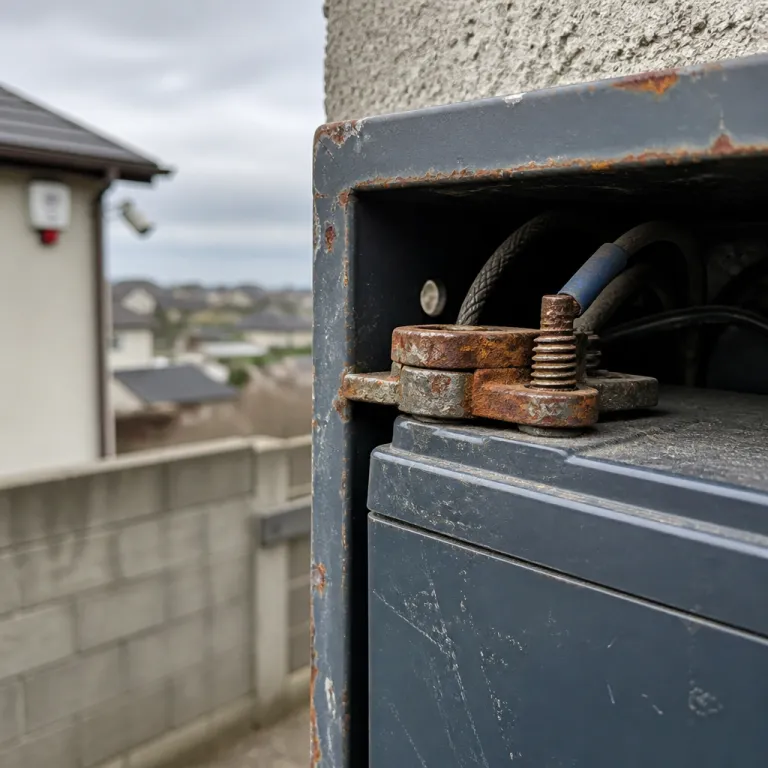
Gate controllers such as GTO alarm boards in Mule GTO or Mighty Mule systems often sit outdoors, so their SLA AGM batteries deserve even closer inspection for corrosion, swelling, or cracked cases. If you read any sign of acid leakage or deformation, replace the unit immediately and clean the compartment before installing a new maintenance free battery to prevent future damage. Keeping a simple log with installation dates, test results, and price paid for each replacement battery will give you a clear view of real world lifespan and help you budget for future upgrades across all your alarm systems and access control devices.
Integrating alarm batteries with cameras, solar panels, and smart access control
As homes add more connected devices, the battery for a house alarm system increasingly shares duties with cameras, smart locks, and network equipment. A central security system may power wired cameras, Wi Fi bridges, and access control readers, so the alarm battery must support not only sirens but also continuous low current loads that keep these devices online. When you design such a setup, calculate the total current draw of all components and choose an SLA AGM or equivalent battery with enough capacity to maintain full operation for several hours of outage.
Solar panels are becoming common companions for outdoor cameras and gate operators, yet they do not eliminate the need for a robust maintenance free backup battery. In a typical Mighty Mule or Mule GTO gate installation, a dedicated SLA AGM battery stores solar energy and then powers the motor and any connected GTO alarm or access control modules, while the indoor security alarm panel relies on its own sealed lead acid unit. To avoid overloading either system, keep the camera power circuits separate and use a properly rated adapter, as explained in depth in guides about camera power management and adapter selection for home security.
When you integrate ADT Security panels, AJC battery replacements, and third party cameras, always confirm that each device has a clearly defined power source and that no single alarm battery is asked to support more current than its specifications allow. Some Solex alarm and ADT alarm models offer programmable outputs that can trigger cameras or lights without directly powering them, which is safer for the battery and the wiring. By planning these interactions carefully and documenting every connection, you maintain a clear view of how each replacement battery, whether SLA AGM or another chemistry, contributes to the resilience of your overall alarm systems and access control network.
Balancing cost, reliability, and long term security
Choosing a battery for a house alarm system is ultimately a balance between upfront price and the long term reliability you expect from your security installation. A very cheap alarm battery may look attractive, especially when bundled with free shipping, but if it uses low grade acid, poor AGM technology, or lacks proper certifications, it can fail early and compromise your security alarm when you need it most. Paying slightly more for an original or high quality AJC battery that is fully battery compatible with your panel often delivers better value over the full service life.
When you compare offers, calculate the cost per year of expected operation rather than focusing only on the initial price tag. For example, if one SLA AGM replacement battery for an ADT alarm costs a little more but is rated for a longer float life at the typical current draw of your system, it may end up cheaper per year than a budget alternative that needs replacement twice as often. The same logic applies to batteries for Solex alarm panels, GTO alarm controllers, and Mighty Mule gates, where the labor and travel time to reach remote installations can easily exceed the small difference in battery price.
From a strategic view, maintaining a consistent brand and chemistry across your alarm systems, access control points, and gate operators simplifies stocking spares and training anyone who helps with maintenance. If every panel uses an SLA AGM maintenance free battery of similar capacity, you can keep a small stock of compatible ADT and AJC battery models on hand and rotate them as needed, reducing downtime after failures. By treating each replacement alarm battery as a planned investment rather than an emergency purchase, you reinforce the overall resilience of your security system and ensure that cameras, sensors, and gates remain powered when the grid goes dark.
Key figures on alarm batteries and home security power
- Industry datasheets from major alarm manufacturers report that sealed lead acid AGM batteries in residential alarm systems typically last between 3 and 5 years under normal indoor temperatures, which means homeowners should plan for at least two replacement cycles over a decade of system use.
- Field data cited by large security installers indicate that more than 60 % of alarm failures during power outages are linked to weak or expired backup batteries, highlighting that battery maintenance has a greater impact on reliability than many sensor or camera upgrades.
- Energy audits on connected homes show that a typical small alarm panel with a few wired sensors draws less than 10 watts, while a system with multiple cameras, Wi Fi repeaters, and access control readers can exceed 40 watts, which requires a battery with roughly four times the ampere hour capacity to maintain the same backup duration.
- Gate operators such as Mighty Mule and Mule GTO can draw peak currents above 20 amperes during motor startup, so manufacturers specify SLA AGM batteries with sufficient cold cranking capability, and undersized replacement batteries have been shown to reduce gate opening speed and increase controller fault rates.
- Security industry guidelines recommend testing alarm batteries at least once per year, yet homeowner surveys consistently show that fewer than 30 % of users perform regular tests, leaving a majority of residential alarm systems at risk of silent battery failure during extended blackouts.
FAQ about alarm batteries and home security power
How often should I replace the battery in my house alarm system ?
Most sealed lead acid AGM batteries in residential alarm systems need replacement every 3 to 5 years, depending on temperature and how often they are discharged. If your panel shows low battery warnings, or if a test siren sounds noticeably weaker, schedule a replacement battery even if the calendar interval is not yet reached. Always check your alarm system manual, because some manufacturers specify shorter intervals for high temperature locations.
Can I use any 12 volt battery as a replacement for my alarm panel ?
No, you should only use a battery that matches the voltage, capacity, chemistry, and size specified by your alarm system manufacturer. Alarm panels are usually designed for sealed lead acid AGM batteries, and using a different chemistry such as automotive flooded lead acid or lithium without proper charging control can damage the system or create safety risks. Look for a battery compatible listing from reputable brands such as AJC battery or the original supplier, and confirm dimensions and terminal types before purchase.
What is the difference between SLA and AGM in alarm batteries ?
Sealed lead acid, or SLA, is a broad category of batteries where the electrolyte is immobilized, and AGM, or absorbed glass mat, is a specific SLA technology that uses fiberglass mats to hold the acid. AGM batteries are maintenance free, spill resistant, and capable of delivering high current, which makes them well suited for security alarm panels, access control devices, and gate operators. When you see SLA AGM on an alarm battery label, it usually indicates a sealed, valve regulated design intended for standby use in systems like ADT alarm or Solex alarm panels.
Do solar panels remove the need for an alarm backup battery ?
Solar panels can reduce how often your alarm battery discharges, but they do not replace the need for a dedicated backup battery. During the night or in bad weather, the alarm system still relies on its internal SLA AGM or equivalent battery to maintain power when the grid fails. In many installations, solar panels charge a separate battery for outdoor devices such as gates or cameras, while the indoor alarm panel keeps its own sealed lead acid backup.
Why does my gate or access control system use a different battery from my indoor alarm panel ?
Gate operators and some access control systems, such as Mighty Mule or Mule GTO units, experience high current surges and harsher environmental conditions than indoor alarm panels. Manufacturers therefore specify SLA AGM batteries with particular capacity and temperature ratings to handle motor loads and outdoor exposure. Your indoor security alarm panel may use a smaller sealed lead acid battery optimized for long float life, so it is normal for the two systems to require different replacement battery models.