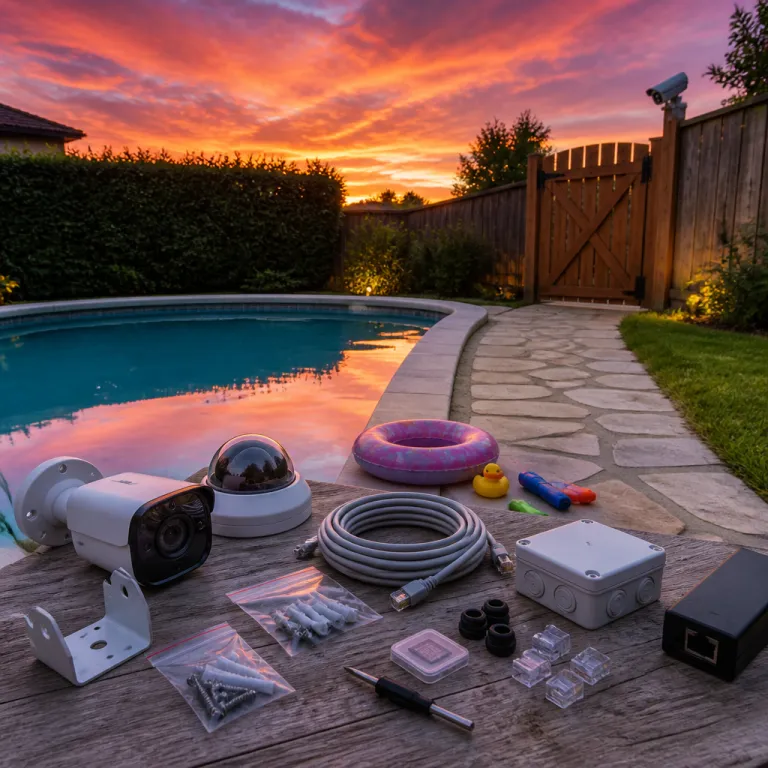
Backyard security camera summer setup: seeing the whole pool safely
A reliable backyard security camera summer setup starts at the pool edge. Your first goal is a viewing angle that shows the entire water surface and surrounding coping, not just the diving board or the steps. Mount outdoor cameras about 2.5 to 3 metres high, slightly off to the side, so the video captures both the pool and the path kids use to reach it.
For most first time homeowners, wireless security cameras feel easier than a fully wired security system, and that instinct is usually right for a summer focused yard. A battery powered outdoor camera such as the Arlo Pro 5S or Nest Cam Battery gives flexible installation, while a wired Ring Stick Up Cam or an outdoor wired Eufy camera offers steadier power and more predictable video storage. Either way, you want motion detection tuned to small figures near the water, not every leaf that moves in the background.
Think in layers rather than trusting any single security system to act as a lifeguard. Use the camera or cameras to verify alerts from a separate pool alarm, and set smart notification schedules for the time when children usually play outside. A good backyard security camera summer setup will combine clear audio for shouting, reliable night vision for late barbecues, and a weather resistant housing that survives both sun and sudden storms.
When you compare cameras best suited for pool zones, look for wide angle lenses between 150 and 180 degrees and colour night vision rather than basic infrared only. Colour night footage makes it easier to distinguish a floating toy from a child at 22:00, which is when many near misses actually happen. Avoid placing outdoor security cameras directly over the water, because reflections confuse motion detection and can quickly fill your cloud storage or local storage with useless clips.
Heat matters more than most marketing pages admit, especially for an outdoor security camera that bakes above concrete. Many consumer models quote operating ranges around −20 °C to 40 or 45 °C, but real housings can run hotter than the air. Check the specified operating weather range for each security camera model, then add a safety margin of at least 5 degrees Celsius for real world summer peaks, using the manufacturer’s datasheet as your primary reference.
Condensation is another quiet enemy of outdoor cameras in humid climates. A camera that goes from full sun to a sudden thunderstorm can fog internally, softening video at exactly the wrong time. To reduce this, avoid pointing the lens straight at sprinklers, keep rubber gaskets clean, and choose weather resistant models rated at least IP65 for general splash protection according to IEC 60529 ingress protection definitions.
If you live where summer storms are violent, consider IP67 rated outdoor cameras for deeper weather protection. IP65 handles rain and spray, while IP67 rated security cameras can survive brief immersion, which matters near low lying patios that sometimes flood. In both cases, a secure cable gland or sealed battery compartment is as important as the printed rating on the box.
On the storage side, decide early whether you prefer cloud storage or on device video storage, because that choice shapes your whole backyard security camera summer setup. Cloud storage with a monthly subscription from brands such as Ring, Arlo, or Blink gives easy access and sharing, but your security system will depend heavily on Wi‑Fi stability. Local video storage on a microSD card or a home network recorder avoids ongoing subscription costs, yet you must protect that indoor outdoor recorder from heat and power cuts.
Gates, paths, and summer guests: placing cameras without killing the vibe
Once the pool is covered, shift your attention to the back gate and the paths guests actually use. A well placed outdoor camera at the gate does more for real security than a second camera pointed vaguely at the lawn. Mount the camera inside the yard, angled back toward the gate, so you see who comes in and whether the latch closes properly.
For gate monitoring, pairing a magnetic contact sensor with a nearby security camera gives you context that a simple chime never will. When the sensor registers an open gate, your security system can trigger the closest camera to record high bitrate video for a set time window. That clip shows whether a delivery driver, a neighbour, or a curious child left the gate open, which matters when you are juggling kids and barbecues.
Summer entertaining raises a subtle question about outdoor security and privacy. You want security cameras that deter intruders and protect kids, but you do not want friends to feel watched every time they sit near the grill. The fix is careful installation and smart privacy zones that block recording over seating areas while keeping motion detection active on gates and walkways.
Most modern smart cameras, including Nest Cam Battery and Arlo Pro 5S, let you draw privacy masks directly in the app. Use those tools to blank out the dining table and the main patio sofa, then keep the active detection zones on the gate, the side path, and the steps down to the lawn. This way, your backyard security camera summer setup respects guests while still feeding useful clips into your cloud storage or local storage system.
Camera height matters again here, especially for audio quality and for avoiding harsh backlighting. Mount outdoor cameras between 2 and 2.5 metres high near gates, slightly above eye level, so faces are recognisable and microphones capture clear audio without wind roar. If you go much higher, you get the classic top of head view that looks impressive in marketing shots but fails when you need to identify someone later.
For many first time homeowners, Blink Outdoor 4 and Ring Stick Up Cam Battery hit a sweet spot between cost, battery life, and ease of installation. Typical battery runtimes range from a few weeks in very busy spots to several months in quieter areas, depending on clip length and motion sensitivity. Both integrate with larger wireless security systems, and both offer optional subscription plans for extended video storage and smart motion detection.
Do not ignore the driveway just because the article focuses on the backyard. A single best outdoor camera at the side gate that also sees the driveway can replace two poorly placed cameras, saving both money and subscription fees. When you evaluate cameras best suited for this dual role, prioritise models with strong night vision and colour night capabilities, because cars and people often move there after dark.
Finally, remember that security is a system, not a single gadget. A backyard security camera summer setup that combines cameras, gate sensors, and good lighting will outperform a pile of cameras with no plan. Think about how you move through the yard on a busy Saturday, then place each security camera to answer a specific question such as who opened the gate or whether the kids reached the pool.
Power, heat, and weather: keeping cameras running all summer
Power is the quiet backbone of every reliable backyard security camera summer setup. If a camera dies during a storm or a heatwave, all the clever motion detection and cloud storage in the world will not help you. Start by mapping where you have safe outdoor power outlets, then decide which cameras should be wired and which can realistically stay on battery.
Wired outdoor cameras, including PoE models that draw power over Ethernet, offer the most stable video quality and the least maintenance. Common PoE standards such as IEEE 802.3af supply up to about 15 W over a single cable according to IEEE specifications, which is more than enough for most fixed cameras. They suit locations such as a wall overlooking the pool or a permanent gate, where you can plan the installation once and forget it for several summers.
Wireless security cameras with rechargeable battery packs, such as Blink Outdoor 4 or Eufy SoloCam S340, shine where running cable would mean tearing up decking or drilling through heritage brick. Many quote battery life in months rather than days, assuming moderate motion and short clips, but heavy activity or continuous live viewing will shorten that dramatically. Check the app’s estimated runtime after the first week and adjust settings before peak holiday season.
Solar panels change the equation again for summer. A small panel feeding a battery powered outdoor camera can keep it running indefinitely in sunny months, as long as you respect the panel’s angle and shade patterns. Aim panels roughly south facing in the northern hemisphere, tilted around 30 to 40 degrees, and keep them clear of climbing plants that grow aggressively in warm weather.
Summer thunderstorms test weather resistant claims more brutally than winter drizzle. An IP65 rated outdoor camera should handle heavy rain at an angle, but wind driven storms can still push water into poorly sealed cable entries. For exposed fence posts or pergola beams, step up to IP67 rated cameras best suited for direct exposure, and always create a drip loop in any outdoor wired power cable.
If you rent or live in a condo with strict rules, focus on clamp mounts and no drill brackets. A compact indoor outdoor camera placed behind a window is tempting, but reflections and double glazing often ruin night vision and colour night performance. You will get far better results from a small wireless security camera on a balcony rail, combined with non invasive security tips from resources such as guides to securing an apartment without drilling.
Audio is often overlooked until you play back a critical clip. Test each camera’s audio by standing where guests and kids usually talk, then listen for clarity, wind noise, and echo. If the audio is unusable, adjust the mounting angle or add a simple windbreak, because intelligible sound can matter as much as sharp video when reconstructing an incident.
Finally, keep an eye on storage subscription costs as your system grows. Each new security camera can add a few euros per month in cloud storage fees, which adds up over several summers. If you plan more than four or five cameras, a mixed approach with both cloud storage and local video storage on a hub or network recorder often delivers the best security value.
Best camera placement for kids, patios, and smart routines
Kids change how you think about a backyard security camera summer setup. You are not just protecting property anymore; you are tracking small, fast moving people who ignore rules and chase balls through open gates. That means your security cameras must prioritise sight lines to play zones, trampolines, and the routes children use between the house, the pool, and the street.
Start by walking the yard at kid height, literally crouching to see what a child sees. Place at least one outdoor camera so it covers the main back door and the first few metres of patio, because that is where toddlers often slip outside unnoticed. A second camera should watch the transition point between the patio and the lawn or pool path, creating overlapping coverage that your security system can stitch together in the app.
For evening entertaining, wide angle outdoor cameras with strong night vision and colour night capabilities earn their keep. Models like Arlo Pro 5S and Eufy SoloCam S340 handle mixed lighting better than many cheaper cameras, preserving detail in both bright string lights and dark corners. Aim them slightly downward to avoid glare from bare bulbs, and use warm white lighting that helps the camera’s sensor render skin tones accurately.
Smart home routines can turn a passive security camera into an active safety tool. With Alexa or Google Assistant, you can create routines where motion detection at the back gate turns on patio lights, announces a spoken alert indoors, and bookmarks the relevant video clip. A step by step automation guide such as building Alexa routines with your security cameras helps you connect these pieces without hiring an installer.
Placement also affects how often you get false alerts, which directly impacts whether you keep using the system over time. Aim security cameras slightly away from busy roads and neighbour gardens, and use zone based motion detection to ignore tree tops while focusing on gates, doors, and the pool edge. The best security setups are the ones you do not mute out of frustration after a week of constant pings.
When comparing indoor outdoor models for a mixed house and yard layout, check how each handles transitions between bright sun and shaded interiors. Some cheaper cameras blow out highlights when a child runs from a dark hallway into a sunlit patio, losing facial detail at exactly the wrong moment. Higher end security systems manage this with better dynamic range and smarter processing, which you will notice in side by side video clips rather than on spec sheets.
Remember that every camera, whether wired or wireless, is just one sensor in a broader safety net. Combine them with simple physical measures such as self closing gate hinges, clear pool rules, and visible house numbers for emergency services. At 03:00, what matters is not the advertised resolution, but whether your backyard security camera summer setup actually shows who opened the gate and where the kids went.
FAQ: backyard security cameras for summer safety
Where should I place a camera to watch the pool safely ?
Mount an outdoor security camera 2.5 to 3 metres high at a corner of the pool area, angled so you see the entire water surface and the main access path. Avoid placing the camera directly above the water, because reflections confuse motion detection and reduce video clarity. Combine the camera with a dedicated pool alarm, since cameras are a monitoring tool, not a replacement for active supervision.
Is wireless good enough for a backyard security camera summer setup ?
For most homes, modern wireless security cameras are reliable if your Wi‑Fi signal is strong in the yard and you check battery levels regularly. Use wired or PoE cameras for fixed, critical views such as the pool, and wireless models for flexible spots like temporary play areas or seasonal seating. A mixed system gives you both stability and easy installation without running cables everywhere.
How do I stop false alerts from trees and passing cars ?
Use zone based motion detection to focus on gates, doors, and paths while excluding tree tops, roads, and busy pavements. Many smart cameras let you adjust sensitivity and person detection separately, so you can ignore small animals but still catch a child near the pool. Small tweaks over a few days usually cut false alerts dramatically without sacrificing real security.
What weather rating should I look for in outdoor cameras ?
For most backyards, an IP65 rated outdoor camera is enough to handle rain and splashes under partial cover. If your camera sits fully exposed on a fence post or near ground level where puddles form, step up to IP67 for better weather resistance. Always protect cable joints and power supplies, because a weak connector can fail long before the camera body itself.
Do I really need a cloud subscription for video storage ?
You can run some security cameras with only local video storage on a microSD card or hub, but you lose easy remote access and off site backups. A modest cloud storage subscription often makes sense for at least your most important cameras, such as those watching the pool and main gate. If you have many cameras, combine limited cloud plans with local storage to control long term costs.