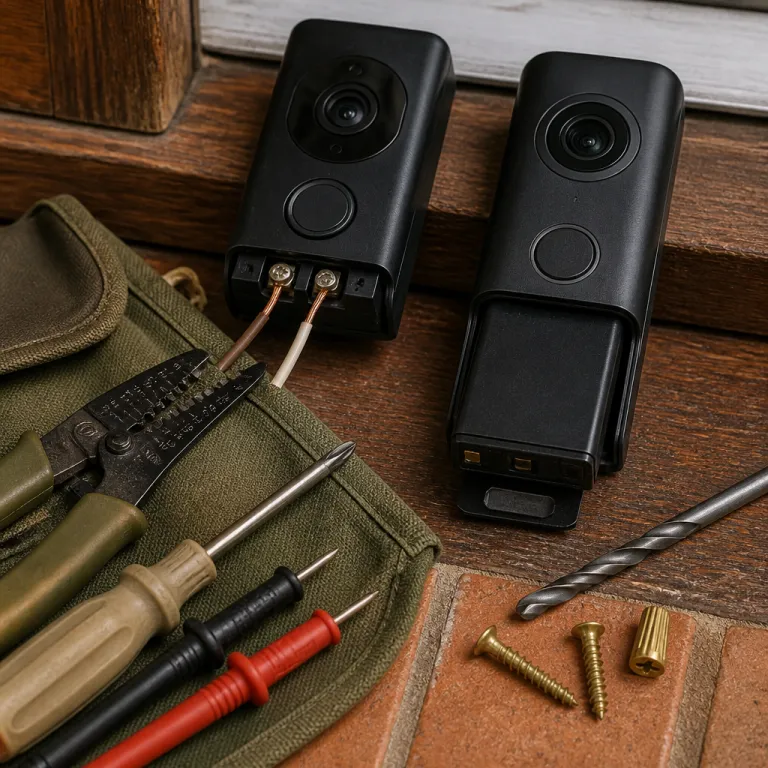
Why power type matters more than brand or resolution
When you compare a wired vs battery video doorbell, you are really choosing how your front door will behave under stress. A wired video doorbell treats power as an always-on utility, while a battery doorbell constantly juggles power-saving tricks that affect motion detection, recording length, and how quickly the camera wakes. That single decision shapes how your doorbell camera, your chime, and even your wireless network cooperate when someone presses the button or walks past your gate.
Think about what you expect from modern video doorbells before you fixate on a specific model or brand name like Ring, Nest, or Eufy. A wired doorbell can usually offer a pre-roll buffer that captures roughly two to four seconds of doorbell video before motion is detected, while a battery-powered cam often starts recording only after the motion detection trigger fires, which means you may see a delivery driver walking away instead of approaching. That difference in pre-roll behavior between wired and battery doorbells is not a minor technicality, because it decides whether your video doorbell actually shows faces or just backs and license plates.[1]
Most first-time homeowners assume that any smart doorbell, whether hardwired or wireless, will behave like a tiny outdoor security guard that never blinks. In reality, a battery doorbell must sleep aggressively to save power, so its camera and motion detection sensors wake only when the system predicts activity, while a wired unit connected directly to a transformer can keep its camera, chime, and Wi‑Fi radio ready at all times. Once you understand that trade-off, the wired vs battery video doorbell question stops being about marketing promises and becomes a clear choice about reliability, maintenance, and how much of each event you are willing to miss.
Speed, pre-roll, and motion detection in everyday use
When someone walks toward your porch, a wired video doorbell usually reacts faster than a battery doorbell because it never has to wake from sleep. That constant power lets the camera maintain a rolling video buffer, so pre-roll captures the two to four seconds before motion detection is fully confirmed, which is why wired doorbells tend to show the person’s face as they approach rather than just the moment they press the doorbell ring button. With a battery-powered model, the system often waits for a stronger motion signal to protect the doorbell battery, and by the time the camera wakes and the recording starts, the visitor may already be turning away.
Independent reviewers who have compared wired and battery variants from the same brands commonly report that hardwired units begin recording a fraction of a second sooner than comparable battery devices.[2] That gap sounds tiny, yet in practice it often means the wired doorbell camera captures the full approach, while the battery cam sometimes produces doorbell video clips where the visitor’s face never appears, which undermines the whole point of front door security. This is also where a wireless doorbell that still uses wired power, such as a Ring doorbell powered by an existing transformer but connected over Wi‑Fi, can offer the best of both worlds by combining fast motion detection with flexible placement of wireless chimes inside the house.
Motion detection settings complicate the picture further, because aggressive zones and high sensitivity drain a battery doorbell faster than a wired smart doorbell that draws steady power from a transformer. If you live on a busy street, a battery-powered video doorbell will either chew through its doorbell battery quickly or miss events when you dial back sensitivity to save energy, while a wired doorbell on a 16 to 24 volt AC transformer can keep high sensitivity without penalty.[3] For broader home security, pairing your video doorbells with a separate wireless door alarm sensor on side doors can offload some motion detection duties from the main doorbell camera and reduce false alerts.
Cold weather, batteries, and what really happens in winter
Cold weather is where the wired vs battery video doorbell debate stops being theoretical and becomes painfully real. Lithium‑ion batteries inside a battery doorbell lose capacity as temperatures drop toward freezing, which means the same doorbell battery that lasted two months in autumn might struggle to survive two weeks of winter motion events. A wired doorbell that draws power from an indoor transformer does not face that seasonal collapse, so its camera, chime, and Wi‑Fi radio keep behaving consistently even when your outdoor steps are covered in ice.[4]
Homeowners in northern states often report that their battery doorbells enter a low-temperature protection mode, where the camera limits charging or shuts down non‑essential features to save the battery from damage. That can mean slower motion detection, fewer recorded clips, or a complete pause in charging until the doorbell camera warms up, which is not what you want when packages are left on a frozen porch. A wired doorbell powered by a transformer inside a heated utility room avoids that problem entirely, because the power source never sits in the cold, and the only outdoor components are the camera housing and button.
If you must use a battery-powered video doorbell in a harsh climate, plan for more frequent charging and consider a removable doorbell battery system with a spare pack ready indoors. Some video doorbells offer an interchangeable faceplate that lets you quickly access the battery compartment, which makes winter swaps less painful but does not change the underlying physics of cold weather drain. For many first-time homeowners, the most practical compromise is a wired‑plus‑wireless setup, where a wired doorbell camera handles the front door while one or two wireless doorbells or outdoor cams cover side gates and driveways that are harder to reach with cable.
Installation, wiring checks, and when you really need a pro
Before you choose between a wired vs battery video doorbell, you need to know what wiring already exists behind your current doorbell. Most modern homes in the United States use a 16 to 24 volt AC transformer that can safely power a wired doorbell camera, but older houses sometimes rely on weaker transformers that struggle with smart doorbells and may require an electrician to upgrade.[3] If your existing doorbell chime is mechanical and decades old, a wired smart doorbell on that circuit might buzz or fail, while a battery doorbell with a separate wireless chime sidesteps the whole legacy wiring issue.
Installation complexity is where battery-powered video doorbells earn their popularity, because you can often mount the camera with two screws, connect it to your wireless network, and be done in under thirty minutes. A wired doorbell, by contrast, demands that you shut off power, confirm transformer voltage, connect low-voltage wires correctly, and sometimes install a small power module inside the chime box, which can intimidate first-time homeowners. If you are comfortable replacing a light fixture, you can probably handle a wired doorbell installation, but if exposed wires and cramped junction boxes make you nervous, a battery doorbell or a hybrid wired‑wireless kit may be the safer path.
For broader planning, think beyond the front door and consider how your doorbell camera will integrate with other security cameras and monitors around the property. A wired front video doorbell paired with wireless outdoor cams, such as a Ring Stick Up Cam or Blink Outdoor 4, can give you full coverage without rewiring the entire house, especially when you follow a structured guide to choosing the right camera and monitor setup. If you later add a wireless doorbell at a side entrance, you will already understand how transformer power, Wi‑Fi signal strength, and chime placement interact, which reduces the temptation to call a pro for every small change.
Subscriptions, apps, and how power type locks or unlocks features
Power type quietly controls which features your video doorbell can use, especially when brands reserve advanced options for wired models. Continuous recording, 24/7 live view, and richer motion detection analytics often appear only on wired doorbell pro lines, because those features demand constant power and higher bandwidth than a battery doorbell can sustain. If you expect your doorbell camera to behave like a full security cam, you need to check whether the wired or battery version of your chosen model actually supports those modes.
Subscription plans complicate the wired vs battery video doorbell decision further, because services like Ring Protect, Nest Aware, and Arlo Secure gate cloud recording and smart alerts behind monthly fees. A Ring doorbell on wired power with a Ring Protect plan can store weeks of doorbell video, offer rich motion detection zones, and integrate with other cameras in the Ring app, while a Ring Battery Doorbell without a subscription will feel more like a glorified peephole that only shows live video. If you are comparing brands, a detailed breakdown of which camera subscription is worth paying for can help you understand how wired and battery models differ once you start paying for cloud storage.
App experience matters just as much as raw features, because you will interact with your doorbell ring alerts and doorbell video clips through software every day. The Ring app, for example, treats wired doorbells and battery doorbells slightly differently in settings menus, exposing more granular power and motion detection controls when the system knows the camera has unlimited power. When you evaluate video doorbells, look at how each app handles multiple cameras, wireless doorbells, and chimes, because a clean interface will save you time every week, while a clumsy one will quietly push you to ignore alerts and lose the security benefits you paid for.
Real world camera performance, Matter 1.5, and what to buy now
On paper, many wired and battery video doorbells share the same resolution, but what the camera actually captures at 3 a.m. depends heavily on power and processing. Wired doorbells can push higher bitrates, stronger infrared illumination, and more aggressive noise reduction because they are not rationing every milliamp of power, while a battery doorbell often dials back those settings to save energy. That is why a wired doorbell camera frequently produces clearer night video, with more legible faces and license plates, than its battery twin even when both claim identical 1080p or 2K specs.
The broader ecosystem is shifting too, as video doorbells become a distinct category under the Matter 1.5 smart home standard, which defines how live video, motion events, and two‑way audio should work across brands.[5] As of mid‑2026, Samsung SmartThings is among the first major platforms to publicly advertise Matter 1.5 support for doorbells, while Apple, Google, and Amazon have committed to the standard but have not yet delivered full, widely available end‑to‑end compatibility for video doorbells. When those updates arrive, a wired vs battery video doorbell choice will still matter, because Matter focuses on interoperability, not on how fast your motion detection triggers or how long your doorbell battery lasts in winter.
For a first-time homeowner who wants a clear recommendation, a wired doorbell pro model at the main entrance is usually the best long‑term investment, with one or two battery-powered wireless doorbells or outdoor cams filling coverage gaps where running cable would be painful. A Ring Video Doorbell Pro or similar wired doorbell on a solid transformer will give you fast alerts, reliable pre-roll, and strong night video, while a Ring Battery Doorbell or Blink Outdoor 4 can handle sheds, gates, or temporary placements. In the end, the smartest security upgrade is not the flashiest camera, but the power setup that will still be recording, still ringing the chime, and still sending motion alerts the hundredth time someone walks up your path.
Key figures that highlight wired vs battery performance
- Many smart doorbells rely on 16 to 24 volt AC transformers, and upgrading an undersized transformer typically costs between 50 and 150 dollars in parts and labor in the United States, which is a one‑time expense that stabilizes power for any future wired doorbell camera.[3]
- Cold weather can reduce lithium‑ion battery capacity by roughly 20 to 40 percent as temperatures approach freezing, which means a battery doorbell that normally lasts eight weeks between charges may drop to three or four weeks in winter conditions according to typical manufacturer support documentation and battery chemistry references.[4]
- Pre‑roll buffers on wired doorbells commonly capture two to four seconds of video before motion detection is fully triggered, while most battery doorbells either skip pre‑roll entirely or offer only a trimmed version to protect the doorbell battery from constant recording.[1]
- Cloud subscription plans for video doorbells in the United States typically range from about 3 to 15 dollars per month per household, and many brands reserve continuous recording and advanced motion detection analytics for wired doorbell pro models on the higher tiers.[6]
- Smart home platforms are gradually adopting Matter 1.5 support for cameras and doorbells, with Samsung SmartThings currently among the leaders in implementation while Apple, Google, and Amazon have announced but not yet delivered full doorbell compatibility as of mid‑2026, which will influence how easily wired and battery video doorbells integrate across ecosystems.[5]
FAQ: wired vs battery video doorbells
Is a wired video doorbell more reliable than a battery model ?
A wired video doorbell is generally more reliable because it has constant power, which supports faster motion detection, pre‑roll recording, and consistent night vision performance. A battery doorbell depends on a charged doorbell battery and often uses aggressive sleep modes that can delay alerts or shorten clips. If your main priority is dependable security at the front door, a wired smart doorbell on a proper transformer usually wins.
How often will I need to charge a battery doorbell ?
Most battery doorbells need charging every one to three months in mild weather, depending on motion activity, Wi‑Fi strength, and video quality settings. In colder climates, the same doorbell battery may require charging every few weeks because low temperatures reduce capacity and increase drain. Choosing conservative motion detection zones and limiting unnecessary live view sessions can help save power, but it will not match the consistency of a wired doorbell.
Can I use my existing chime with a smart wired doorbell ?
Many smart wired doorbells can work with existing mechanical or digital chimes, as long as the transformer provides enough voltage and the wiring is in good condition. Some models require a small power module installed inside the chime box to regulate current and prevent buzzing or overheating. If your chime is very old or incompatible, you can disable it and use wireless chimes or smart speakers instead.
What happens to a battery video doorbell in very cold weather ?
In very cold weather, a battery video doorbell may lose capacity quickly, limit charging, or temporarily shut down non‑essential functions to protect the battery. You might see warnings in the app, slower motion detection, or shorter recording times until temperatures rise. If you live in a region with long winters, a wired doorbell or an indoor‑mounted camera watching through a window can provide more stable security.
Should I mix wired and battery doorbells around my home ?
Mixing wired and battery doorbells is often the most practical approach for a typical house or condo. A wired doorbell pro model at the main entrance delivers fast, reliable alerts, while battery-powered wireless doorbells or outdoor cams can cover gates, garages, or sheds where running cable would be expensive. Managing all these cameras through a single app keeps the system simple while letting each device use the power source that suits its location.
Wired vs battery video doorbells at a glance
- Wired video doorbells: Faster wake times and pre‑roll, stronger night vision, no battery swaps, but require compatible wiring and a transformer.
- Battery-powered doorbells: Flexible placement and easier DIY installation, but shorter clips, more aggressive sleep modes, and frequent charging in busy or cold environments.
- Hybrid setups: Use a wired pro model at the main entrance for reliability, then add wireless doorbells or outdoor cameras where running new cable would be costly.
Sources: [1] Product documentation from major video doorbell brands describing pre‑roll features. [2] Comparative reviews from established tech publications testing wired vs battery variants. [3] Typical North American low‑voltage doorbell wiring standards and manufacturer installation guides. [4] Lithium‑ion battery performance data from battery manufacturers and smart doorbell support articles. [5] Connectivity Standards Alliance Matter 1.5 specification and platform announcements. [6] Public pricing pages for Ring Protect, Nest Aware, and Arlo Secure plans.