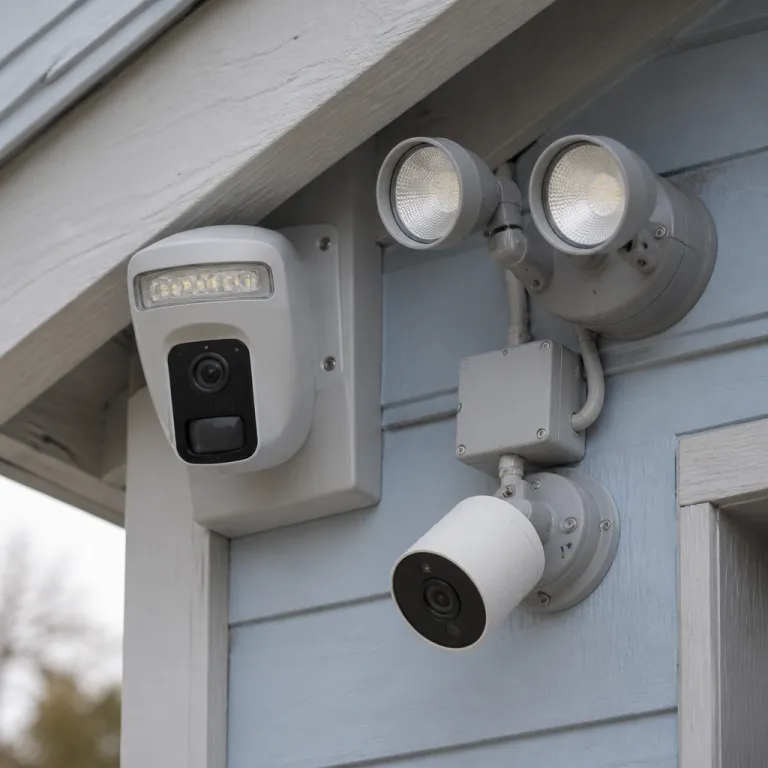
Floodlight camera vs separate setup: what really changes on your wall
When you compare a floodlight camera vs separate setup, you are really choosing between one smart box and a small modular security system. A single floodlight camera combines a powerful outdoor floodlight, a security camera, and motion detection in one housing, while a separate floodlight plus camera lets you tune each device for the best light and the best view. That difference in physical layout shapes everything from image quality and motion behaviour to how clearly you can identify people when motion is detected at night.
All in one floodlight cameras such as the Reolink TrackFlex Floodlight WiFi or Ulticam IQ Floodlight give you one installation point, one Wi‑Fi connection, and one app to manage. The Reolink model uses two lenses to keep a wide field view while a second lens zooms on motion, which helps maintain video quality and range detail across large areas like driveways or side yards. That kind of integrated design can feel very smart and professional, especially when the super bright light and camera trigger together the instant motion detection events start, and you see both context and close‑up detail in the same clip.
With a separate setup, you mount a standard outdoor floodlight high for coverage and place the camera lower and closer to faces. That lets the light throw across outdoor spaces while the camera sits around 1.8 to 2.1 metres, which is the sweet spot to identify people without relying only on digital zoom. In practice, this often means clearer video, better image quality, and more usable details when you later scrub through video clips to check exactly what motion was detected near your car or front gate.
All in one floodlight cameras: strengths, shortcuts, and power realities
All in one floodlight cameras promise simplicity, and for many front porches they deliver it. You usually reuse existing wiring from an old outdoor floodlight, bolt the new unit to the junction box, connect Wi‑Fi, and you are done with installation in under an hour. For a smart home enthusiast who already runs Alexa or Google Home, that single device can drop neatly into routines that arm the security camera when you leave and turn on the light when motion is detected at night.
The Reolink TrackFlex Floodlight WiFi is a good example of how far these floodlight cameras have come. Its twin lenses maintain a wide field view while tracking motion with a zoomed frame, so you keep both context and close details in the same video clip. In independent reviewer tests, dual‑lens designs like this typically hold more detail on faces at 6 to 10 metres than single‑lens floodlight cameras, because the zoomed stream does not have to crop heavily from a wide 2K or 4K frame.
When the super bright light fires, the camera can switch from infrared night vision to full colour, which often improves video quality and makes it easier to identify people in outdoor spaces where street lighting is weak. Wirecutter and PCMag have both noted in their security camera reviews that colour night footage under a floodlight usually shows clothing colours and vehicle plates more clearly than pure infrared clips, especially when bitrates stay above roughly 2 to 4 Mbps.
Power is the quiet advantage of wired floodlight cameras over battery powered spotlight camera models such as the Ring Stick Up Cam or Blink Outdoor 4. With mains power, you get continuous recording options, stronger Wi‑Fi radios, and higher bitrates for clear video without worrying about battery life or solar angles. In long‑term tests by major reviewers, wired cameras typically reconnect faster after outages and show fewer missed motion events than battery models that have to sleep aggressively to preserve charge.
Separate floodlight plus camera: better angles, better redundancy, more work
A separate floodlight plus camera setup takes more planning, but it often wins on pure security. You mount the outdoor floodlight high at around 2.7 to 3 metres so the light spreads across large areas, then place the camera lower where faces fill more of the frame. That separation lets you tune the field view and motion zones independently, which can cut false alerts and sharpen the details that really matter.
For the camera itself, models like the Arlo Pro 5S, Nest Cam Battery, Eufy SoloCam S340, or Blink Outdoor 4 give you flexibility that an integrated floodlight camera cannot match. You can choose wired or battery power, pick the image quality and video quality you prefer, and even mix a spotlight camera in one corner with a wider security camera in another. If a camera fails, the light still works, and if the light dies, your cameras keep recording motion detection events, which is real redundancy rather than a single point of failure.
This approach does mean two installations, two Wi‑Fi connections, and more configuration in your smart home app. You may need professional installation if your existing wiring is messy or if you want a very clean look with hidden conduits. Because power and backup are so central to reliability, it is worth reading a guide on understanding the importance of your intruder alarm battery to see how camera uptime, alarm triggers, and lighting all intersect when motion is detected during a real break in.
To make the trade offs easier to scan, think in terms of quick pros and cons. Integrated floodlight cameras give you one device, simpler wiring, and tidy aesthetics, but they lock light and lens position together and create a single point of failure. Separate floodlights and cameras demand more planning and setup time, yet they unlock better mounting angles, easier upgrades, and true redundancy if one component fails.
Real world trade offs: image quality, motion behaviour, and upgrade paths
When you stand in your driveway at night, the difference between a floodlight camera vs separate setup becomes very tangible. With an all in one unit mounted at 2.7 metres, the light usually looks great, but the camera angle can be too high to capture faces cleanly when someone walks close to the wall. You get a strong overall security view of the scene, yet the details that help you identify people may be softer than the spec sheet suggests.
Separate cameras placed at 1.8 to 2.1 metres tend to produce more flattering angles for identification, especially when motion detection is tuned to ignore cars in the street and focus on motion zones near doors. In testing by reviewers such as Wirecutter and PCMag, battery models like Nest Cam Battery and Arlo Pro 5S sometimes struggle with Wi‑Fi hand off and delayed wake up, which can clip the first second of motion when someone approaches from the side. Measured delays of around 0.5 to 2 seconds are common in those reviews, and that gap is often just enough for a fast visitor to move out of the centre of the frame.
Wired cameras paired with a separate outdoor floodlight usually start recording faster, maintain higher video quality, and keep night vision more stable when the super bright light turns on and off. Because they do not have to sleep as aggressively, they can keep their sensors and Wi‑Fi radios partially awake, which reduces missed motion detection events and keeps bitrates closer to their advertised maximums.
Upgrade paths are another quiet but important point in this comparison. With a single floodlight camera, replacing the camera to get better image quality or a wider field view means replacing the whole light, which increases cost and waste. With separate security cameras and lights, you can swap a camera for a newer model, add a second spotlight camera to cover blind spots, or upgrade only the light to a more efficient LED while keeping your existing wiring intact.
Costs, scenarios, and a clear recommendation you can act on
Price often nudges people toward a floodlight camera vs separate setup, so it is worth running the numbers calmly. A solid integrated floodlight camera such as the Reolink TrackFlex Floodlight WiFi usually sits around 150 to 200 euros, which buys you a bright light, a capable camera, and coordinated motion detection in one package. Building a separate setup with a quality outdoor floodlight at 40 to 80 euros plus a good camera at 80 to 150 euros lands in the same ballpark, especially once you factor in any professional installation costs.
For a simple front yard or a small patio, an all in one floodlight camera is usually the best balance of effort and security. You get one clean device on the wall, a clear video feed, and straightforward control of motion zones without juggling multiple apps or automations. If you also want to secure the doorway itself, pairing that light with one of the best video doorbell options can give you close range facial details while the floodlight cameras handle the wider field view of the driveway.
For complex driveways, side passages, or large areas around garages, a separate floodlight plus camera setup usually wins. You can angle the light to avoid glare in the lens, place cameras where they can identify people rather than just shapes, and add extra security cameras later if blind spots appear. In the end, the right choice is not the advertised resolution on the box, but what your system actually captures at 3 a.m. when motion is detected and you need clear, usable video.
Whichever route you choose, take a few minutes after dark to review recorded clips, adjust angles, and fine tune motion zones. A small tweak to camera height, floodlight tilt, or sensitivity can make more difference to real world security than jumping from 2K to 4K resolution on the spec sheet.
FAQ
Is a floodlight camera enough for a typical front yard ?
For a small to medium front yard, a single floodlight camera is usually enough if it is mounted around 2.7 metres high and aimed to cover the path to your door. You get combined light, motion detection, and video in one device, which keeps installation simple. If your porch is recessed or has deep shadows, adding a separate camera or a video doorbell can improve close range coverage.
How high should I mount a camera to identify faces clearly ?
The most reliable height to identify people is usually between 1.8 and 2.1 metres, which keeps faces near the centre of the frame instead of under a steep angle. Floodlight cameras often sit higher for better light spread, which can compromise facial details when someone stands close to the wall. Using a separate camera at face height and a higher outdoor floodlight for coverage gives you the best of both worlds.
Do I need professional installation for a floodlight camera ?
If you are comfortable turning off breakers and connecting basic wiring, many homeowners can handle a floodlight camera installation themselves. Professional installation is worth considering when your existing wiring is old, when you want multiple security cameras added at once, or when you need very tidy conduit runs on exposed brick. Paying once for a clean, safe job is usually cheaper than fixing a rushed DIY attempt later.
Are battery powered cameras reliable enough for driveways and side yards ?
Battery powered cameras such as Nest Cam Battery, Arlo Pro 5S, Eufy SoloCam S340, and Blink Outdoor 4 can be reliable if Wi‑Fi is strong and motion zones are tuned carefully. They sometimes miss the first second of motion when waking from sleep, which matters if people move quickly across a narrow field view. Pairing them with a wired outdoor floodlight and keeping batteries topped up or solar assisted reduces those gaps and keeps alert latency closer to what reviewers measure in wired models.
How does a floodlight affect night vision and video quality ?
A super bright floodlight can improve colour video at night by letting the camera switch out of infrared mode, which often boosts clarity and detail. If the light is aimed poorly or too close to the lens, it can cause glare and wash out faces, especially when people stand very near the wall. Testing your setup after dark and adjusting angles until you get clear, balanced video is as important as choosing the right hardware, and a quick snapshot or thumbnail review can confirm that your field view and exposure look right.