
Summary
Editor's rating
Value for money: worth it or better go cheaper?
Design: looks like a serious camera, not a toy
Durability & weather: how it holds up outside
Performance: image quality, tracking and detection in real life
What this Imou camera actually does (beyond the fancy specs)
How effective is it for real security, not just specs
Pros
- Dual‑lens setup (3MP fixed + 5MP PTZ) really works like two cameras in one, reducing blind spots
- Good image quality day and night with usable colour night vision and 30 m range
- AOR recording mode saves a lot of SD card space while still keeping continuous footage
- Human/vehicle detection and pre‑trigger recording make alerts and clips much more usable
Cons
- PTZ tracking can be a bit jerky and needs tweaking for best results
- Vehicle detection easily triggers on parked cars unless zones are carefully set
- Some advanced AI features are locked behind a paid cloud subscription

Specifications
View full product page →| Brand | Imou |
A dual‑lens camera that actually covers the whole yard
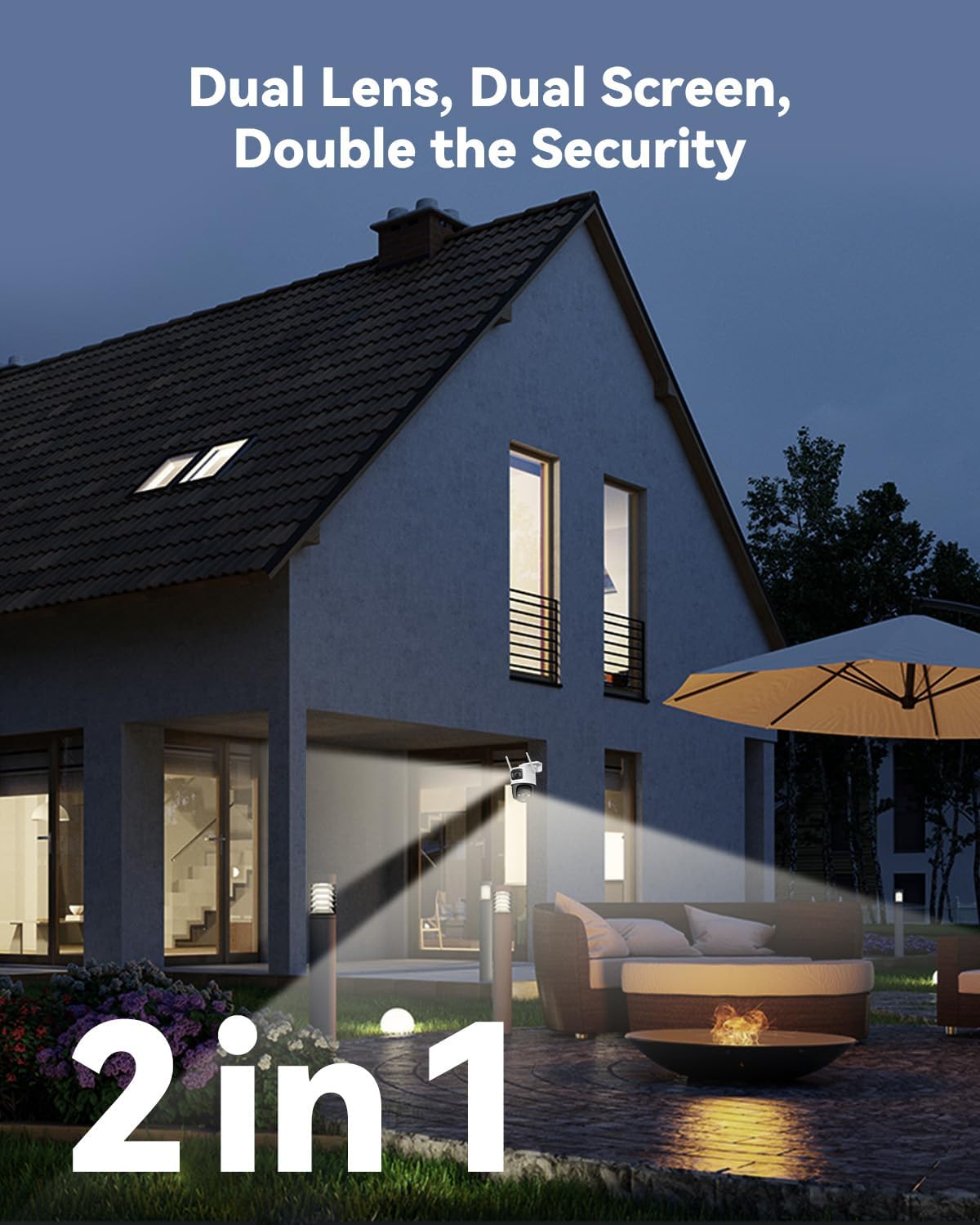
I set up this Imou 2‑in‑1 dual‑lens camera to cover my driveway, the front door and the bit of pavement where cars park. I was looking for something that could both watch a fixed area and also follow motion, without having to stick two ugly domes on the wall. On paper, this thing ticks a lot of boxes: dual lenses, 360° coverage, Wi‑Fi, siren, spotlight, and AI that can tell people from cars.
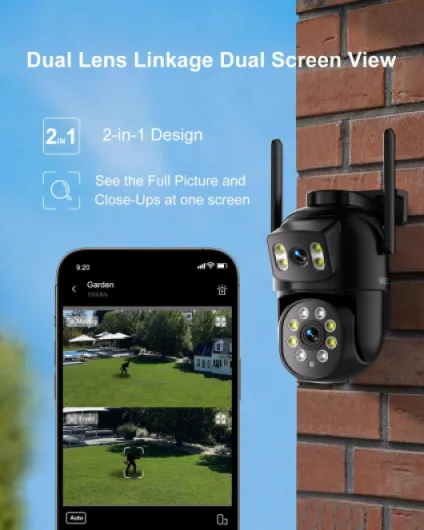
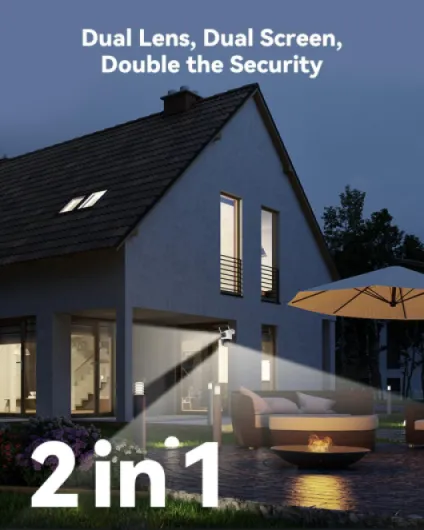
In practice, it feels like a mix of "pretty solid" and "slightly overcomplicated". The main thing I noticed after a week is that it really does behave like two cameras in one: the fixed lens keeps an eye on the whole scene, while the PTZ (the moving part) follows whatever moves. That alone is a big step up from my old single PTZ where I always missed something when it was pointed the wrong way.
But it’s not perfect. The motion tracking is good but not super smooth, and the vehicle detection is useful but a bit too sensitive if you’ve got parked cars in view. I had to spend a bit of time tweaking the activity zones and notification settings so my phone didn’t ping every time a neighbour’s car sat in the frame.
Overall, after living with it, I’d say this is a good, feature‑packed outdoor camera for the price, especially if you want wide coverage and like to tinker in the app. If you just want a plug‑and‑forget camera with zero settings, this might feel a bit much. It gets the job done, but you need to spend a bit of time setting it up the way you want.
Value for money: worth it or better go cheaper?
In terms of value, I’d say this Imou sits in a good middle ground. It’s not the cheapest camera on Amazon, but when you factor in that it’s basically two cameras in one (fixed + PTZ) with 4K‑class resolution and decent AI, the price starts to make sense. If you tried to replicate this setup with one fixed 4K camera plus a separate PTZ from a known brand, you’d likely spend more and have a messier install.
Where they try to squeeze more money out of you is the cloud storage and AI subscription. You get 30 days free, which is enough to see if you care about it. Personally, I’m fine with a 128 or 256 GB SD card and local recording. The new AOR mode really helps here: recording full frame only on events and 1 fps otherwise means you can keep days and days of continuous footage without blowing through your storage. That’s a smart feature and actually adds real value instead of just being a buzzword.
Compared to cheaper no‑name cameras I’ve used, the main differences are: more stable app, better motion detection, and the dual‑lens setup that actually solves the PTZ blind‑spot problem. Compared to more expensive brands (Reolink, Hikvision level), you do feel some corners cut: all‑plastic build, tracking not as smooth, and the usual subscription nudging. But for a typical homeowner who just wants good coverage, clear image and some smart alerts, this is good value for money.
If you’re on a tight budget and only need to watch a small area, a single fixed 1080p camera will obviously be cheaper and probably enough. But if you’ve got a bigger yard, driveway or shop front and you were considering two cameras anyway, this Imou makes sense. One power cable, one app, two views, and enough resolution to actually see what’s going on – that’s a fair deal for the price bracket it’s in.
Design: looks like a serious camera, not a toy
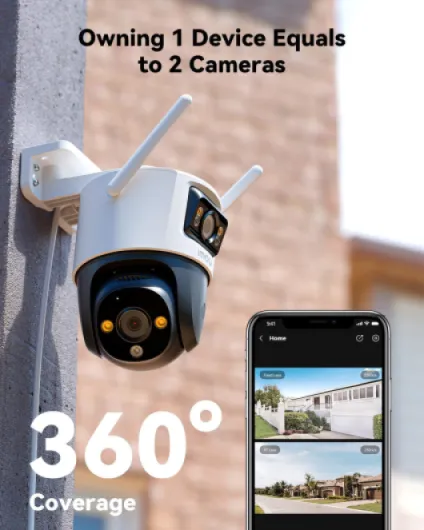
Design‑wise, this Imou is pretty typical for a modern outdoor dome/PTZ hybrid, but a bit chunkier because of the dual lenses. You’ve got a main body with the fixed lens, and underneath there’s the rotating part with the 5MP lens that pans and tilts. It’s not tiny, so don’t expect something discreet like a little bullet cam. Once it’s on the wall, people will notice it, which can actually be a plus if you want a visible deterrent.
The mounting system is screw‑in, nothing fancy but it works. Imou includes a drilling template and a screw/anchor kit, so as long as you’ve got a drill and a ladder, you’re fine. I mounted it on a brick wall above my garage. The fixed lens angle can be adjusted a bit manually (pan 0–260° and tilt 0–30°), but don’t expect huge range up and down. That’s something to keep in mind: if you mount it too high and angled too far out, you’ll have a lot of pavement and not much detail close to the wall.
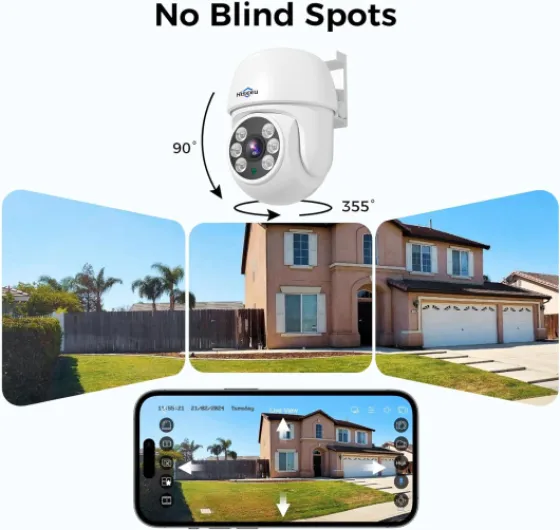
The PTZ part (the moving lens) rotates 0–355° horizontally and 0–90° vertically, which is plenty. Movement isn’t totally silent, but outside you don’t really hear it unless you’re right under it. Compared to another PTZ I own, this one feels a bit less smooth when tracking fast movement, but for regular walking pace or slow‑moving cars it’s fine. You do see a slight jerk sometimes when it switches direction fast.
Overall, the design is more functional than pretty. It’s plastic but doesn’t feel flimsy, and the white dome style blends in fairly well with most house facades. If you’re expecting something tiny and subtle, you’ll be disappointed. If you want something that clearly looks like a proper security camera and covers a wide area, it does the job.
Durability & weather: how it holds up outside
This camera is rated IP66, which basically means it’s fine with heavy rain and dust. I haven’t had it up for a full year obviously, but it did go through a couple of solid rain showers and some windy days, and it didn’t flinch. No water inside the dome, no fogging on the lens, and the PTZ still moved normally afterwards. The plastic housing doesn’t feel premium, but it doesn’t feel cheap either – just standard outdoor camera plastic.
The power cable is about 3 m (10 ft), which is okay but could be a bit short depending on your setup. Imou includes a waterproof connector for the power and Ethernet if you use it, which is important if your junction box or plug is slightly exposed. I taped and tucked everything under the eaves and so far nothing has loosened or corroded. It’s not the neatest install in the world, but for a home setup it’s fine.
One thing to note: the PTZ mechanism is a moving part, so like all PTZ cameras, long‑term durability will depend on how much it moves. If you set it to track every tiny movement 24/7, you’re obviously stressing the motor more than if you mostly use it as a fixed camera with occasional manual moves. I use motion tracking only for certain hours (evenings and night) and leave it mostly parked during the day. That’s a compromise between functionality and not wearing it out too fast.
In terms of software durability, Imou’s app and firmware feel reasonably mature. I didn’t have random disconnects or constant reboots, which I’ve seen with cheaper brands. The Wi‑Fi 6 compatibility is nice on paper; in practice, it just means the connection stayed stable even with a couple of walls between the router and the camera. I still recommend using Ethernet if you can, but for many people Wi‑Fi will be enough. Overall, it feels like something that should last several years outside if you install it sensibly and don’t abuse the PTZ 24/7.
Performance: image quality, tracking and detection in real life
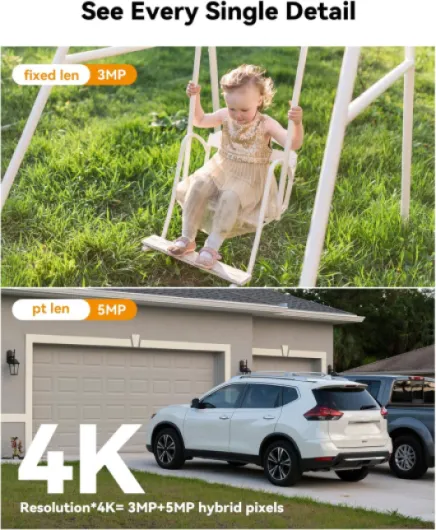
On the performance side, this camera is pretty solid for the price, especially in terms of image quality. During the day, both lenses give a sharp picture with good detail. You can easily read number plates within a reasonable distance and recognise faces without zooming too much. The 5MP PTZ lens with 8x zoom is useful when the camera tracks someone or a car – you actually get a usable close‑up instead of a blurry blob.
At night, the 30 m colour night vision is decent. If there’s a bit of ambient light (street light, neighbour’s porch), you get colour most of the time. In complete darkness, it switches to infrared and you get a classic black‑and‑white image, still clear enough to see faces and shapes. I tested it on a very dark side of the house and I could still clearly see my gate and anyone walking up to it. Is it cinema quality? No. But for a security camera, it’s more than enough to understand what’s going on.
Motion detection and tracking are where it gets interesting. Human and vehicle detection do work – it’s definitely better than basic motion that triggers every time a leaf moves. That said, out of the box it picked up parked cars constantly. I had to adjust the activity zones so it ignored the section where cars are always parked. After that, alerts were much more reasonable. The tracking itself is okay but not perfect: when someone walks quickly across the driveway, the PTZ sometimes lags a bit or overshoots, but the fixed lens still has the full scene, so you don’t lose the event.
The siren and spotlight combo is loud and bright enough to scare off someone who’s not expecting it. I tested it on myself walking into the detection zone at night – the spotlight kicked in, the siren blared, and I definitely wouldn’t want to stand there pretending nothing happened. You can also talk through the built‑in mic and speaker. The 2‑way audio is usable but not crystal clear; there’s a slight delay and it sounds like a typical IP camera, but it’s good enough to shout at a courier or tell someone to leave.
What this Imou camera actually does (beyond the fancy specs)
On the box and product page, Imou throws a lot of specs at you: 3MP fixed lens + 5MP PTZ lens (8MP total), 4K/2160p, 30 m colour night vision, human and vehicle detection, Wi‑Fi 6, IP66, siren, spotlight, 360° coverage, and this new AOR recording mode that’s supposed to save 85% storage. Once you install it, the basic idea is simple: one lens looks at the whole area, the second one moves and zooms in on what’s interesting.
From the app, you basically see two channels: the general view and the zoomed/moving view. Both can record at the same time to a microSD card (up to 256 GB) or to the cloud if you pay. The AOR mode (all‑day saving recording) is actually practical: it records at full frame rate only when something happens and drops to 1 frame per second the rest of the time. That means you can keep continuous footage without filling the card in a week. I tested this with a 128 GB card, and after several days with events every day, I still had plenty of space.
Notifications are pretty granular: you can choose human only, vehicle only, or generic motion. When something triggers it, you get a push with a thumbnail and the clip starts a couple of seconds before the event, which is genuinely useful. Compared to my older cheap camera that only records from the exact trigger moment, this makes the clips way more usable because you see how the person or car entered the frame.
So in short, in daily use it’s a feature‑rich outdoor camera that aims to replace two separate units: one wide‑angle for overview and one PTZ for detail. It works as advertised, but you’ll probably need to play in the app for 20–30 minutes at the start to tune zones, alerts and recording modes so it doesn’t spam you or miss important stuff.
How effective is it for real security, not just specs
For actual home security, this camera does the job pretty well. The big advantage is that you don’t miss events when the PTZ is looking somewhere else, because the fixed lens is always watching the whole area. With my old single PTZ, there were times when someone would walk up to the door but the camera was busy tracking a car in the street. Here, even if the PTZ is following a car, the fixed lens still captures the whole scene, so you have a full record.
The AI detection helps cut down on useless alerts, but you do need to configure it. Out of the box, I was getting too many notifications because it saw parked cars as “vehicles”. After setting an activity zone that excluded the parked area, it behaved much better. For people detection, it’s fairly accurate: it didn’t trigger on cats or foxes, but it picked up anyone walking up the driveway. There were still a few false positives (strong shadows, for example), but nothing crazy.
Response time from detection to notification on my phone was usually a couple of seconds on Wi‑Fi. That’s fast enough to open the app and see what’s going on live if someone is still there. The fact that the clip starts a couple of seconds before the trigger makes the recordings more usable: you can see how the person arrived, not just their back as they leave. That sounds like a small detail, but in real life it matters a lot.
The only real downside on the effectiveness side is the subscription pressure. You can use a microSD card and skip the cloud, which is what I did, but some of the advanced AI features are pushed through the paid plan. The free 30‑day trial is nice to test, but I’m not convinced it’s worth paying long term for most people. The basic on‑device AI (human/vehicle) is already good enough for typical home use. So yes, it’s effective as a security tool, but be ready to spend 20–30 minutes fine‑tuning detection zones, alert types and schedules so it actually works the way you need.
Pros
- Dual‑lens setup (3MP fixed + 5MP PTZ) really works like two cameras in one, reducing blind spots
- Good image quality day and night with usable colour night vision and 30 m range
- AOR recording mode saves a lot of SD card space while still keeping continuous footage
- Human/vehicle detection and pre‑trigger recording make alerts and clips much more usable
Cons
- PTZ tracking can be a bit jerky and needs tweaking for best results
- Vehicle detection easily triggers on parked cars unless zones are carefully set
- Some advanced AI features are locked behind a paid cloud subscription
Conclusion
Editor's rating
After using the Imou 2‑in‑1 4K dual‑lens camera, my overall take is that it’s a solid, practical outdoor camera that genuinely replaces two separate units. The fixed lens keeps a constant wide view so you don’t miss anything, while the PTZ lens zooms and tracks people or cars with enough detail to be useful. Image quality is good in both day and night, the siren and spotlight are actually loud and bright, and the AOR recording mode makes local storage on an SD card much more realistic long term.
It’s not perfect: motion tracking isn’t silky smooth, vehicle detection needs proper zone setup if you have parked cars, and the push toward paid cloud AI is a bit annoying. The plastic build is functional rather than fancy, and the install does require a bit of planning for cable routing and mounting height. But once you spend some time in the app tuning zones and alerts, it does what it’s supposed to do without constant headaches.
If you want wide coverage for a driveway, yard or shop front and like the idea of one camera doing the job of two, this is a good buy. If you’re ultra picky about PTZ smoothness, or you hate subscriptions and don’t want to touch settings, you might prefer a simpler fixed 4K camera. For most home users who want real coverage, clear footage and decent smart detection without going into pro‑grade systems, this Imou hits a reasonable balance between features, performance and price.