
Summary
Editor's rating
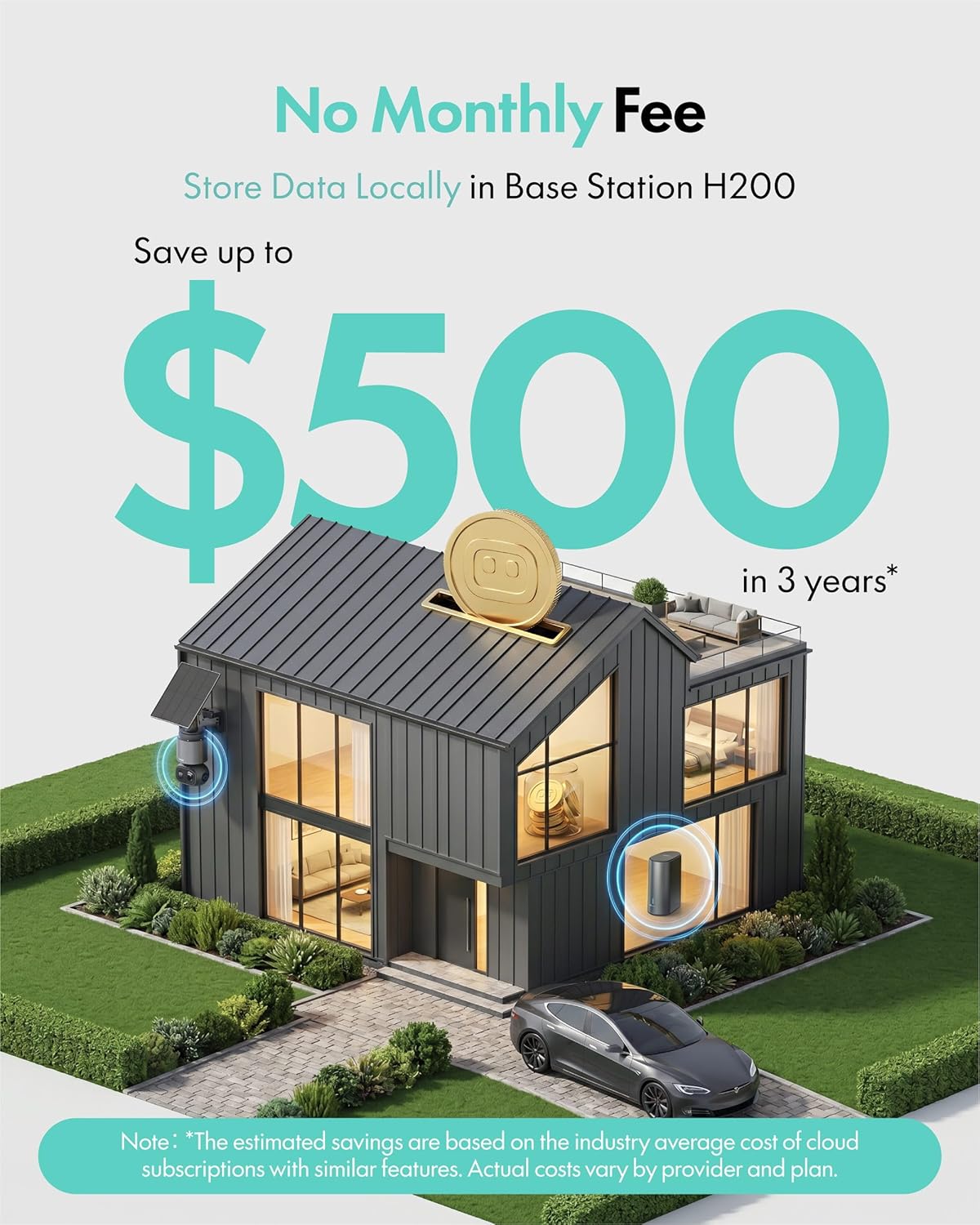
Value for money: not cheap, but you avoid monthly bleeding
Design: compact, practical, but not exactly discreet
Battery and solar: great when you have sun, weaker in grey climates
Durability and reliability: feels solid, but support is a bit of a question mark
Performance: 4K image, AI detection and app experience in real life
What you actually get and how it all fits together
Pros
- Very clear 4K video with good detail during the day and decent colour night vision at typical garden/driveway distances
- Solar + 10,000 mAh battery combo works well in normal climates, leading to mostly maintenance‑free use
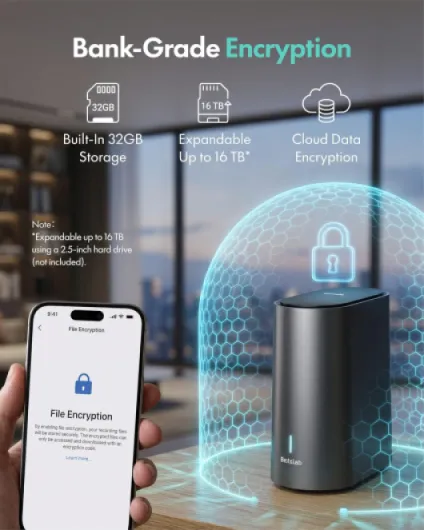
- Local storage on the base station (32 GB built‑in, up to 16 TB) means no forced subscription and plenty of recording capacity
Cons
- Solar charging struggles in very rainy or dark winter climates, may require manual recharging or hard‑wiring
- Brand support seems inconsistent based on reviews, and ecosystem is smaller than big names
- Setup and app have a learning curve; not ideal for people who want a super simple, plug‑and‑forget experience

Specifications
View full product page →| Brand | BOTSLAB |
4K, solar and no subscription – worth the money or overkill?
I’ve been using this BOTSLAB W510 4K 2‑camera kit for a little over three weeks around my house: one camera watching the driveway, the other pointed at the back garden. I bought it mainly because I was tired of cheap 1080p cameras with weak batteries and constant subscription nags. On paper, this kit ticks a lot of boxes: 4K, solar panels, base station with local storage, and no forced monthly fees.
In practice, it’s a mixed bag but mostly positive. The cameras do feel like a step up from the usual budget stuff you see on Amazon. Video quality is clearly better, the app is more serious, and the solar + battery combo, once you set it up properly, does make life easier. But it’s not magic: if you live somewhere with constant rain or very short winter days, you still need to think about placement and power, like one of the reviewers from Wales noticed.
What stood out to me is how much this system depends on the base station and the app. If your Wi‑Fi is weak or you hate fiddling with settings, the first setup can be a bit annoying. It’s not hard, just a bit longer than the classic “scan QR and done” type of camera. Once it’s running, though, I rarely have to touch it beyond checking a notification or quickly scrubbing through recordings.
Overall, I’d say it feels like a fairly serious home security setup for people who want good image quality and local storage, but you do pay for it. It’s not perfect, there are a few quirks and some climate limitations, but compared to the random cheap cams I’ve tried before, this one feels more like a system and less like a toy.
Value for money: not cheap, but you avoid monthly bleeding
Price‑wise, this BOTSLAB kit sits in that mid‑to‑high range for consumer security systems. You’re paying for two 4K pan/tilt cameras, solar panels, and a base station with built‑in storage. Compared to cheaper 1080p standalone cameras, it’s clearly more expensive. Compared to bigger brands with 4K and battery power (Arlo, eufy, etc.), it’s usually a bit cheaper or on par, depending on discounts. The key difference is the no mandatory subscription angle and the local storage up to 16 TB.
If you hate monthly fees, this is where the kit starts to make sense. The 32 GB internal memory already stores a decent amount of clips, and if you really want to, you can throw in a big hard drive and basically keep months of footage. For a lot of people, that’s enough to justify spending a bit more upfront. There is an optional cloud plan, but I didn’t feel forced into it, which is refreshing compared to some brands that practically nag you every time you open the app.
On the downside, you are taking a small gamble on a brand that’s not as well known as the big names. If you want bulletproof support, tight integration with other smart home stuff, or a huge user community, you might find better value with a more established ecosystem. Also, if you live in a place with bad sun and you end up needing to hard‑wire power anyway, the whole “solar” advantage loses some of its charm, and the price starts to feel less attractive.
For me, considering the 4K image, AI features, solar panels, and no forced subscription, I’d say the value is pretty solid but not mind‑blowing. It makes sense if you specifically want local storage and don’t want to be locked into a monthly plan. If you just need basic coverage and don’t care about 4K or solar, you can definitely spend less and still get the job done with simpler cameras.

Design: compact, practical, but not exactly discreet
The design is pretty straightforward: white plastic body, black camera face, and a visible antenna. It looks like what it is – a security camera – so don’t expect it to blend into a fancy façade. Personally, I like that it’s obvious; people see it and know they’re being recorded, which is part of the point. But if you want something tiny and subtle, this isn’t it. The cameras are about 12 x 10 x 19 cm, so not huge, but definitely noticeable on a wall.
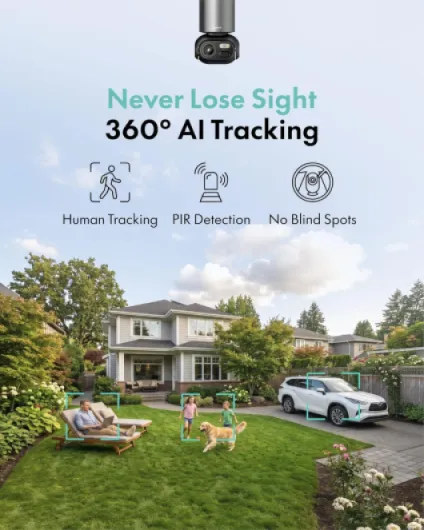
What I did like is the pan/tilt head. The camera can rotate horizontally and vertically, so you can cover a wide area with a single unit. In my case, one camera covers basically the whole driveway and part of the street. That saves you from buying multiple fixed‑angle cameras. The motor noise when it pans is there if you’re close, but outside you don’t really hear it. It doesn’t feel cheap or wobbly when it moves.
The solar panel is separate, with its own bracket and cable. That’s both good and bad. Good because you can mount the camera where you want the view, and the panel where you get sun. Bad because you now have a cable between them to manage. I ended up running the cable along the wall with clips so it doesn’t dangle. It’s not ugly, but it’s not invisible either. If you’re picky about your walls, you’ll spend a bit of time making it look neat.
Build‑wise, the plastic feels decent. Not luxury, but solid enough for outdoor use. The joints and seals look like they can handle rain, though I haven’t had a full winter storm season with them yet. Access to the charging port and reset buttons is straightforward, but still protected enough that you’re not opening flaps all the time. From a pure design point of view, it’s functional, pretty solid, and focused on coverage rather than looking pretty.
Battery and solar: great when you have sun, weaker in grey climates
Each camera has a 10,000 mAh battery plus its own solar panel. In my case (moderate climate, some sun, some clouds), the combo works well. I fully charged both cameras via USB‑C before installing them. After about three weeks, both have stayed between 90–100% according to the app, similar to what one of the 5‑star reviewers said. That’s with motion detection on, people/vehicle AI enabled, and around 10–20 events per day per camera. So in a reasonable climate with okay sun exposure, it’s basically “set and forget”.
Where it clearly struggles is in places with constant rain or very short winter days. The Welsh reviewer complaining about the battery draining in winter is believable. Solar panels are not magic; if you have heavy rain, overcast skies, and the camera triggers a lot (like a busy street), then yeah, the battery will drain faster than it charges. The firmware update they mentioned seems to have helped with power management, but physics is still physics. If you live in northern regions with long, dark winters, I’d plan for occasional manual charging or think about positioning the panels very carefully.
One thing I appreciated is that you can adjust how aggressive the motion detection is. If you dial down sensitivity and limit the detection zones, the battery obviously lasts longer. If you max everything out, use constant live view, and have the camera moving a lot, you’ll chew through power more quickly. So there is some trade‑off between security coverage and battery life. For a normal home setup with tuned zones, I think the battery + solar solution is good enough.
Bottom line: in a mild or sunny area with a decent panel angle, the system behaves like a wired one – always on, no effort. In dark, rainy climates, expect to babysit it a bit more or think about adding a hard‑wired charging option like that 3‑star reviewer is considering. I wouldn’t buy this relying only on solar if I lived somewhere with constant grey skies all winter.
Durability and reliability: feels solid, but support is a bit of a question mark
From a physical point of view, the cameras feel reasonably tough. I’ve had them out in wind, heavy rain, and a couple of frosty nights. No water inside, no fogged lens, no random reboots so far. The plastic housings haven’t discoloured or cracked, and the joints still move smoothly when the camera pans. I wouldn’t go at them with a hammer, but for normal outdoor exposure they seem fine. The cables from the solar panels haven’t shown any wear yet either, though long‑term UV exposure is something I can’t judge after only a few weeks.
On the reliability side, the connection between cameras and base station has been stable for me. I put the base station in the living room near the router, and both cameras are outside on opposite sides of the house. No random drop‑outs so far, and recordings are always there when I check events. That said, this does depend heavily on your Wi‑Fi and house layout. If you’ve got thick stone walls or a huge property, you might need to think about router placement or a mesh system.
What worries me a bit more is customer support. The listing talks about 24/7 support and an extra 6‑month warranty if you activate it in the app, which sounds good. Some reviewers mention that support helped them and that a firmware update fixed battery issues. On the other hand, there’s also that 1‑star review where the person says they got one reply and then nothing after several follow‑ups. I haven’t needed support yet, so I can’t confirm either way, but it’s something to keep in mind if you’re not comfortable troubleshooting on your own.
Overall, in terms of build and day‑to‑day reliability, I’m not seeing any red flags. It feels like it will last a few years outside without drama if you install it properly and don’t yank on the cables. The only uncertainty is how the brand will handle issues if something does break after a while. If you value ultra‑responsive support, that might be a downside compared to more established players like Arlo or Ring.
Performance: 4K image, AI detection and app experience in real life
The 4K image quality is honestly the main strength here. During the day, the picture is very sharp. I can clearly read license plates of parked cars across the street and see faces well enough to recognise people without zooming much. Compared to my older 1080p camera, it’s a noticeable step up – less pixel mush when you pinch‑zoom in. The digital zoom (up to 8x) is still digital, so it gets grainy at the extreme, but the extra resolution gives you more room before it turns into blobs.
At night, the camera does a decent job. The colour night vision works as long as there’s at least some ambient light (streetlight, nearby house lights). In full darkness it falls back to IR black‑and‑white, which is normal. Within about 7–8 meters (around the 25ft they claim), you can see people and objects clearly. Beyond that, details drop off but you still see movement. If you’re expecting cinema‑level night footage at 30 meters, that’s not happening, but for a driveway, garden, or front door, it’s more than enough.
The AI detection is actually useful. You can tell it to focus on people, vehicles, or general motion. Once I turned off general motion and left only people + vehicles, my notification spam dropped a lot. Before that, wind and branches were triggering alerts. The camera tracks people when they enter the frame, which looks a bit robotic but works. The app lets you draw activity zones too, so you can ignore the pavement and just watch your gate or door. That took a bit of tweaking in the first days, but after that I barely touched it.
The app itself is fairly responsive. Live view loads in a few seconds on my Wi‑Fi, scrubbing through recordings is smooth enough, and the timeline is usable. It’s not perfect – there are the occasional delays when the connection is weak, and the interface has a lot of options so you might need 15–20 minutes to understand everything. But once set, day‑to‑day use is simple: tap notification, see clip, done. Overall, performance is pretty solid: reliable enough for everyday security use, with good clarity and fewer false alarms than cheaper cameras I’ve tried.
What you actually get and how it all fits together
This kit is basically three main pieces: two W510 cameras with their solar panels and the H200 base station. The base station has 32 GB built‑in storage and can go up to 16 TB with an extra hard drive, which is honestly more than enough for a normal house. Everything connects over Wi‑Fi, but the cameras don’t talk directly to your router; they talk to the base station, which then sits on your network. That’s good for stability, but it does mean one more box near your router.
Setup flow was: plug in the base station, connect it to Wi‑Fi via the app, let it update firmware, then add each camera one by one. Each camera took me about 10 minutes, similar to what one Amazon review mentioned. The app walks you through pairing, naming the cameras, and testing their position before you bolt anything to the wall. It’s not complicated, but it’s not a 2‑minute job either. Expect to spend a solid hour if you’re doing a careful installation.
In the box you get pretty much everything: brackets for the cameras and solar panels, screws, wall plugs, a Type‑C cable for first charging, and the power adapter for the base station. No drill bits or tools, obviously, so you’ll need your own drill if you’re going into brick or concrete. I liked that the solar panel brackets are adjustable – it makes a real difference when you’re trying to angle them towards the sun without putting them in a stupid place.
Overall, as a package, it feels like a mid‑to‑high range consumer kit. Not pro‑grade, but clearly above the usual no‑name plastic cams. The promise is: install it once, let the sun do the work, and avoid subscriptions. That’s mostly accurate, as long as your placement, Wi‑Fi, and climate cooperate.
Pros
- Very clear 4K video with good detail during the day and decent colour night vision at typical garden/driveway distances
- Solar + 10,000 mAh battery combo works well in normal climates, leading to mostly maintenance‑free use
- Local storage on the base station (32 GB built‑in, up to 16 TB) means no forced subscription and plenty of recording capacity
Cons
- Solar charging struggles in very rainy or dark winter climates, may require manual recharging or hard‑wiring
- Brand support seems inconsistent based on reviews, and ecosystem is smaller than big names
- Setup and app have a learning curve; not ideal for people who want a super simple, plug‑and‑forget experience
Conclusion
Editor's rating
After a few weeks of use, I’d sum up the BOTSLAB W510 2‑Cam Kit like this: solid 4K image, practical solar + battery setup, and decent AI detection, with a few caveats around climate and support. As a day‑to‑day security system, it does what it’s supposed to do: records clear footage, sends relevant alerts, and doesn’t nag you for a subscription every five minutes. The base station with local storage is a nice change from purely cloud‑based setups, and the ability to expand up to 16 TB is overkill in a good way.
Who is it for? People who want better image quality than the usual 1080p cams, don’t want to run power cables, and prefer local storage over cloud subscriptions. If you live in a reasonably sunny place and can give the solar panels a clear view of the sky, it’s convenient and low‑maintenance. If you’re comfortable spending a bit of time tweaking detection zones and app settings at the start, you’ll get a system that mostly runs itself afterwards.
Who should skip it? If you live somewhere with long, dark winters and constant rain, relying only on the solar charging is risky; you’ll probably end up charging manually or planning a wired backup. Also, if responsive customer support and a big brand name are critical for you, you might feel safer with something like Arlo, Ring, or eufy, even if that means paying subscriptions. Overall, I’d give it a 4/5: good, quite capable, with room for improvement in support and better handling of tough climates.