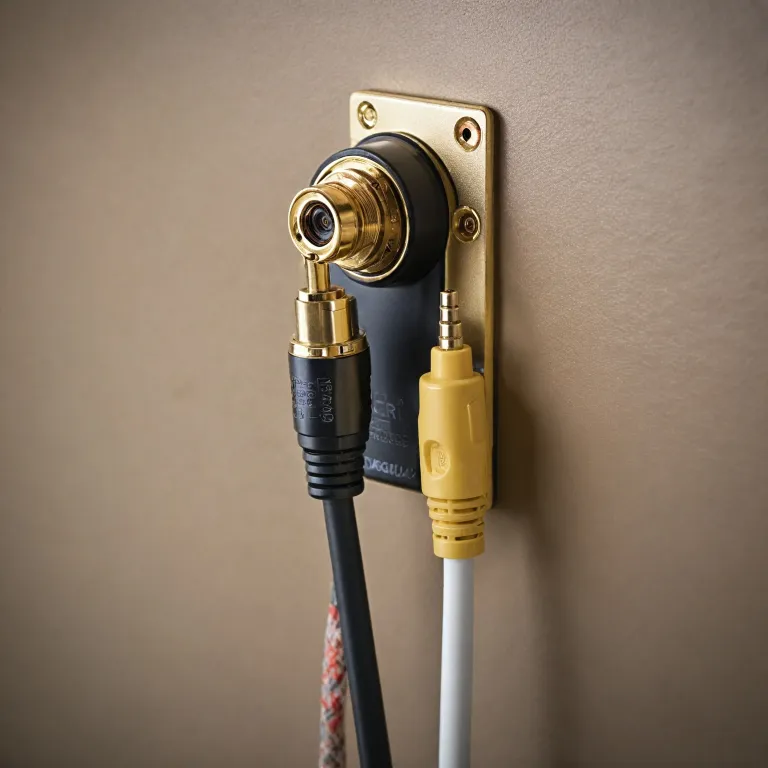
Why the right RCA connector to RCA matters for home security cameras
In many legacy home security camera systems, the humble RCA connector to RCA cable still carries critical audio and video signals. Although modern IP cameras rely on Ethernet and fully digital links, countless analog cameras remain installed in apartments, garages, and small businesses, where a simple audio video cable is easier to maintain and cheaper to replace. When a single rca connector to rca link fails, you may lose the only visual record of a break in or suspicious movement around your property. Choosing the correct connector type, cable length, and shielding therefore becomes a real security decision, not just a technical detail.
Traditional rca connectors were designed for consumer stereo audio and composite video, yet they now bridge older cameras to newer receivers amplifiers and hybrid recorders. A typical analog camera sends its video signal over a yellow cable rca plug, while red white plugs carry mono or stereo audio back to a digital video recorder or monitor. Even if your recorder is digital, the signal entering through rca cables remains analog, so cable quality, impedance, and connector fit directly affect image clarity and noise. Poorly matched male cable ends or worn female jacks can introduce interference, ghosting, or intermittent dropouts that undermine evidence quality.
Homeowners often underestimate how many connectors and cables hide behind their theater systems and security racks. A single camera may use one rca male plug for video and another for stereo audio, multiplied across several channels and extended with black extension cables. Each additional rca connector to rca junction adds a potential failure point, especially when cheap plugs or loosely crimped audio cable ends are used. Understanding how rca plug geometry, jack tolerances, and cable black shielding interact helps you build a more robust surveillance backbone.
Understanding RCA connectors, plugs, and jacks in camera installations
The classic rca connector to rca assembly consists of a central pin and an outer ring, forming a simple unbalanced connection. On a home security camera, the male plug usually emerges from a short pigtail, ready to mate with a female jack on a DVR, monitor, or balun adapter. Because the design is standardized, most rca connectors and rca cables appear interchangeable, yet subtle differences in connector type, plating, and strain relief can change long term reliability. In damp basements or outdoor junction boxes, corrosion on a cheap plug rca can quickly degrade both audio and video quality.
Security installers often color code each cable rca plug to avoid confusion when routing multiple lines through conduits. Yellow typically marks composite video, while red white plugs indicate stereo audio or dual mono channels feeding receivers amplifiers or small theater systems. When you extend a camera run, you usually join two male cable ends with a short female to female coupler, effectively creating another rca connector to rca link in the chain. Every added junction should be firmly seated, with no wobble between connectors, because even slight looseness can cause intermittent signal loss during vibrations or temperature changes.
Although rca is an analog standard, it still coexists with digital interfaces in mixed technology homes. A hybrid recorder might accept both coaxial rca audio cable inputs and HDMI outputs, allowing you to monitor analog cameras on a modern flat screen while keeping legacy wiring intact. In some advanced setups, xlr connectors carry balanced microphone feeds, while rca stereo outputs send line level audio to secondary rooms. When integrating such systems, always check whether each connector type is intended for audio video, stereo audio only, or control signals, and label all cables clearly to avoid mispatching during maintenance.
For readers interested in broader smart home integration, pairing reliable cabling with a well designed floodlight camera can further strengthen perimeter protection ; see this detailed guide on enhancing your home security with a wired floodlight camera for complementary strategies.
Matching RCA cable types to camera distance and environment
When planning a home security camera layout, the length and type of each rca connector to rca cable run are as important as the camera resolution. Short indoor connections between a camera and a nearby recorder can often rely on standard molded rca cables, provided the cable black jacket is flexible and the plugs grip firmly. For longer distances, especially beyond 10 to 15 metres, signal loss and interference become more likely, so higher quality audio video cables with better shielding and thicker conductors are advisable. Using the wrong cable rca type for a long outdoor run can result in washed out video and noisy audio that obscures important details.
In mixed use installations, you may run both stereo audio and composite video along parallel paths, each using its own rca male plug and matching female jack. Keeping power lines separate from rca cables reduces hum and interference, particularly when receivers amplifiers and theater systems share the same electrical circuits as your security equipment. If you must cross mains power, do so at right angles and avoid bundling audio cable and power cords together inside tight conduits. For very long runs, some professionals convert the signal to balanced xlr or twisted pair, then back to rca connector to rca near the recorder, to preserve quality.
Harsh environments demand more robust connector type choices, including metal bodied rca plug designs with strain relief and weather resistant boots. Outdoor junction boxes should protect each plug rca and jack from moisture, insects, and dust, while indoor racks benefit from cable management that prevents heavy male cable ends from pulling on delicate connectors. If you experience intermittent dropouts or rolling images, inspect every rca stereo and video connector for oxidation or looseness before assuming the camera has failed. For systematic diagnostics on smart cameras and their wiring, this guide on troubleshooting common camera issues offers a useful methodology that also applies to analog setups.
Integrating analog RCA with digital recorders and hybrid systems
Many homeowners now operate hybrid security systems where analog cameras feed into digital recorders, creating a bridge between rca connector to rca cabling and network based monitoring. In such configurations, each analog camera typically connects via an rca male plug for video and another for audio, which then terminate at a DVR that digitizes the signals. The recorder may output over HDMI to a television while still accepting legacy rca cables on the input side, allowing you to upgrade viewing equipment without rewiring every camera. This layered approach preserves existing investments while gradually moving toward fully digital infrastructure.
When integrating analog and digital components, pay attention to input labeling on receivers amplifiers and recorders. Some inputs are designed for stereo audio only, using red white rca stereo pairs, while others accept composite audio video through a single yellow jack. Connecting a camera’s video rca plug into an audio only jack will yield no picture, even though the connector type physically fits. Clear labeling of each cable rca and jack, along with color coded heat shrink or tags, prevents such silent misconfigurations that can leave blind spots in your coverage.
Hybrid systems also raise questions about audio privacy and legal compliance, because stereo audio recording may be regulated differently from video. Before enabling microphone inputs over rca audio cable runs, verify local rules on consent and signage, especially in shared buildings or multi unit properties. In some cases, you may choose to route only video through rca connector to rca links and reserve audio for specific zones like entryways, using separate cables and clearly marked switches. For households that combine security monitoring with smart cleaning devices and other connected appliances, maintaining tidy wiring around racks and floors also matters ; a detailed review of a robot vacuum with advanced obstacle avoidance illustrates how clutter free cabling can reduce accidental disconnections.
Choosing between RCA, XLR, and other connector types for security audio
While rca connector to rca links dominate consumer grade camera kits, more demanding audio capture sometimes benefits from alternative connector type options. Professional microphones near entrances or intercom panels may use xlr connectors for balanced audio, which resist interference better than unbalanced rca cables over long distances. In such cases, installers often convert the balanced signal to unbalanced at the recorder, using adapters that terminate in rca male plugs feeding standard audio inputs. This hybrid approach allows you to retain robust front end capture while still using affordable DVRs and receivers amplifiers with rca jacks.
Within a single property, you might therefore encounter a mix of xlr, rca, and even digital interfaces like USB or HDMI, each serving different roles. Door stations could send stereo audio over rca stereo pairs to indoor monitors, while background music systems use separate rca cables to feed theater systems in living rooms. To avoid confusion, map every cable rca run on a simple diagram, noting which connectors carry audio video from cameras and which carry only audio from microphones or media players. This documentation becomes invaluable when troubleshooting or expanding your system later.
Color coding remains a practical tool for distinguishing functions at a glance, especially in low light equipment closets. Reserve red white rca plug pairs for stereo audio, yellow for video, and black for specialized feeds like subwoofers or auxiliary zones, ensuring each male cable matches a clearly labeled female jack. When you must run multiple rca connector to rca lines through a single conduit, use high quality cable black jackets with printed legends to differentiate channels. Such disciplined practices reduce the risk of mispatching during hurried repairs after an incident, when every minute without coverage feels critical.
Practical maintenance tips for reliable RCA based home security
Maintaining a secure home camera network built around rca connector to rca cabling requires periodic inspection and simple preventive measures. At least once a year, power down your receivers amplifiers and DVR, then gently unplug and reinsert each rca male plug to break up minor oxidation on the contacts. Check that every cable rca strain relief remains intact and that no male cable hangs under tension from a wall mounted jack or recorder input. A few minutes spent reseating connectors can resolve intermittent noise or flicker that might otherwise be blamed on failing cameras.
Visually inspect all rca cables along their length, paying attention to tight bends, crushed sections, or nicks in the cable black outer jacket. Any damage that exposes shielding or conductors can invite interference or moisture, especially in garages and attics where temperature swings are significant. Replace suspect audio cable or video leads promptly, and consider upgrading to thicker, better shielded audio video cables in high risk runs. When routing new lines, avoid stapling directly through the cable, and instead use clips that hold the jacket without compressing it.
Inside equipment racks, group rca stereo and other low level signal cables away from power bricks and mains cords to minimize hum. Use short patch leads between adjacent devices rather than coiling excess rca connector to rca lengths, which can act as antennas for interference. Label both ends of every rca plug and jack pair with clear tags, indicating camera number, location, and whether the line carries audio, video, or both. This disciplined approach ensures that even in stressful situations, you can quickly trace a fault and restore full surveillance coverage without guesswork.
Key statistics on home security camera reliability and cabling
- Up to a significant share of analog camera failures in homes are ultimately traced to damaged or poorly seated rca connector to rca cables rather than to the cameras themselves.
- In many small residential systems, more than half of all signal paths still rely on rca cables for at least one segment of the audio video chain.
- Properly shielded cable rca runs can reduce visible noise and interference on analog video feeds by a substantial margin compared with thin, unshielded alternatives.
- Routine inspection and reseating of rca plug and jack connections at least once per year measurably lowers the rate of unexplained dropouts in legacy camera systems.
Common questions about RCA connectors in home security cameras
How do I know if my camera uses an RCA connector to RCA cable ?
Check the camera pigtail for round male plugs with a central pin and metal ring, usually color coded yellow for video and red white for audio. If these rca male plugs terminate at matching female jacks on your recorder or monitor, your system relies on rca connector to rca cabling. Many hybrid DVRs label these inputs as AV or audio video, confirming their analog nature.
Can I mix RCA and digital connections in the same security system ?
Yes, many homeowners run analog cameras over rca cables into a DVR, then use HDMI or network links to view footage on modern screens. The key is to keep analog rca connector to rca paths clearly labeled and separate from digital lines to avoid confusion. Hybrid recorders are designed to accept both connection types simultaneously without compromising performance.
Does cable length affect RCA video quality for security cameras ?
Longer cable rca runs increase signal loss and susceptibility to interference, especially with thin or poorly shielded cables. For distances beyond roughly 10 to 15 metres, higher quality audio video cables or signal boosters may be necessary to maintain a clean image. If very long runs are unavoidable, consider using baluns or converting to balanced lines before returning to rca connector to rca near the recorder.
Should I upgrade from RCA to a fully digital camera system ?
Upgrading to IP or HD over coax cameras can improve resolution, remote access, and overall flexibility, but it requires new cabling or adapters. If your existing rca cables are in good condition and your coverage needs are modest, maintaining them while gradually adding digital cameras can be a cost effective compromise. Evaluate image quality, reliability, and future expansion plans before committing to a full replacement.
How often should I check my RCA connectors and cables ?
A yearly inspection of every rca connector to rca link, including plugs, jacks, and visible cable sections, is a practical minimum for most homes. In harsher environments like garages or outdoor enclosures, a quick check every few months helps catch corrosion or mechanical stress early. Regular maintenance reduces the risk of silent failures that leave critical areas unmonitored.