Summary
Analysis score
Average of the criteria rated below
Value for money: strong niche product, not for every situation
Motorized dome-style design built for wide coverage
Solar power and battery: solid on paper, but depends on your setup
Outdoor durability and long-term reliability
4K image quality, AI detection and 4G behaviour in real life
What the Reolink Go PT Ultra-G actually offers
Pros
- 4K/8MP resolution with colour night vision and spotlight for detailed footage day and night
- True wireless operation via 4G LTE plus 6 W solar panel for remote locations without Wi‑Fi or mains power
- 355° pan and 140° tilt with presets and AI detection for people, vehicles and pets
Cons
- Requires a SIM card and data plan, with potentially high data use if not configured carefully
- Performance and battery longevity heavily depend on 4G signal quality and solar exposure
- Some reports of connection hiccups and motion detection quirks in more challenging environments

Specifications
View full product page →| Brand | Reolink |
4K security for spots where Wi‑Fi is useless
The Reolink Go PT Ultra-G targets a very specific need: securing places where Wi‑Fi and fixed internet are either unreliable or just don’t exist. It’s a 4K/8MP 4G LTE camera with a solar panel, motorized pan/tilt, spotlight and smart detection for people, vehicles and pets. On paper, it’s the kind of all-in-one solution you’d stick on a remote property, a construction site, a second home, or even a camper van, as long as there’s 4G coverage.
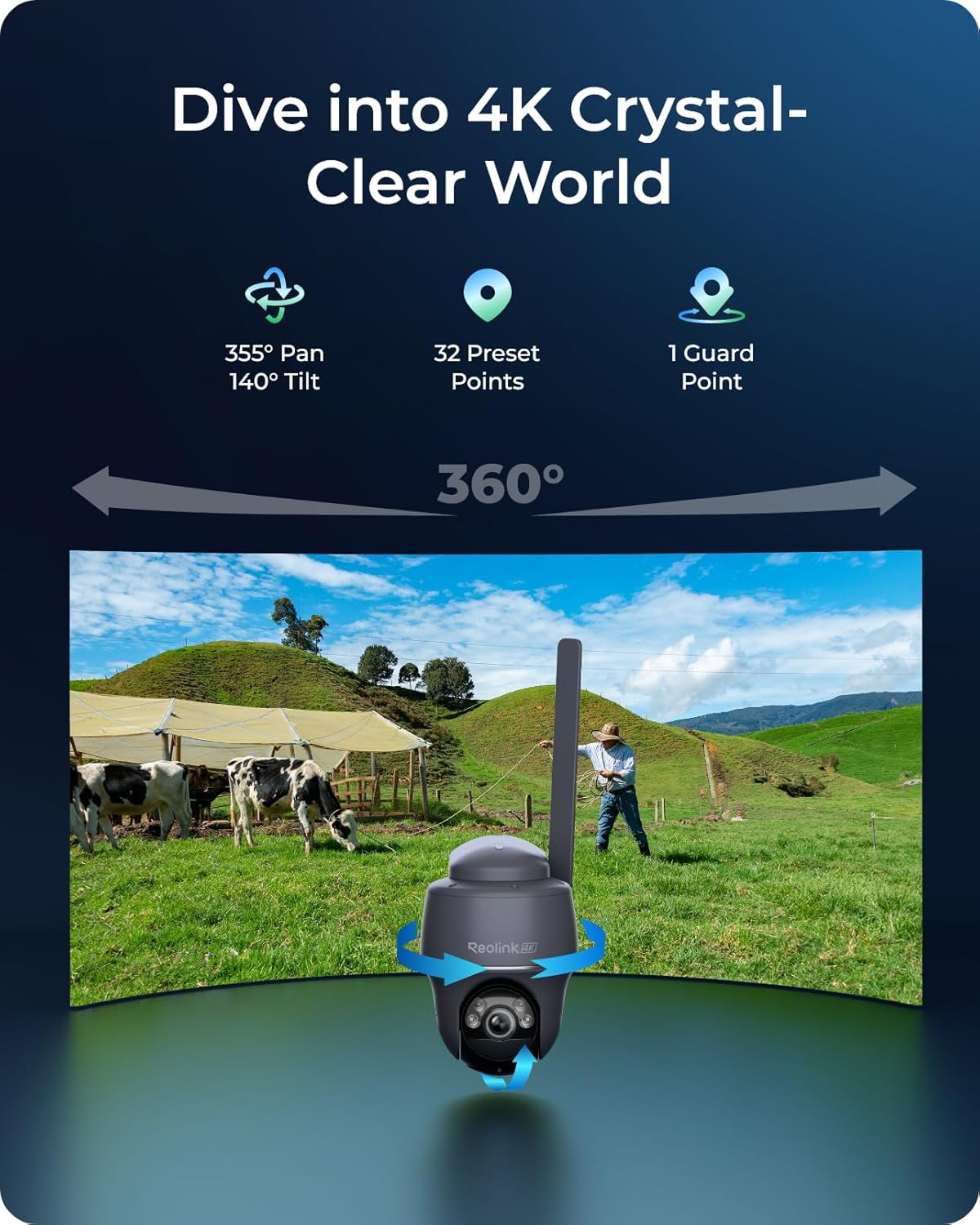
According to the spec sheet, it combines several key points that usually don’t go together: 4K resolution, full wireless operation over 4G, and solar power. It also comes with a pre-installed 32 GB microSD card, which is rare enough to be noted, and can go up to 128 GB if you upgrade the card. Colour night vision with spotlight and a 355° pan / 140° tilt mechanism round out the security side.
In the Amazon comments, the general tone is “good idea with some caveats”. The average rating sits around 3.9/5, which is decent but not mind-blowing for this kind of high-end camera. Buyers praise the flexibility and image quality, but there are complaints around mobile data usage, occasional connection hiccups, and some quirks with motion detection or app responsiveness. Nothing shocking for a 4G camera, but clearly not flawless.
In my opinion, this product is aimed more at people who really need 4G and solar than those just shopping for a basic outdoor camera. If you already have solid Wi‑Fi and mains power, there are simpler and cheaper options. But if your priority is covering an isolated gate, a barn, a parking lot or a field, this combo of solar power and 4G connectivity is exactly what makes it interesting, even if you have to accept a few compromises on stability and running costs.
Value for money: strong niche product, not for every situation
The price is not displayed here, but given the feature set — 4K sensor, 4G LTE module, motorized pan/tilt, solar panel, AI detection and included 32 GB microSD — this camera clearly sits in the upper segment of consumer security gear. It competes more with other 4G/solar kits than with basic Wi‑Fi cameras. When you factor in the need for a SIM card and data plan, the total cost of ownership is higher than a standard Wi‑Fi camera plugged into your home router.
Among the reviews, many buyers say the value is good if you truly need 4G and solar. They compare it favourably to paying for mains wiring runs or installing network cables to remote areas. For people protecting a secondary residence, a field entrance or an off-grid building, the cost of the camera plus a modest data plan is seen as acceptable compared to the hassle of other solutions. The inclusion of a 32 GB microSD card and free local recording is a plus, as it avoids mandatory cloud subscriptions, although Reolink does offer optional cloud storage for those who want off-site backup.
On the other hand, some comments point out that if you already have solid Wi‑Fi coverage and power outlets, you can get equally capable or even more stable cameras for less money, sometimes also from Reolink’s own Wi‑Fi range. In those cases, the Go PT Ultra-G’s main strengths (4G freedom and solar) bring little benefit, and you’re mostly paying for features you won’t use. There are also remarks about ongoing data costs: heavy use of remote live view and many motion alerts can increase data consumption, which adds to the monthly bill.
In my opinion, the value for money is very context-dependent. For a remote gate, a farm track, a boat mooring or a cabin in the woods, this product makes sense and can actually be economical compared to running cables or paying for professional systems. For a typical suburban house with decent Wi‑Fi, it’s harder to justify. If you’re in the first category and ready to tune settings to control data use, the camera looks like a solid investment. If not, a simpler Wi‑Fi-powered model will likely give you better bang for your buck.
Motorized dome-style design built for wide coverage
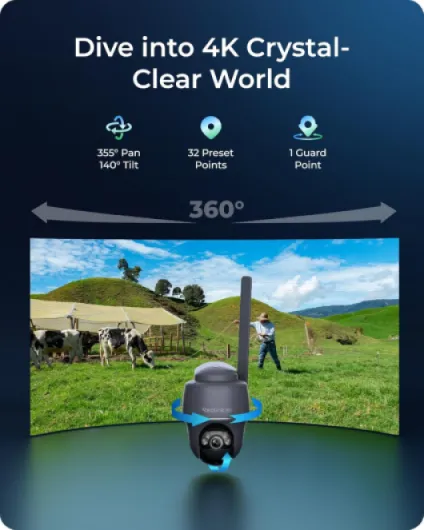
The Go PT Ultra-G follows Reolink’s usual outdoor design language: a compact dome-shaped camera head on a mounting base, here in grey, with the included Reolink Solar Panel 2 attached via cable. The camera itself integrates the lens, IR LEDs, spotlight, microphone and speaker in one housing that can rotate and tilt under motor control. This motorized design is what enables the 355° pan and 140° tilt, which is a strong point if you want to cover a large area with a single device.
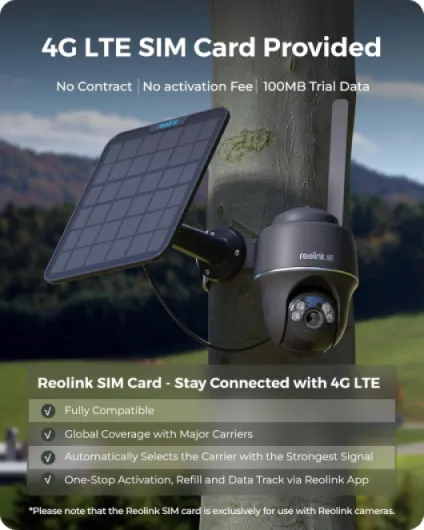
From the photos and descriptions, the mounting system is a classic wall or pole-style bracket, plus an adjustable arm for the solar panel so you can angle it towards the sun. Reviews often mention that the camera looks relatively discreet for a 4G model with a solar panel: it’s not tiny, but it doesn’t have the heavy industrial look of some cellular cameras. The grey colour can help it blend into darker facades, fences or sheds, instead of the bright white that stands out on some competitors.
Buyers report that the pan/tilt control through the Reolink app is generally responsive, though a few people mention a slight delay, which is logical over 4G. The ability to set 32 preset positions is seen as practical: for example, one preset for the gate, one for parking spots, one for a path, and the camera jumps there in one tap. On paper, this is a clear advantage over fixed cameras, especially when you’re trying to cover multiple angles with one device.
In my opinion, the design is focused on coverage and flexibility more than stealth. The camera and panel are visible enough to act as a deterrent, which some owners like. The trade-off is that you need to accept the visual presence of the solar panel and cable, and plan the installation carefully so the panel gets sun while the camera sees the right area. It’s not a design object; it’s a practical piece of kit, and everything about it reflects that priority.
Solar power and battery: solid on paper, but depends on your setup
The Go PT Ultra-G combines an internal rechargeable battery with a 6 W solar panel. On paper, this is exactly what you want for a remote 4G camera: the panel keeps the battery topped up, and you avoid climbing up a ladder every few weeks to recharge. Reolink does not shout a specific mAh capacity or exact autonomy in the snippet available here, but the whole product is marketed as being able to run continuously outdoors on solar, provided the panel gets enough sunlight.
Among the published reviews, many buyers say the solar + battery combo works well once correctly installed. In sunny regions, people report that the battery level stays high most of the time, even with regular motion events and some live viewing. Others in cloudier climates or with shaded installations are less positive: they mention that the battery can drain gradually during long periods of bad weather, especially if the camera is very active, with frequent alerts and live views over 4G.
One detailed comment describes a scenario where the camera was placed under partial shade, watching a busy driveway, with multiple daily notifications and frequent remote viewing. Over time, the battery level slowly decreased despite the solar panel, and the user had to either reduce the number of alerts, adjust the schedule, or occasionally bring the camera down for manual charging. This kind of report underlines a key point: solar power is not magic. If the camera is in an energy-hungry configuration (weak 4G, many events, lots of live viewing) and the panel doesn’t get enough direct sun, the system can end up in a deficit.
In my opinion, anyone interested in this product should plan the solar installation carefully: orient the panel to maximize sun exposure, avoid shade from trees or roofs, and consider reducing motion sensitivity or alert frequency if the spot is very busy. For a quiet field entrance or a rarely used gate in a sunny area, the solar/battery setup should be more than enough. For an active courtyard in northern weather with poor 4G, you might have to compromise on usage or accept occasional manual recharges.
Outdoor durability and long-term reliability
This camera is clearly marketed for outdoor security, so durability is a key point. While the exact IP rating is not spelled out in the short spec snippet here, Reolink’s outdoor models are typically built to handle rain, dust and temperature variations. The presence of a dedicated outdoor solar panel also suggests the system is intended to stay outside year-round. The casing appears to be plastic with weather-sealed joints, and the mounting hardware is designed for fences, walls or poles.
In the Amazon comments, most buyers seem satisfied with the overall build quality. People mention that the camera feels robust enough for typical outdoor use and that the bracket and panel mount hold up well once tightened. Users have installed it in gardens, on barns, at remote gates and near coastal areas. Over several months, many report no particular issue with water ingress or obvious deterioration, as long as the camera is mounted correctly and cables are properly routed.
There is, however, at least one notable review describing a problem after some months outside: the user reported that the camera started to behave erratically after bad weather, with connection drops and inconsistent operation, and suspected moisture or environmental stress. This is an isolated case among the reviews, but it shows that outdoor electronics are always at the mercy of harsh conditions and installation quality. Another common theme is that the 4G antenna and signal can be affected by where you mount the camera; thick walls or metal structures can reduce signal, which then impacts reliability and potentially increases battery drain.
In my opinion, the durability here is good but not bulletproof. It’s suitable for permanent outdoor use, but you still need to respect some basics: avoid placing the camera where it will be hit directly by sprinklers or trapped water, secure cables so they don’t flap in the wind, and check fixings after storms. For remote sites that are hard to access, it may be worth slightly over-engineering the installation (better anchors, thoughtful positioning) to avoid surprises. Overall, there’s nothing alarming in the feedback, but like most smart cameras, it’s not an industrial-grade device.
4K image quality, AI detection and 4G behaviour in real life
On the spec sheet, the 4K/8MP resolution is clearly one of the headline features. Compared to the many 2K/4MP 4G cameras on the market, having double the pixel count should give more detail when zooming into recordings, especially combined with the 16x digital zoom. Several Amazon comments confirm that image quality in daylight is sharp enough to recognize faces or read number plates at reasonable distances, assuming the subject is within the camera’s field of view and lighting conditions are decent.
At night, the camera offers up to 30 m colour night vision thanks to a built-in spotlight. Reviews often say that the colour mode with the spotlight is very usable in yards, driveways and near buildings. Some buyers mention that pure IR night vision is less detailed than daytime 4K (which is expected), but still good enough for monitoring movement. The spotlight can also act as a deterrent when motion is detected, especially when combined with the siren.
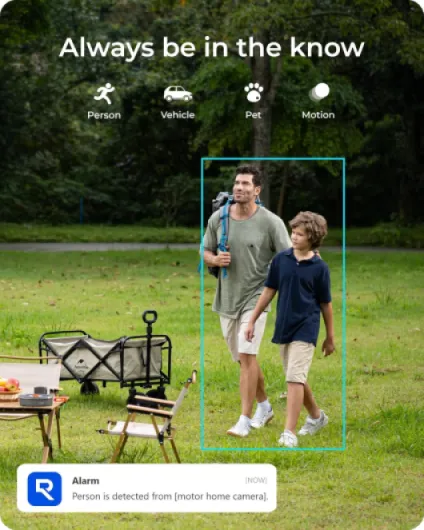
On the smart side, the camera has person, vehicle and pet detection. According to the comments, this AI filtering is one of the more appreciated features because it reduces false alerts compared to basic motion detection. That said, buyers are not unanimous: some mention occasional missed events or false alerts with shadows, branches or insects, especially in complex scenes. This is common with consumer AI cameras, and in my opinion, you should expect to spend some time tuning sensitivity, motion zones and notification settings to find the right balance.
The 4G connection is both the strength and the weak point. Where there is good LTE signal, people report stable live view and notifications. In more marginal coverage areas, some owners mention slow video loading, intermittent disconnections and delayed alerts. This is not really the camera’s fault; it’s the nature of cellular networks. But it means performance will heavily depend on your operator and the local signal quality. If your spot has borderline coverage on your phone, you should assume the camera will behave similarly. Overall, performance seems solid when the environment (signal, sun, placement) is favourable, and more hit-or-miss when those conditions are not met.
What the Reolink Go PT Ultra-G actually offers
On paper, the Reolink Go PT Ultra-G is a 4K/8MP motorized 4G LTE camera sold here as a kit with the Reolink Solar Panel 2 (6 W). It’s fully wireless: no Ethernet, no Wi‑Fi, just a 4G SIM card and the solar panel feeding a built-in rechargeable battery. That means it’s designed for outdoor spots where you can’t or don’t want to run cables. The camera supports major 4G LTE bands and works anywhere with compatible cellular coverage, so the key requirement is a data plan, not a router.
The spec sheet highlights several main functions: 4K video, colour night vision up to about 30 m with spotlight, smart detection for people, vehicles and pets, and two-way audio. The pan/tilt motor allows 355° horizontal and 140° vertical movement, with 16x digital zoom. You can set up to 32 preset points and a guard point in the Reolink app or client, so the camera can quickly jump to specific areas with a tap. Motion videos can be stored locally on microSD (up to 128 GB) and the camera ships with a 32 GB card already installed, plus optional encrypted cloud storage if you prefer off-site backup.
According to buyer feedback, the key selling points that stand out are:
- Freedom from Wi‑Fi and power sockets – users install it in fields, driveways, boats, cabins, etc.
- High image detail – several reviews say the 4K resolution makes it easier to zoom in on plates or faces.
- Decent motion detection – the AI filters for people/vehicles/pets are generally seen as useful, though not perfect.
On the downside, comments mention that you need to think about SIM costs, data usage and 4G signal strength. Some owners were surprised by how much data continuous alerts or remote live view can consume. In my opinion, this isn’t a plug-and-forget gadget for someone who never wants to manage settings. It’s more of a flexible tool for those ready to tweak motion zones, alert settings and data usage to match their location and budget.
Pros
- 4K/8MP resolution with colour night vision and spotlight for detailed footage day and night
- True wireless operation via 4G LTE plus 6 W solar panel for remote locations without Wi‑Fi or mains power
- 355° pan and 140° tilt with presets and AI detection for people, vehicles and pets
Cons
- Requires a SIM card and data plan, with potentially high data use if not configured carefully
- Performance and battery longevity heavily depend on 4G signal quality and solar exposure
- Some reports of connection hiccups and motion detection quirks in more challenging environments
Conclusion
Analysis score
The Reolink Go PT Ultra-G is a specialized tool rather than a general-purpose security camera. Its main strengths are clear: 4K resolution, 4G LTE connectivity, solar power and motorized pan/tilt. According to published reviews, it delivers good image quality, useful AI detection and enough flexibility to cover large outdoor areas with a single device. When installed in a spot with solid 4G signal and decent sunlight, it seems to do the job reliably, with the solar panel keeping the battery topped up most of the time.
It’s not perfect, though. The average rating of around 3.9/5 reflects some connection issues in weak-signal areas, occasional quirks with motion detection and the fact that energy balance can be tight in shaded or very busy locations. You also have to factor in the cost and management of a SIM card and data plan. In my opinion, this camera makes the most sense for people who genuinely need what it offers: monitoring remote gates, barns, fields, secondary homes or off-grid spots where Wi‑Fi and mains power are not an option.
If you’re in that use case and ready to tweak settings to match your environment, the Go PT Ultra-G looks like a strong candidate with a lot of practical features. If you just want to secure a regular house already covered by Wi‑Fi, there are simpler and cheaper alternatives — including from Reolink itself — that will likely be easier to live with. Overall, it’s a good product for a specific niche, with solid capabilities as long as you respect its constraints.