
Summary
Editor's rating
Value for money: cheap entry into cell cams, but count the hidden costs
Design & build: rugged enough, but not fancy
Battery life & power: either dial it in or go solar
Durability & reliability: holds up physically, less so in behavior
Photo, video & app performance in real life
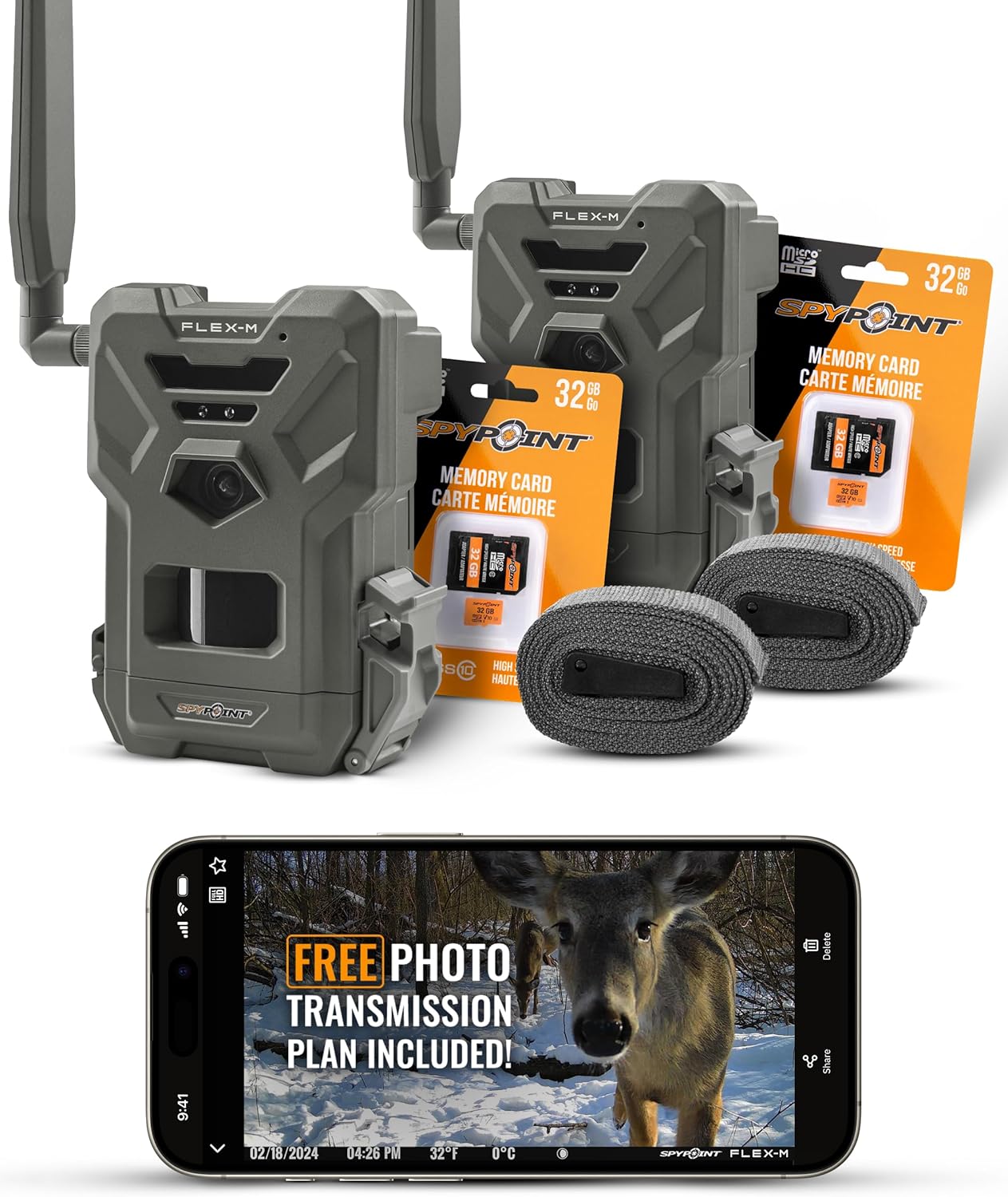
What you actually get with the Flex‑M twin pack
Pros
- Strong upfront value: two cellular cams with SD cards for roughly the cost of one from other brands
- Daytime photo quality is clear enough for serious scouting, with usable 720p video
- User-friendly app with species filtering, maps, and remote setting changes
Cons
- No SD card overwrite or remote formatting, so full cards mean driving out to the camera
- Occasional black night photos and over‑sensitivity, which waste both photos and battery
- To use them comfortably, you often end up paying for higher data plans and possibly solar panels

Specifications
View full product page →| Brand | SPYPOINT |
Two cell cams for the price of one… but what’s the catch?
I’ve been running this SPYPOINT Flex‑M twin pack for a bit now on two different spots: one on a feeder and one on a trail crossing. I picked this kit because the price for two cameras was close to what a single cellular cam from other brands costs, and it already includes the SD cards. On paper, it checks a lot of boxes: 28MP photos, 720p video, night vision, GPS, cellular connection that auto-picks the network, and an app with AI filters. Looked like a simple way to cover two areas without going broke.
In practice, it’s a mixed bag. There are some things they do really well for the money, and a few things that are honestly pretty annoying once you actually use them in the field. If you just read the product page, you’d think everything is smooth and smart. Once the cams are strapped to a tree, you start to see the limits: SD card handling, black photos, battery drain if the settings aren’t dialed in, and the fact you’ll probably end up paying for a subscription if you want to use them properly.
What I’ll do here is walk through how they behaved for me: setup, day and night image quality, cell signal, the app, battery life, and whether the twin pack is really good value or just cheap on the surface. I’m not sponsored, I paid for mine, and I’ve also used other cellular cams (Tactacam, Moultrie, and one cheap no‑name Amazon cam) so I have some comparison points.
If you’re thinking about buying this pack for hunting season or to watch a property, read this as “chat with a buddy who already dragged them through the woods”. They’re not terrible, not perfect either. It really depends what you expect and how much hassle you’re willing to accept to save some money.
Value for money: cheap entry into cell cams, but count the hidden costs
On paper, the value of this twin pack is strong: two cellular trail cameras with SD cards included, for about what some brands charge for one camera alone. If you just look at the box price, it’s hard to complain. You get decent daytime photos, workable night shots (when the IR behaves), cellular connectivity that auto‑selects the network, and an app with some genuinely useful features like maps, weather, and species filtering. For someone who’s never used a cell cam before and wants to test the waters, it’s a fairly low barrier to entry.
But once you start actually using them, the ongoing costs show up. The free 100‑photo plan is okay for a slow camera on a quiet trail, but for a feeder, mineral lick, or any spot with regular traffic, you’ll blow through that quickly. Then you’re into $5/month or $15/month per camera. Run both on unlimited for a full season and you’re suddenly not in budget territory anymore. Add in the fact that they really behave better with lithium batteries or solar panels, and you can easily double or triple your initial spend over time.
There’s also the “value of your time” side. Because the cameras don’t support SD card overwrite or remote formatting, you eventually have to drive out and clear them manually. If you live 10 minutes from your hunting land, that’s annoying but fine. If you’re managing a more remote property, that’s gas and time. Same with reliability hiccups: a more expensive cam that just quietly works for months can end up being better value than a cheap one you have to nurse.
So for me, I’d say the Flex‑M twin pack is good value if you: want to cover two spots cheaply, don’t mind some quirks, and are okay with occasional trips to the cameras. If you expect rock‑solid reliability, smart storage management, and minimal babysitting, then the “cheap” twin pack starts to feel less like a bargain and more like a compromise. It gets the job done, but it’s not the gold standard of value once you factor everything in.
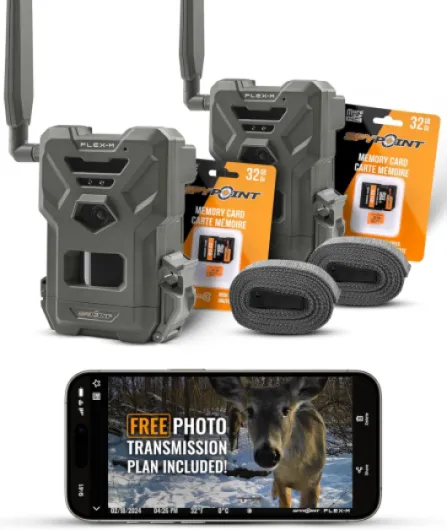
Design & build: rugged enough, but not fancy
Design-wise, the Flex‑M is pretty classic trail cam stuff. The housing is plastic with a camo/neutral look, nothing flashy. It’s not tiny but also not bulky, and it fits fine on a standard tree with the included strap. The front layout is simple: sensor window, lens, IR LEDs, and a small status area. There’s no big color screen like on some higher‑end models, so you’re not framing shots on the device itself. You mostly rely on the app and test photos to know if the angle is good.
The IP65 water resistance seems honest. I had one cam sitting through rain and a couple of windy nights, and there were no leaks or fogging inside. The latch feels reasonably solid, not like it’s going to snap off the first time you open it in the cold. That said, it’s still plastic – if you’re rough with your gear, I wouldn’t treat these like indestructible. The hinge and door feel okay but not overbuilt. There’s also the usual threaded insert on the bottom for mounting on a bracket if you don’t want to use the strap.
Inside, the layout is clean: microSD slot, battery compartment, and a few simple buttons for power, formatting the card, and sending a test photo. The on‑camera formatting button is actually useful; you don’t need a computer for that. But there’s no way to remotely format the SD card through the app, and that’s where some frustration comes in. Once the card is full, it just stops taking pictures until you go out there and deal with it. No “overwrite oldest photo” loop like some other brands use. For a cellular cam that’s supposed to be remote, that’s a bit of a miss.
Overall, the design is practical but basic. It feels like SPYPOINT tried to keep costs down while still giving a rugged enough shell. If you want a big screen, metal mounts, or a very polished feel, this isn’t it. If you’re fine with plastic that you strap to a tree and mostly forget about, it does the job. Just don’t expect premium touches at this price point.
Battery life & power: either dial it in or go solar
Power is where these cameras can either be fine or a pain, depending on how you set them up. The Flex‑M runs on batteries (SPYPOINT pushes lithiums), and that’s what I used first. With basic settings – photo only, reasonable delay between shots, not a crazy busy spot – the batteries held up decently over a couple of weeks. Nothing impressive, but acceptable for a hunting season if you’re checking them now and then. The trouble starts when the camera gets trigger‑happy or you use video or frequent uploads.
If the cam is pointed at something with movement all day (brush, a busy feeder, bad angle on a trail), it chews through batteries. That lines up with the angry 1‑star review: if you don’t have an unlimited plan and the cam keeps firing, you burn both your photo quota and your batteries in record time. There’s no magic here: more photos + more uploads = more power drained. You can slow down the upload frequency to save power, but then you lose the “near real‑time” feel.
SPYPOINT clearly expects a lot of people to add their solar panel. I tried one panel on the busier camera, and it did help keep it alive much longer. But it’s not bulletproof: if the cam is constantly firing and you don’t have good sun exposure, you can still end up with a dead rig. Also, the combo of cam + solar panel suddenly isn’t that cheap anymore. The cameras themselves are well‑priced, but once you add two solar panels and paid plans, the whole setup climbs into the same budget as other brands that might manage power a bit better.
One thing that bugged me is that there’s no smart SD card management tied to power. When the card fills, it just stops shooting, even if it still has plenty of battery. You can’t set it to auto‑overwrite old photos or remotely format the card, so you’ll burn gas driving out to the camera just to clear space and maybe swap batteries again. For a product sold as “remote cellular”, that’s a weak point. In short: with careful placement and settings, battery life is okay; in a bad spot or bad config, it’s rough unless you go solar.
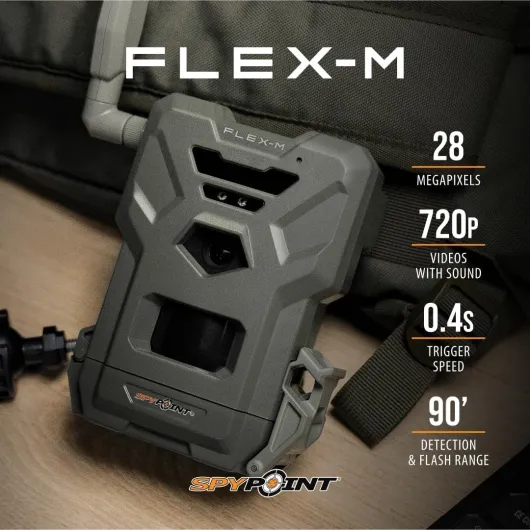
Durability & reliability: holds up physically, less so in behavior
On the physical durability side, I don’t have big complaints. The plastic housing has handled rain, temperature swings, and a few bumps without cracking or leaking. The latch still closes tight, the strap hasn’t slipped, and the ports and SD slot haven’t given me issues. The IP65 rating seems realistic: it shrugs off normal weather. I wouldn’t dunk it in a creek, but for trees, posts, and fence lines, it’s fine. The cameras don’t feel premium, but they don’t feel like dollar-store toys either.
Where the “durability” becomes more questionable is in the reliability over time. That 1‑star review complaining about cameras working, then randomly stopping to send photos – I’ve seen a lighter version of that. One of my cams went quiet for several hours for no good reason, then suddenly started sending again without me touching it. Signal strength looked okay in the app, battery was decent, SD card wasn’t full. No clear explanation. It didn’t fully die, but it doesn’t inspire full confidence if you’re counting on it for security.
The black photo issue (IR not firing) also falls into reliability. The camera is technically working, but the result is useless. Same for over‑sensitivity: yes, it triggers, but on nothing. When you add that to the lack of overwrite mode on the SD card, you get a product that’s physically tough enough but sometimes flaky in how it behaves. If you live nearby and can check them often, it’s manageable. If your spot is hours away, it gets old fast.
Support is another part of the reliability story. The long negative review about SPYPOINT support lines up with what I’ve heard from others: live chat isn’t very helpful, and phone support wants you to be standing in front of the camera to do basic troubleshooting. That’s not realistic when the whole point of a cellular cam is to avoid driving out there all the time. So yes, the hardware will probably survive the season. But you might have to babysit the system more than you’d like, especially if something weird starts happening.
Photo, video & app performance in real life
On the performance side, the Flex‑M is a bit of a mixed story. Let’s start with the good. Daytime photos are pretty solid. The 28MP spec is obviously some kind of interpolation like most trail cams, but the images are clear enough to identify deer, hogs, and smaller critters without squinting. Colors are decent, not washed out, and for scouting purposes they’re totally fine. Video at 720p isn’t impressive on paper, but for quick clips it’s okay. You’re not filming a documentary; you just want to see what walked by and roughly how it behaved.
At night, it’s more hit‑or‑miss. When the IR flash behaves, you get usable black‑and‑white images where you can clearly see antlers, body size, and direction. But like some reviewers mentioned, you do get random black photos where the IR doesn’t seem to fire properly. I saw this too: every so often, there’s a completely dark frame with just a timestamp. When you’re on a limited plan and each photo counts, that’s frustrating. You can request HD versions of some photos in the app, and they are a bit sharper, but there’s a cap on those, and they don’t fix the black-shot problem anyway.
The motion detection is sensitive – sometimes a bit too much. In windy conditions, branches and shadows can trigger the camera, and if you’re not on the unlimited plan, your quota melts quickly. You can adjust some settings to reduce false triggers, but it’s not perfect. One of my cams facing a feeder was fine, the other aiming at a trail with some brush around it spammed a lot more. That lines up with what other users say: placement matters a lot with these.
As for the app, it’s actually one of the better parts. You can change modes, adjust delay, check signal strength, and use their Buck Tracker AI to filter for certain species. The AI isn’t magic, but it’s handy to jump straight to deer photos instead of scrolling through raccoons all night. The annoying bit is that there’s no live view or on‑demand photo option. If you’re walking to a stand and want to see if something is at the feeder right now, forget it. Pictures come in on a schedule (like every 2 hours), so it’s not a real‑time security cam.
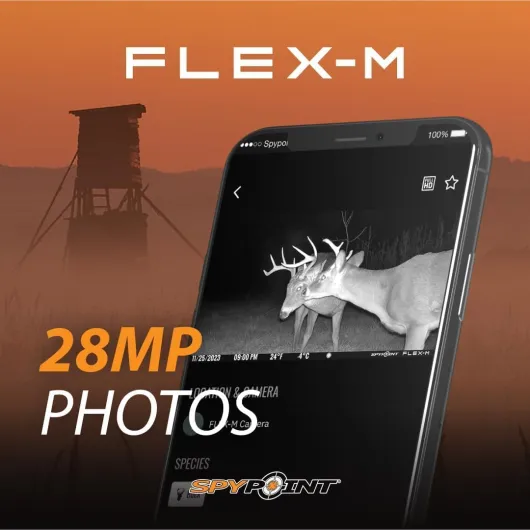
What you actually get with the Flex‑M twin pack
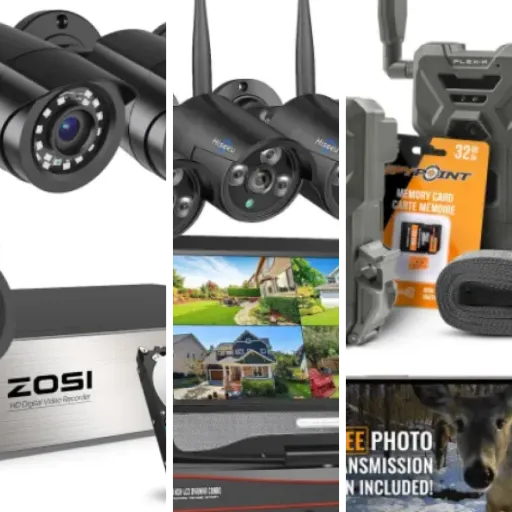
The twin pack is pretty straightforward: you get two Flex‑M cameras and two microSD cards already included. No batteries, no straps upgrade, no solar panels in the box – just the basics. Each cam is a compact cellular trail camera with a stated 28MP photo resolution and 720p video with sound. They’re IP65 water-resistant, so they’re meant to live outside permanently, rain or shine. The cameras connect over cellular only; there’s no Wi‑Fi, which honestly is fine for this type of gear.
The sales pitch is that the cams use cross‑carrier coverage, meaning they’ll automatically pick whichever network works best in the area. You don’t have to choose AT&T or Verizon at checkout; it’s all handled inside. In my case, both cameras locked onto a signal in areas where my phone sometimes struggles, so that part is legit. The SPYPOINT app is the control center: you see the photos, tweak settings, request HD downloads, check battery and signal, and manage your subscription plan.
The capture modes are more flexible than cheap non‑cell cams: you can do Photo, Video, Time‑Lapse, or Time‑Lapse+. Time‑Lapse+ basically combines scheduled shots with motion detection, which is handy for bigger fields or food plots when you don’t know exactly where the animals will pass. There’s also this “Constant Capture” thing, which just means it can keep taking photos while it’s sending others over the network. In real life, you don’t notice it much, but at least it doesn’t fully freeze while uploading.
Where the product starts to feel less generous is the data plans. You do get a free plan with 100 photos per month per camera, which is honestly decent for a low‑traffic spot. But if your cam is busy – wind, shadows, feeders, etc. – 100 photos disappear in a day or two. Then you’re looking at paid plans: around $5/month for 250 photos or $15/month for unlimited. For two cameras, that adds up if you go unlimited on both. So the twin pack is cheap upfront, but you have to count the monthly cost if you really want to use them heavily during season.
Pros
- Strong upfront value: two cellular cams with SD cards for roughly the cost of one from other brands
- Daytime photo quality is clear enough for serious scouting, with usable 720p video
- User-friendly app with species filtering, maps, and remote setting changes
Cons
- No SD card overwrite or remote formatting, so full cards mean driving out to the camera
- Occasional black night photos and over‑sensitivity, which waste both photos and battery
- To use them comfortably, you often end up paying for higher data plans and possibly solar panels
Conclusion
Editor's rating
Overall, the SPYPOINT Flex‑M twin pack is a decent entry-level cellular setup if your main goal is to get two working cams in the woods without dropping a ton of cash on day one. Daytime images are clear, the app is easy enough to use, and the cross‑carrier connection actually does what it says. For basic scouting – seeing what’s hitting your feeder or crossing a trail – they get the job done. If you place them well, tune the settings, and maybe pair at least one with a solar panel, they can be a solid budget workhorse.
Where things get less rosy is on the reliability and convenience side. No SD overwrite, no remote formatting, occasional black night photos, and no live view make them feel a bit behind some competitors. Battery life can be fine or terrible depending on how busy the spot is, and if you’re not on an unlimited plan, the camera’s sensitivity can cost you in both photos and power. Add in that support doesn’t seem very sharp according to several users, and you’re trading money saved for some extra hassle.
I’d recommend this twin pack to hunters or landowners on a budget who want to cover more ground and don’t mind driving out to the cameras from time to time. It’s also okay if you’re just getting into cell cams and want to experiment without spending big. If you manage a remote property, need rock‑solid uptime, or hate fiddling with gear, I’d look at slightly pricier brands that handle storage and reliability better, even if you only get one camera for the same money.